
Heel pain is not one thing. When it hurts, and what the pain feels like, are some of the most useful clues you can bring to a doctor. Pain that bites with your first steps after sitting points in one direction. Burning, tingling or pain that wakes you at night points in others. This guide walks through four common patterns, what each one tends to suggest and when it is time to be seen.
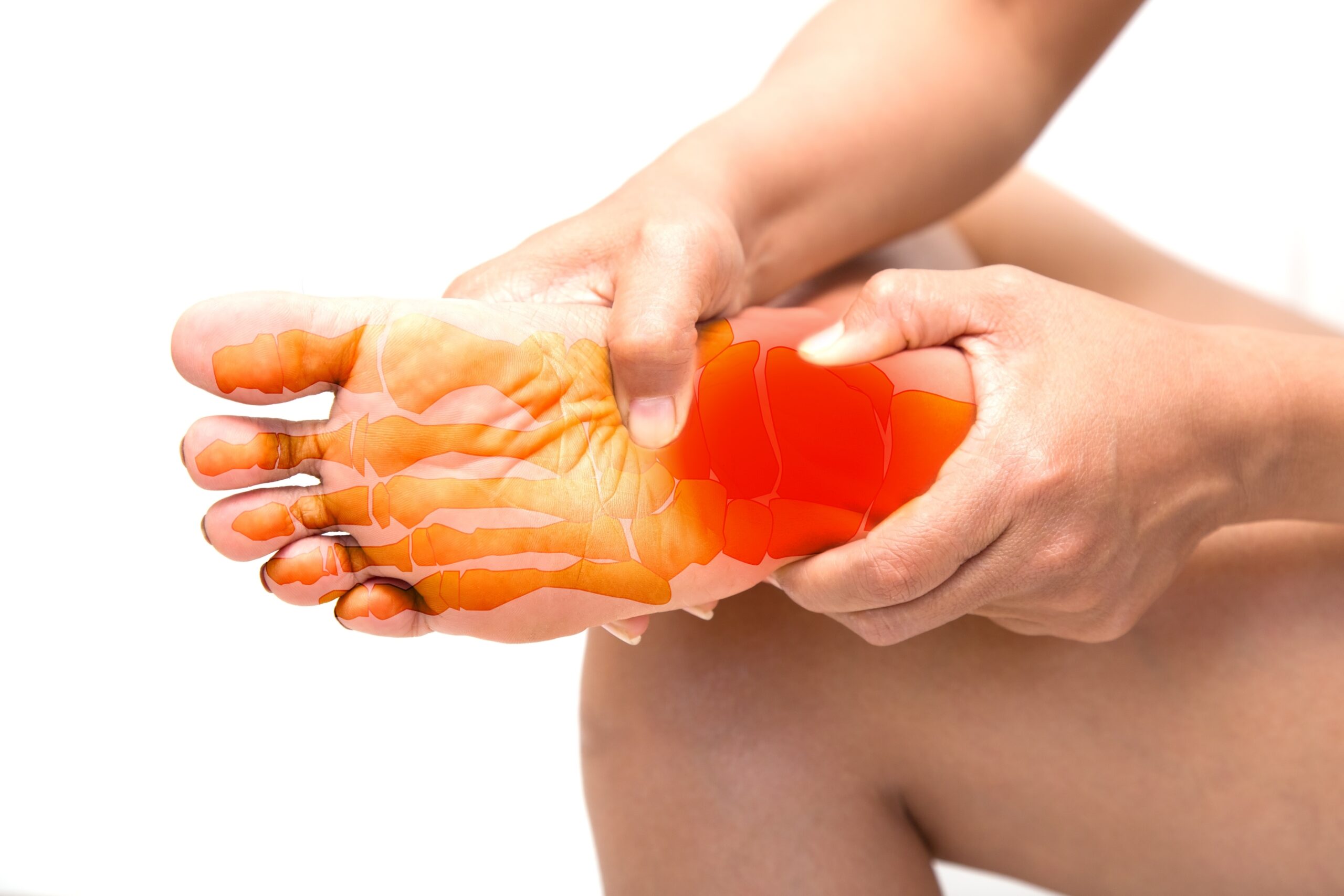
A pattern is a clue, not a diagnosis. Two conditions can exist in the same heel, and only an exam can sort that out.
Four patterns at a glance
| Pattern | What it often suggests | How soon to be seen |
|---|---|---|
| Sharp pain with the first steps after sleeping or sitting, easing as you move | Plantar fasciitis | Routine visit if it lasts more than a few weeks |
| Burning, tingling, numbness or shooting pain | A nerve problem in the foot, ankle or lower back, or nerve damage from diabetes | Schedule a visit; sooner if it is spreading or you notice weakness |
| Pain at night or while resting | Not typical of plantar fasciitis. Possible stress fracture, fat pad problem, nerve condition, poor circulation or, rarely, a bone problem | Do not wait this one out |
| Pain that builds while you are walking, standing or running | Stress fracture, nerve compression at the ankle, fat pad problem or circulation, depending on the details | Promptly if it is getting worse or you cannot bear weight |
Pattern 1: pain with the first steps after sleeping or sitting
This is the classic plantar fasciitis story. The American Academy of Orthopaedic Surgeons (AAOS) describes pain with the first few steps after getting out of bed, or after a long period of rest such as a long car ride, that usually goes away after a few minutes of walking. A review in American Family Physician puts it the same way: the pain begins when you start walking after a period of inactivity, improves or resolves as you keep moving, and then returns at the end of the day.
Why would resting make it worse? The AAOS notes that most people sleep with their feet pointed down, which lets the plantar fascia relax and shorten. The first steps stretch it again. The same thing happens on a smaller scale after an hour at a desk or a movie.
Two more details fit this pattern:
- The pain is on the underside of the heel, usually toward the inner side, and pressing there is tender.
- After exercise, the pain tends to be greater afterward, not during the activity itself.
In one review of 250 patients seen at a foot clinic for pain under the heel, first-step pain in the morning and tenderness at the inner heel bone were the features that went with plantar fasciitis. If this is your pattern, our page on morning heel pain explains it in more depth.
Pattern 2: burning, tingling or numbness
Plantar fasciitis is usually described as sharp or stabbing. American Family Physician notes that tingling and pins-and-needles sensations are uncommon with it. So when heel pain burns, tingles, shoots or comes with numb patches, a nerve is the more likely source.
Several nerve problems can do this:
- A pinched nerve in the heel. Small nerve branches run along the inner heel. When one is compressed, the result is burning over the inner or lower inner heel, sometimes after a jump in activity or an injury.
- Tarsal tunnel syndrome. The tibial nerve is squeezed behind the inner ankle bone. This causes burning, tingling or shooting pain and numbness in the inner ankle and heel that can extend into the sole and toes. It tends to worsen with standing, walking or running and ease with rest and elevation.
- A nerve root in the lower back. American Family Physician advises doctors to consider this even when there is no back pain.
- Peripheral neuropathy. Nerve damage from diabetes can cause burning or tingling in the feet. The National Institute of Diabetes and Digestive and Kidney Diseases notes that these symptoms are often worse at night and are usually felt on both sides.
Nerve-related heel pain from a pinched nerve is usually in one foot. When both heels burn or tingle, doctors look for a body-wide cause. Our page on circulation problems versus neuropathy explains how those two are told apart.
This pattern matters for treatment. Stretching, inserts and procedures aimed at the plantar fascia do not treat a compressed nerve.
Questions about your treatment options? Dr. Fox can help.
Book a ConsultationThis article is part of our Heel Pain Guide.
Pattern 3: pain at night or at rest
Plantar fasciitis usually quiets down when you are off your feet. Heel pain that aches while you sit still, or wakes you from sleep, does not fit, and it deserves an evaluation instead of another month of stretching.
Here is what doctors consider:
- A stress fracture of the heel bone. The pain usually begins after an increase in weight-bearing activity or a switch to a harder walking surface. At first it hurts only with activity, but it can later hurt at rest. Squeezing the heel from both sides is often painful, and early X-rays can look normal.
- Heel fat pad thinning. In the 250-patient review, fat pad thinning mainly involved pain in both heels, pain at night and pain that was aggravated by standing.
- Neuropathy. As noted above, burning or tingling from nerve damage is often worse at night.
- Poor circulation. In severe peripheral artery disease, the National Heart, Lung, and Blood Institute describes pain in the leg and foot at rest, along with sores on the toes, feet or legs that heal slowly or not at all. One foot may feel colder than the other.
- A bone tumor or infection. These are rare. American Family Physician lists deep bone pain and night pain as the pattern for a bone tumor, and includes bone infection among the causes of heel pain.
Most night heel pain turns out to be something manageable. The reason to be seen is that the serious causes on this list are ones you do not want to find late.
Pattern 4: pain that builds during activity
Remember that typical plantar fasciitis is worst at the start and often flares after activity, not during it. If the pain climbs steadily the longer you are on your feet, think about these:
- Stress fracture. Pain with weight-bearing activity that progressively worsens.
- Heel fat pad syndrome. A deep, bruise-like pain in the middle of the heel, brought on by walking barefoot, on hard surfaces or for long periods.
- Tarsal tunnel syndrome. Burning or tingling that builds with standing and walking.
- Achilles tendon problems. Pain at the back of the heel, not underneath, that worsens with increased activity.
- Circulation. Pain, aching or cramping that comes on with walking and goes away with rest is the most common symptom of peripheral artery disease. It is most often in the calf but can be felt in the foot.
Long-standing plantar fasciitis can also ache late in the day after hours of standing, so this pattern overlaps. The location of the pain and the exam make the difference.
When to be seen promptly
Call a doctor soon, or go to urgent care, if you have any of the following:
- You cannot put weight on the heel, or the pain began with a fall, a jump or a sudden pop
- The heel is hot, red or swollen, or you have a fever
- Pain at night or at rest that is new, worsening or comes with unexplained weight loss
- Numbness or weakness that is spreading, or new trouble controlling your bladder or bowels along with leg symptoms
- A cold, pale or bluish foot, or a sore on the foot that is not healing, especially if you have diabetes
For heel pain without those signs, a routine visit makes sense if it has lasted more than a few weeks despite rest and supportive shoes. Our guide to which doctor to see can help you choose where to start.
How doctors confirm the cause
Most of the time, your description and a hands-on exam are enough to diagnose plantar fasciitis. American Family Physician suggests that imaging may help look for another diagnosis when pain lasts longer than three months and does not respond to treatment. We explain the role of each test in MRI, ultrasound and X-ray for plantar fasciitis, and the full list of look-alikes in conditions mistaken for plantar fasciitis.
It helps to arrive with notes. Write down when the pain is worst, what it feels like, whether one heel or both are involved, and what makes it better.
Why the pattern matters before any procedure
Treatments are matched to causes. Plantar fasciitis embolization (PFE), which Dr. Fox performs, has only been studied in people with confirmed plantar fasciitis that did not improve with conservative care, and that research is still early: small series of patients with no comparison group. It is not a treatment for nerve compression, a stress fracture or fat pad thinning.
As a board-certified vascular surgeon, Dr. Fox also evaluates circulation, which is one of the causes of rest pain described above. If your pattern does not fit plantar fasciitis, he will tell you and point you toward the right specialist.
The heel pain guide gathers every article in this series, and the embolization guide explains where embolization fits for other joints.
Frequently Asked Questions
Why does my heel hurt when I stand up after sitting?
This is the usual pattern of plantar fasciitis. The plantar fascia relaxes while you rest, and the first steps stretch it again. The pain usually eases after a few minutes of walking.
Is burning heel pain plantar fasciitis?
Usually not on its own. Plantar fasciitis tends to be sharp or stabbing, and tingling is uncommon with it. Burning, tingling or numbness suggests a nerve problem and is worth having checked.
Should I worry about heel pain at night?
It should be evaluated. Plantar fasciitis usually settles with rest, so pain at night or at rest raises other possibilities such as a stress fracture, a nerve condition or a circulation problem. Most causes are treatable.
Does plantar fasciitis hurt more during or after exercise?
The American Academy of Orthopaedic Surgeons describes greater pain after exercise, not during it. Pain that builds steadily during activity suggests another cause should be considered.
Can embolization help burning or night-time heel pain?
PFE has only been studied for confirmed plantar fasciitis. If your symptoms point to a nerve, bone or circulation problem, that needs to be diagnosed and treated first.
Keep Reading
- Plantar Fasciitis Embolization (PFE) in Manhattan
- Heel Spur vs. Plantar Fasciitis: What Is the Difference?
- Plantar Fasciitis Embolization for Runners and Athletes: What to Know
- Plantar Fasciitis Embolization vs. Radiofrequency Ablation and Topaz: How They Compare
- Plantar Fasciitis Embolization vs. Tenex: How the Two Compare
- Do You Need an MRI, Ultrasound or X-Ray for Plantar Fasciitis?
- Heel Pain Guide: causes, treatments and PFE
Sources
- American Academy of Orthopaedic Surgeons, OrthoInfo: Plantar fasciitis and bone spurs
- Trojian T, Tucker AK, Am Fam Physician, 2019: Plantar fasciitis
- Tu P, Am Fam Physician, 2018: Heel pain, diagnosis and management
- Yi TI et al., Ann Rehabil Med, 2011: Clinical characteristics of the causes of plantar heel pain, review of 250 patients
- National Institute of Diabetes and Digestive and Kidney Diseases: Peripheral neuropathy
- National Heart, Lung, and Blood Institute: Peripheral artery disease, symptoms
- Gill S et al., J Vasc Interv Radiol, 2026: Transarterial embolization for plantar heel pain, 6-month prospective case series of 24 patients
Medically reviewed by David Fox, MD, FACS, RPVI. This article is general information, not a substitute for a medical evaluation.
Living with joint or tendon pain that hasn’t improved? Schedule a consultation with Dr. David Fox at Fox Vein & Vascular in Manhattan to find out whether embolization is right for you. Call (212) 362-3470 or request an appointment online.
