
Plantar Fasciitis Embolization (PFE) in Manhattan, NYC
For many New Yorkers living with chronic heel pain — especially the sharp, burning ache of plantar fasciitis that greets you with every first step in the morning — the traditional options have often felt limited: stretching, orthotics, cortisone injections, or eventually surgical release of the plantar fascia. If you have tried these approaches and still find yourself wincing through your day, you are not alone — and you are not out of options.
Part of our Heel Pain and Plantar Fasciitis Guide: causes, treatments compared and what to try when heel pain is not improving.
Plantar Fasciitis Embolization (PFE) is an advanced, minimally invasive, image-guided procedure designed to target the underlying source of persistent heel pain — not just mask the symptoms. By addressing the abnormal blood vessels that sustain inflammation in the plantar fascia, PFE offers a path to meaningful, lasting relief without surgery, without general anesthesia, and without weeks of downtime.
At Fox Vein & Vascular, PFE is performed by David Fox, MD, FACS, RPVI, a board-certified vascular surgeon with more than 28 years of experience in image-guided, minimally invasive vascular procedures. Dr. Fox brings the same precision and expertise he applies to Genicular Artery Embolization (GAE) for chronic knee pain — using the same proven embolization technology to help patients find relief.

- Minimally invasive treatments
- Board-certified vascular surgeon
- No hospital stay
- Fast recovery
- Personalized care
Patient Testimonials

What Is Plantar Fasciitis Embolization (PFE)?
Plantar Fasciitis Embolization is a catheter-based, outpatient procedure that treats chronic heel pain by reducing the abnormal blood vessels — known as neovascularity — that develop within and around the inflamed plantar fascia. These abnormal microvascular networks are not part of your body’s healthy circulation. Instead, they form in response to chronic inflammation and actually help sustain the cycle of pain and tissue irritation that keeps plantar fasciitis from resolving on its own.
Traditional treatments for plantar fasciitis — such as stretching, orthotics, cortisone injections, and shockwave therapy — focus on managing symptoms or temporarily reducing inflammation. PFE takes a fundamentally different approach by targeting the vascular supply that feeds ongoing inflammation at its source.
During PFE, microscopic embolic particles are delivered through a tiny catheter directly into the abnormal blood vessels feeding the inflamed tissue. This reduces the excess blood flow sustaining the inflammation, allowing the plantar fascia to begin healing naturally. The procedure uses the same embolization principles successfully applied in musculoskeletal embolization for conditions like knee osteoarthritis.
PFE is designed for patients who have been living with heel pain for six months or longer and have not found lasting relief from conservative treatments. It is the next step when those approaches have not been enough.
PFE is one of several embolization treatments Dr. Fox performs. Our Embolization Guide covers knee, heel, shoulder, elbow and hip pain.

How Does PFE Work?
To understand why PFE is effective, it helps to understand what is happening inside your heel when plantar fasciitis becomes chronic.
In healthy tissue, blood vessels supply oxygen and nutrients to support normal function. But when the plantar fascia is chronically inflamed, the body generates abnormal inflammatory blood vessels — tiny, disorganized networks that bring inflammatory cells and pain-signaling nerve fibers to the area, perpetuating the cycle of pain and swelling. This is one of the key reasons plantar fasciitis can become chronic even after months of treatment.
PFE works by targeting these abnormal vessels directly using real-time fluoroscopic imaging (live X-ray) and precision catheter techniques.
Step-by-Step Overview
1. Access
A small entry point is created — typically a tiny puncture at the ankle or the top of the foot — to access the arterial system. No surgical incision or stitches are required.
2. Catheter Navigation
A thin microcatheter is advanced through the blood vessels using real-time X-ray imaging guidance. Dr. Fox carefully navigates the catheter to the specific arteries supplying the inflamed plantar fascia, mapping the abnormal blood flow along the way.
3. Embolization
Once the target vessels are identified, microscopic embolic particles are carefully delivered through the catheter into the abnormal blood vessels. These particles reduce the excess blood flow feeding the inflamed tissue without affecting normal, healthy circulation in the foot.
4. Completion
The catheter is removed and a small bandage is applied to the access site. The entire procedure typically takes 45 to 90 minutes. Most patients rest briefly in recovery and go home the same day.
There are no large incisions, no general anesthesia, and no hardware placed in your foot.
Who Is a Good Candidate for PFE?
PFE is specifically designed for patients with chronic plantar fasciitis who have not responded to conservative treatments. If you have been dealing with persistent heel pain and feel like you have tried everything, PFE may be the right next step.
PFE may be right for you if:
- You have experienced heel pain for six months or longer
- You have tried stretching, physical therapy, orthotics, or night splints with limited or no lasting relief
- You have received cortisone injections, shockwave therapy, or PRP without adequate improvement
- You want to avoid surgical plantar fascia release
- You are looking for a minimally invasive treatment that allows a fast return to daily activities
- Your podiatrist has cleared you for evaluation after exhausting conservative options
PFE may NOT be ideal if:
- Your heel pain is acute (less than six months) and has not yet been treated with conservative care
- You have an active infection in the foot
- You have severe peripheral arterial disease that may limit safe catheter access
- Your symptoms are primarily caused by a condition other than plantar fasciitis, such as a stress fracture or nerve entrapment
The best way to determine whether you are a good candidate for PFE is through a consultation with Dr. Fox. During your visit, he will review your imaging, discuss your treatment history, and perform a vascular evaluation to assess whether embolization is appropriate for your situation.

Why Patients Are Considering PFE Instead of Surgery
For many patients with chronic plantar fasciitis, the conversation eventually turns to surgery — specifically, plantar fascia release, a procedure that involves cutting part of the plantar fascia to relieve tension. While surgery can be effective for some patients, it comes with significant considerations that give many people pause.
Surgical plantar fascia release typically requires general or regional anesthesia, a recovery period of several weeks to months, and carries risks including nerve damage, infection, and altered foot mechanics.
PFE offers a non-surgical alternative that addresses heel pain through a completely different mechanism. Instead of cutting tissue, PFE reduces the inflammatory blood supply that sustains pain — all through a tiny catheter, under local anesthesia, with same-day discharge.
Patients commonly explore PFE when they:

PFE vs. Other Treatments
When you have been living with chronic heel pain, it is important to understand how your treatment options compare. The table below provides a high-level overview — for a more detailed analysis of each comparison, visit the linked pages.
| Treatment | How It Works | Invasiveness | Duration of Relief | Best For |
|---|---|---|---|---|
| PFE | Targets abnormal inflammatory blood vessels | Minimally invasive, catheter-based | Long-term (months to years) | Chronic PF that has not responded to conservative care |
| Cortisone Injections | Temporarily reduces local inflammation | Minimally invasive (injection) | Weeks to months | Short-term flare-up relief |
| Shockwave Therapy (ESWT) | Stimulates tissue repair through acoustic waves | Non-invasive | Variable | Mild to moderate chronic PF |
| PRP Injections | Uses concentrated platelets to promote healing | Minimally invasive (injection) | Variable, under study | Patients seeking biologic therapy |
| Plantar Fascia Surgery | Cuts part of the plantar fascia to release tension | Moderately to fully invasive | Often long-term, but with surgical risks | Severe cases unresponsive to all other treatments |
| Physical Therapy & Orthotics | Strengthens supporting muscles, reduces mechanical stress | Non-invasive | Ongoing with continued use | First-line treatment for new cases |

Explore detailed comparisons:
- PFE vs. Cortisone Injections
- PFE vs. Shockwave Therapy
- PFE vs. PRP Injections
- PFE vs. Plantar Fascia Surgery
- PFE vs. Physical Therapy & Orthotics
- PFE vs. Dry Needling & Laser Therapy
What to Expect: The PFE Experience at Fox Vein & Vascular
Understanding what happens before, during, and after your procedure can help you feel confident and prepared. Here is a step-by-step look at the PFE experience at our Manhattan office.
Your Consultation
Every PFE journey begins with a thorough consultation. During your visit, Dr. Fox will review your medical history, discuss the treatments you have already tried, and evaluate your imaging studies. He may also perform a vascular assessment to visualize the blood flow patterns in your foot. This appointment is an opportunity to ask questions and understand whether PFE is the right option for your specific situation. Learn more about what to expect at your PFE consultation.

Before the Procedure
You will receive detailed instructions on how to prepare, including guidance on medications and hydration. PFE is performed under local anesthesia with the option of light sedation if you prefer — no general anesthesia is required. Most patients find the preparation straightforward and the process far less intimidating than they expected. Read our full PFE preparation guide for detailed instructions.

During the Procedure
You will lie comfortably on a procedure table while Dr. Fox accesses the arterial system through a tiny puncture — typically at the ankle or top of the foot. Using real-time fluoroscopic imaging, he navigates a microcatheter to the arteries supplying the inflamed plantar fascia and delivers microscopic embolic particles to reduce the abnormal blood flow. Most patients feel little to no discomfort during the procedure.

After the Procedure
You will rest briefly in recovery before being discharged home the same day. A small bandage covers the access site. You may experience mild soreness or bruising at the puncture point, which typically resolves within a few days. Most patients are able to walk the same day and return to light daily activities within 24 to 48 hours.
Clinical Evidence and Outcomes
Plantar Fasciitis Embolization is supported by a growing body of clinical research demonstrating its safety and effectiveness for patients with chronic, treatment-resistant heel pain.
Published studies and clinical data have shown:
- About 7 in 10 patients report significant pain reduction following PFE
- Meaningful improvements in walking ability and daily function
- Reduced inflammation within the treated tissue
- Sustained symptom improvement over follow-up periods of 12 months and beyond
- A favorable safety profile with a low complication rate
PFE builds on the well-established science of embolization — the same interventional technique that has been used for decades to treat a wide range of vascular conditions. In recent years, this technology has been successfully applied to musculoskeletal conditions, including knee osteoarthritis through GAE, where published studies have similarly shown significant pain reduction and improved quality of life.
While PFE is still considered an emerging procedure, the clinical evidence is encouraging — and Dr. Fox is actively involved in evaluating outcomes and refining techniques for his patients. For a deeper look at the research, visit our PFE clinical evidence page.
Recovery After PFE
One of the most appealing aspects of PFE is the fast, straightforward recovery. Because there are no incisions, no tissue removal, and no general anesthesia, most patients are able to return to their daily routines quickly.
Typical recovery timeline:
- Day of procedure: Walk out of the office, rest at home
- 24 to 48 hours: Return to light daily activities
- 2 to 6 weeks: Gradual, progressive pain relief as inflammation decreases
- 2 to 3 months: Most patients experience significant improvement
- 6 months and beyond: Continued healing and sustained relief
It is important to understand that PFE does not provide instant relief. Because the procedure works by reducing the blood supply to inflamed tissue, your body needs time to respond. Most patients notice their pain gradually decreasing over several weeks, with the most meaningful improvement by the two- to three-month mark.
During your recovery, Dr. Fox and his team will provide clear guidance on activity levels and any follow-up care. For a complete breakdown of what to expect week by week, visit our PFE recovery timeline page.
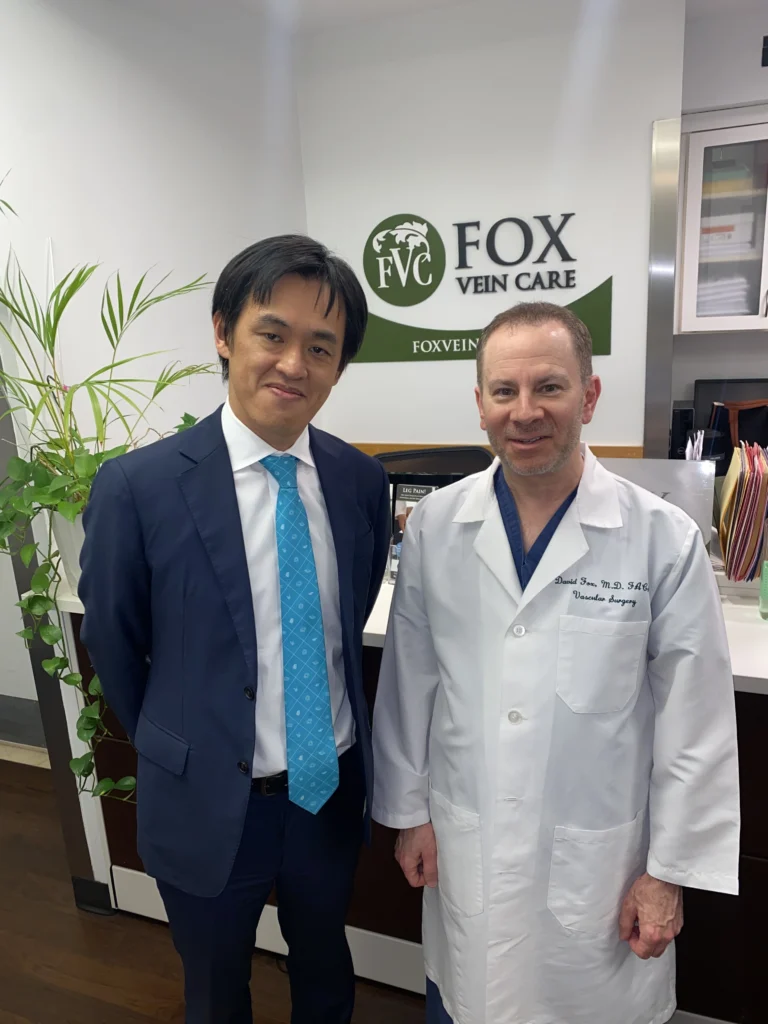
Advancing Embolization in Collaboration with Global Leaders
Fox Vein & Vascular is committed to staying at the forefront of minimally invasive pain treatment. In May 2026, Dr. David Fox had the privilege of hosting Dr. Yuji Okuno, MD, PhD — the internationally recognized pioneer of musculoskeletal embolization — at his Manhattan office following the GEST 2026 Global Embolization Symposium in New York City.
Dr. Okuno, founder of Okuno Clinic in Tokyo, developed the foundational techniques behind transcatheter arterial micro-embolization (TAME) for chronic pain conditions, including knee osteoarthritis and plantar fasciitis. His published research — spanning more than 60 plantar fasciitis embolization cases with up to four years of follow-up — helped establish the clinical evidence that supports the procedures Dr. Fox performs at Fox Vein & Vascular today.
The visit provided an opportunity for Dr. Fox and Dr. Okuno to exchange insights on technique refinements, patient selection, and the future of embolization-based treatments for musculoskeletal conditions. This type of direct collaboration with the physicians shaping the field reflects Dr. Fox’s dedication to offering Manhattan patients access to the most advanced, evidence-based treatment options available.

Why Choose Fox Vein & Vascular for PFE
Choosing where to have a procedure like PFE is an important decision. At Fox Vein & Vascular, we bring together the specialized expertise, advanced technology, and patient-centered approach that this procedure requires.
Dr. David Fox, MD, FACS, RPVI is a board-certified vascular surgeon with more than 28 years of experience performing image-guided, minimally invasive vascular procedures. He is a Fellow of the American College of Surgeons and holds the Registered Physician in Vascular Interpretation (RPVI) credential, reflecting his advanced proficiency in vascular imaging and diagnostics.
Dr. Fox has extensive experience with embolization-based treatments, including Genicular Artery Embolization (GAE) for chronic knee osteoarthritis — using the same catheter-based techniques and embolic materials used in PFE. This means your procedure is guided by a physician who thoroughly understands the vascular anatomy, imaging interpretation, and precise particle delivery that PFE demands.
What sets Fox Vein & Vascular apart:

Board-certified vascular expertise
Dr. Fox is fellowship-trained in vascular surgery with specialized skills in catheter-based interventions
Advanced imaging technology
Real-time fluoroscopic guidance ensures precise targeting of abnormal blood vessels
Comprehensive vascular evaluation
Every patient receives a thorough assessment before any procedure is recommended
Collaborative care model
PFE is performed in partnership with your podiatrist, ensuring coordinated, multidisciplinary care
Manhattan convenience
Our office is located in the heart of Manhattan, making it easy for patients across New York City to access care
Personalized treatment plans
Every procedure is tailored to your specific anatomy, pain pattern, and treatment history
PFE at Fox Vein & Vascular is not a one-size-fits-all approach. Dr. Fox takes the time to understand your condition, explain your options, and ensure you feel confident in your treatment plan.
Frequently Asked Questions
What is plantar fasciitis embolization?
Plantar fasciitis embolization is a minimally invasive, catheter-based procedure that treats chronic heel pain by reducing the abnormal blood vessels sustaining inflammation in the plantar fascia. Microscopic embolic particles are delivered through a tiny catheter to decrease the inflammatory blood supply, allowing the tissue to begin healing. Learn more in our complete guide to how PFE works.
How long does the PFE procedure take?
Most PFE procedures take approximately 45 to 90 minutes. The procedure is performed on an outpatient basis, and most patients are able to go home the same day.
Is PFE painful?
Most patients report feeling little to no discomfort during the procedure. PFE is performed under local anesthesia, with light sedation available if preferred. Any soreness at the access site after the procedure is typically mild and short-lived. Visit our page on whether PFE is painful for more details.
How soon will I feel relief after PFE?
Pain relief after PFE is gradual. Most patients begin noticing improvement within two to six weeks, with significant relief typically occurring by two to three months after the procedure. The gradual timeline reflects the body’s natural response as inflammation decreases.
Can I walk after PFE?
Yes. Most patients are able to walk the same day and return to light daily activities within 24 to 48 hours. There is no cast, boot, or extended immobilization required. Read more about walking after PFE.
Who is a good candidate for PFE?
PFE is designed for patients who have experienced chronic heel pain for at least six months and have not found lasting relief from conservative treatments such as physical therapy, orthotics, cortisone injections, or shockwave therapy. A consultation with Dr. Fox is the best way to determine if you are a good candidate.
Does PFE replace surgery?
PFE is a non-surgical alternative to plantar fascia release. It does not involve cutting tissue or altering foot mechanics. For many patients, PFE provides significant pain relief without the need for surgery. However, PFE does not prevent you from pursuing surgical options in the future if needed. See our PFE vs. surgery comparison for a detailed analysis.
How long does PFE relief last?
Clinical studies have shown sustained improvement in patients over follow-up periods of 12 months and beyond. Because PFE targets the underlying vascular cause of chronic inflammation, the results have the potential to be long-lasting. Learn more about how long PFE relief lasts.
Is PFE covered by insurance?
Because PFE is an emerging procedure, insurance coverage varies. Our team at Fox Vein & Vascular will discuss coverage options and any out-of-pocket costs during your consultation so there are no surprises. Visit our PFE insurance coverage page for additional information.
How is PFE related to GAE for knee pain?
PFE and GAE (Genicular Artery Embolization) use the same embolization technology and catheter-based techniques. Both procedures target abnormal inflammatory blood vessels — PFE in the plantar fascia and GAE in the knee. Dr. Fox performs both procedures, bringing his extensive experience with musculoskeletal embolization to every case.
Schedule Your Consultation
If you are ready to explore whether plantar fasciitis embolization is right for you, contact Fox Vein & Vascular to schedule a consultation with Dr. Fox. Whether you have been struggling with heel pain for months or years, taking the next step starts with a conversation.
Dr. Fox and his team will review your imaging, discuss your treatment history, and help you understand whether PFE could be the right next step. If you are unsure whether PFE is appropriate for your situation, our 7 things to know about plantar fasciitis embolization is a great place to start.
You do not have to live with chronic heel pain. Get a personalized evaluation and find out which treatment is right for you.
We’re here to help you take the next step with confidence.