
If your heel pain has outlasted stretching, inserts and injections, two names may come up as you look for a step short of surgery: Tenex and plantar fasciitis embolization (PFE). They are often mentioned together, but they are very different procedures, done by different specialists, aimed at different parts of the problem. This guide explains both fairly, including what has and has not been studied.
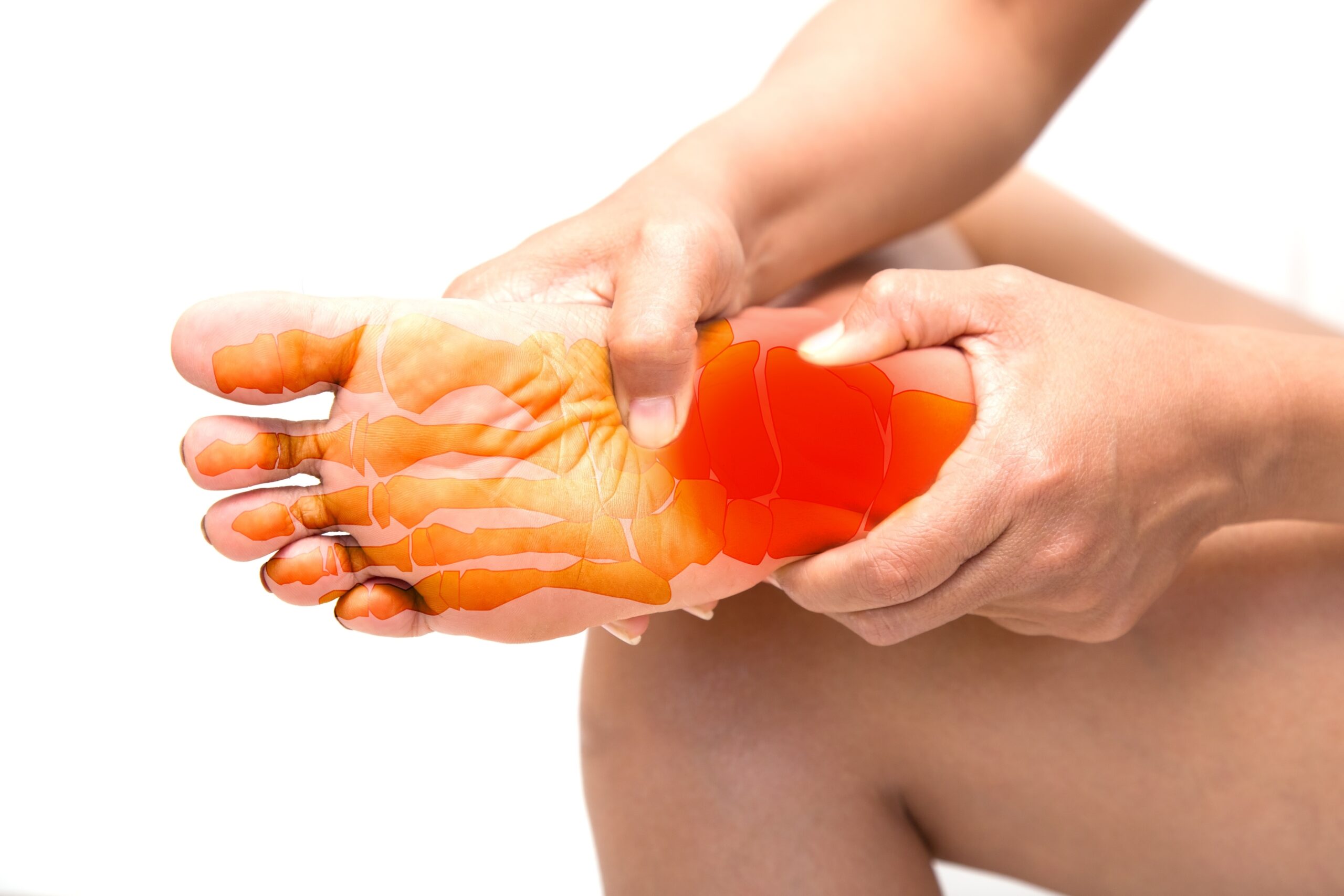
Two procedures, two different targets
Tenex treats the fascia tissue itself. Tenex is the brand name most people use for percutaneous ultrasonic tenotomy, also called ultrasonic fasciotomy when it is done on the plantar fascia. The handpieces are sold as the TX1 and TX2 MicroTips. The American Academy of Orthopaedic Surgeons (AAOS) describes the technique this way: ultrasound imaging guides a probe to the injured plantar fascia, and the tip of the probe vibrates to break up and remove damaged tissue. The probe is about the size of an 18-gauge needle, and the first published report describes the procedure being done under local anesthesia.
PFE treats the blood vessels around the fascia. Long-lasting plantar fasciitis can develop small abnormal vessels around the irritated tissue. In PFE, a vascular specialist uses X-ray guidance to pass a thin catheter into an artery and deliver tiny particles that reduce flow through those vessels. Nothing is cut or removed in the heel. Our plantar fasciitis embolization page explains the steps.
So one procedure removes degenerated tissue, and the other calms the abnormal blood supply that is thought to feed ongoing pain. Neither approach is a quick fix for a heel that has not yet had a real course of conservative care.
What published studies show for Tenex
The research on ultrasonic tenotomy for plantar fasciitis is made up of case series, meaning groups of treated patients with no comparison group.
- Patel, 2015 (prospective study, 12 patients). This was the first report. According to a later systematic review, average foot function scores rose from 30.1 to 88.1 at 3 months, 11 of the 12 patients had complete pain relief at 3 months, and no complications were noted.
- Turner and colleagues, 2024 (retrospective review, 30 patients). Pain scores fell significantly after the procedure. Patients who also received platelet-rich plasma improved more than those who did not.
- Ha and colleagues, 2025 (retrospective case series, 62 patients, 70 procedures). This study of ultrasound-guided percutaneous fasciotomy and debridement has the longest follow-up. Researchers reached patients for 58 of the 70 procedures at an average of 6.6 years. Average pain fell from 6.8 to 0.7 out of 10, 91% of procedures were rated satisfied or very satisfied, and no complications were reported.
A 2021 systematic review of ultrasonic tenotomy across several body areas found only 7 studies in total, one of them in the heel. All were uncontrolled case series, and the authors called for higher quality studies.
What published studies show for PFE
PFE research is also made up of small series without comparison groups, and it is newer.
- Gill and colleagues, 2026 (prospective case series, 24 people). 17 of 24 (70.8%) met the responder definition at 6 months. No adverse events were reported.
- Kumar and colleagues, 2026 (retrospective, 12 patients). The procedure was technically completed in 11 of 12. Of those 11, 8 (72.7%) had at least a 50% drop in pain at 6 months, sustained to 12 months.
- Tonkaz and Bekci, 2026 (prospective, 32 patients). Average pain fell from 7.3 to 1.3 out of 10 at 6 months. Mild recurrence was seen in 5 patients (15.6%) with physically demanding jobs.
- Sasaki and colleagues, 2025 (retrospective, 66 patients). Foot function scores rose from 65.8 to 92.8 at 1 year, and results held at an average follow-up of 30.9 months.
- Astani and colleagues, 2026 (retrospective, 41 legs in 34 patients). 5 legs (12%) needed a repeat procedure within 6 months.
A 2026 review of embolization in the foot and ankle noted that the evidence is limited by small sample sizes and low methodological quality. That is a fair summary. You can read more on our PFE clinical evidence page.
Questions about your treatment options? Dr. Fox can help.
Book a ConsultationThis article is part of our Heel Pain Guide.
There is no head-to-head trial
We searched for a study comparing PFE with ultrasonic tenotomy and did not find one. Neither procedure has been tested against a sham (placebo) procedure for plantar fasciitis either. That means the numbers above cannot be lined up to say one works better. The studies used different patients, different pain scales and different definitions of success.
| Tenex (ultrasonic tenotomy) | PFE (embolization) | |
|---|---|---|
| What it targets | Damaged fascia tissue, which is broken up and removed | Abnormal small blood vessels around the fascia |
| How it is guided | Ultrasound | X-ray with contrast dye |
| Entry point | A small opening in the skin of the heel | An artery, reached with a catheter |
| Who performs it | Podiatrists, sports medicine doctors, orthopedic foot and ankle specialists | Vascular specialists and interventional radiologists |
| Type of evidence | Case series, 12 to 62 patients | Case series, 12 to 66 patients |
| Longest follow-up | Average 6.6 years in one series | Average 30.9 months in one series |
| Randomized trial | None found | None found |
Recovery after each
None of the studies we reviewed for either procedure published a standard recovery schedule, such as days in a boot or weeks until running. So the honest answer is that recovery depends on the specialist's protocol and on your heel.
With Tenex, tissue in the fascia has been treated directly, so the specialist who performs it will guide how quickly you put full weight on the foot and return to activity. With PFE, the heel itself is not cut, and the main early care is for the small artery access site. Our PFE recovery timeline describes what patients at this practice are typically told. In one PFE study, pain fell from 7.36 to 2.27 out of 10 by the day after treatment, while other studies measured improvement over weeks to months.
Who each may suit
These are general patterns to discuss with your doctors, not rules.
Tenex may be worth asking about if ultrasound or MRI shows a thickened, degenerated area of fascia, you already see a foot and ankle specialist who offers it, or you have a health reason to avoid X-ray contrast dye or an artery procedure.
PFE may be worth asking about if your plantar fasciitis is confirmed, has lasted many months despite conservative care, and you prefer an approach that does not cut the fascia. It may not be suitable if you have poor circulation in the legs, kidney disease or a past reaction to contrast dye. Dr. Fox reviews these at a consultation. See who is a candidate for PFE.
Neither is right if the diagnosis is uncertain. Nerve entrapment, a stress fracture and fat pad problems can all copy plantar fasciitis, and neither procedure treats them. Our guide to conditions mistaken for plantar fasciitis explains how they are told apart.
Dr. Fox is a board-certified vascular surgeon. He performs PFE and does not perform Tenex. If your history and imaging suggest a tissue-focused procedure makes more sense, he will say so and point you back to a foot and ankle specialist.
Risks to weigh
The Tenex studies above reported no complications, and the PFE studies reported no major adverse events. Small studies cannot rule out uncommon problems, though. Any procedure that enters the skin carries some risk of infection or soreness. PFE adds the risks of an artery procedure, such as bruising at the access site, and a 2026 case report described a blocked artery in the lower leg after PFE done through an artery in the foot. Ask each specialist what they have seen in their own patients.
Questions to ask before you decide
- What does my imaging show, and does it fit this procedure?
- How many of these procedures do you perform, and what results do you see?
- What will my first two weeks look like?
- If it does not help, what is the next step, and does this procedure limit my other options?
For the wider list of choices, including shockwave, PRP and calf surgery, see alternatives to plantar fasciitis surgery. The heel pain guide gathers every article in this series, and the embolization guide covers embolization for other joints.
Frequently Asked Questions
Is PFE more effective than Tenex?
No one knows. No study has compared the two, and both are supported only by small case series without comparison groups.
Can I have PFE if Tenex did not help, or the other way around?
Possibly, but this has not been studied. It depends on your diagnosis, imaging and health history, so it needs an individual evaluation by the specialist who would perform the next procedure.
Does Dr. Fox perform Tenex?
No. Dr. Fox is a vascular surgeon and performs embolization. Tenex is offered by podiatrists, sports medicine doctors and orthopedic foot and ankle specialists.
Which has longer follow-up in the research?
Ultrasonic fasciotomy has one retrospective series with an average follow-up of 6.6 years. The longest PFE series so far followed patients for an average of 30.9 months.
Keep Reading
- Plantar Fasciitis Embolization (PFE) in Manhattan
- Do You Need an MRI, Ultrasound or X-Ray for Plantar Fasciitis?
- Plantar Fasciitis When You Stand All Day at Work
- Plantar Fasciitis Surgery: Recovery, Success Rates and Risks
- TAME, TAE, PFE and Microembolization: Are They the Same Procedure?
- Plantar Fasciitis That Won't Go Away: A Practical Next-Step Plan
- Heel Pain Guide: causes, treatments and PFE
Sources
- American Academy of Orthopaedic Surgeons, OrthoInfo: Plantar fasciitis and bone spurs
- Patel MM, Am J Orthop, 2015: A novel treatment for refractory plantar fasciitis (percutaneous ultrasonic fasciotomy)
- Vajapey S et al., Sports Health, 2021: Percutaneous ultrasonic tenotomy for tendinopathies, systematic review of 7 case series
- Turner A et al., J Foot Ankle Surg, 2024: Ultrasound-guided percutaneous plantar fasciotomy with and without PRP, retrospective review of 30 patients
- Ha CT et al., Foot Ankle Int, 2025: Ultrasound-guided percutaneous fasciotomy and debridement, six-year outcomes from a retrospective case series
- Trice Medical: TX MicroTip for soft tissue (manufacturer product page for the Tenex TX1 and TX2 MicroTips)
- Gill S et al., J Vasc Interv Radiol, 2026: Transarterial embolization for plantar heel pain, 6-month prospective case series of 24 patients
- Kumar N et al., J Vasc Interv Radiol, 2026: Superselective embolization for refractory plantar fasciitis, retrospective series of 12 patients
- Tonkaz M, Bekci T, Eur J Radiol, 2026: Medial calcaneal artery embolization for plantar fasciitis, prospective study of 32 patients
- Sasaki T et al., Foot Ankle Surg, 2025: Intra-arterial embolization for plantar fasciitis, 66 patients
- Astani SA et al., J Vasc Interv Radiol, 2026: Embolization of plantar fasciitis with resorbable embolics, 41 legs in 34 patients
- Mazzotti A et al., Musculoskelet Surg, 2026: Transcatheter arterial microembolization in foot and ankle pathologies, narrative review
- Tan JT et al., J Vasc Interv Radiol, 2026: Anterior tibial artery occlusion after embolization for plantar fasciitis, case report
Medically reviewed by David Fox, MD, FACS, RPVI. This article is general information, not a substitute for a medical evaluation.
Living with joint or tendon pain that hasn’t improved? Schedule a consultation with Dr. David Fox at Fox Vein & Vascular in Manhattan to find out whether embolization is right for you. Call (212) 362-3470 or request an appointment online.
