Introduction
New York City is a hub for everything—finance, fashion, food, and yes, healthcare. In a city with thousands of medical professionals, finding the right doctor can feel like finding a needle in a haystack. This is especially true when it comes to aesthetic and vascular concerns. When you type vein specialist near me into a search engine, the results can be overwhelming. You’ll see dermatologists, plastic surgeons, general practitioners, and dedicated vascular surgeons all vying for your attention.
But not all white coats are created equal, especially when it comes to treating spider veins. While these tiny, web-like veins are often viewed as a cosmetic nuisance, they can sometimes be a sign of a deeper, more complex circulatory issue. Choosing the wrong provider can lead to ineffective treatments, wasted money, or even complications like skin staining and burns.
So, how do you sift through the noise and find a Manhattan vein clinic that offers safety, expertise, and results?
This guide is designed to be your compass. We will walk you through exactly what to look for in a vein specialist, from board certifications to technology. We will explain why “med-spas” might not be your best bet and how to interpret patient reviews. Whether you are seeking a vein treatment near me for cosmetic reasons or are worried about underlying vein symptoms in legs, making an informed choice is the first step toward healthier, clearer skin.
Why the “Specialist” Label Matters
It’s Not Just About Zapping Veins
There is a common misconception that treating spider veins is simple—just a quick laser zap or a needle poke, and you’re done. Because of this belief, many non-specialized clinics have added vein treatments to their menu of services alongside Botox and facials.
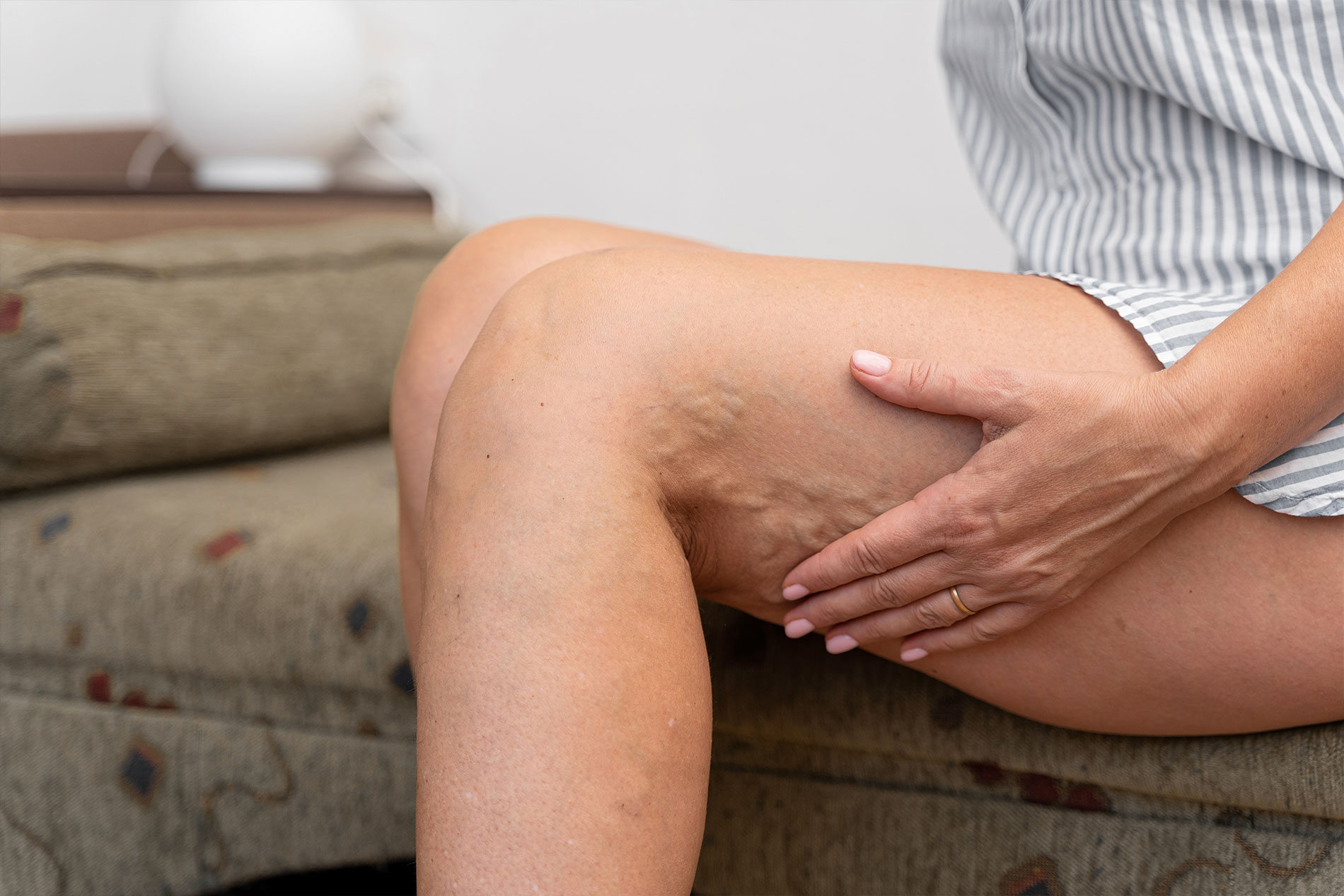
However, the venous system is complex. It is a network of plumbing that fights gravity to push blood back to your heart. Spider veins (telangiectasias) are often just the visible tip of an iceberg. Beneath the skin, there may be “feeder veins” (reticular veins) or deeper valves that are malfunctioning.
If a provider treats the surface spider vein without addressing the underlying feeder vein, the treatment will likely fail. The spider vein might disappear for a few weeks, only to return with a vengeance, or new ones might pop up immediately nearby. A true specialist understands the hemodynamics (blood flow) of the leg and treats the root cause, not just the symptom.
To ensure the highest standard of care, look for a vein specialist affiliated with a dedicated Manhattan vein clinic that offers full evaluation, diagnostics, and comprehensive treatments. For spider vein-specific care and detailed procedural information, visit the Spider Vein Treatment page.
Vascular Surgeon vs. Cosmetic Practitioner
When looking for a vein specialist near me, you will likely encounter different types of doctors.
- Vascular Surgeons: These are doctors who have undergone specialized training specifically in the vascular system (arteries and veins). They are the experts in circulation. They can handle everything from a tiny spider vein to a life-threatening aneurysm.
- Phlebologists: This is a general term for a vein specialist. While many are excellent, the barrier to entry is lower than for vascular surgery. Some may come from backgrounds in family medicine or internal medicine.
- Dermatologists/Plastic Surgeons: They focus primarily on the skin’s appearance. While they are experts in lasers and skin health, they may not have the diagnostic tools to evaluate deep venous insufficiency.
- Med-Spa Technicians: In some states, nurses or technicians perform treatments. While they can be skilled, they lack the medical depth to diagnose underlying vascular disease.
For the safest and most effective results, seeking a board-certified vascular surgeon or a highly specialized phlebologist at a dedicated Manhattan vein clinic is the gold standard. Explore available treatment options and credentials at the Manhattan Vein Treatment and Spider Vein Treatment pages.
Key Qualifications to Look For
Board Certification
This is non-negotiable. Board certification ensures that the doctor has completed rigorous training and passed standardized exams in their field. Look for certification from the American Board of Surgery (with added qualifications in Vascular Surgery) or the American Board of Venous & Lymphatic Medicine.
A board-certified doctor has demonstrated a commitment to the highest standards of patient safety and care. When you trust someone with your veins, you want to know they have the credentials to back up their claims. Read more about board-certified providers at the Manhattan vein clinic.
Diagnostic Capabilities (Ultrasound)
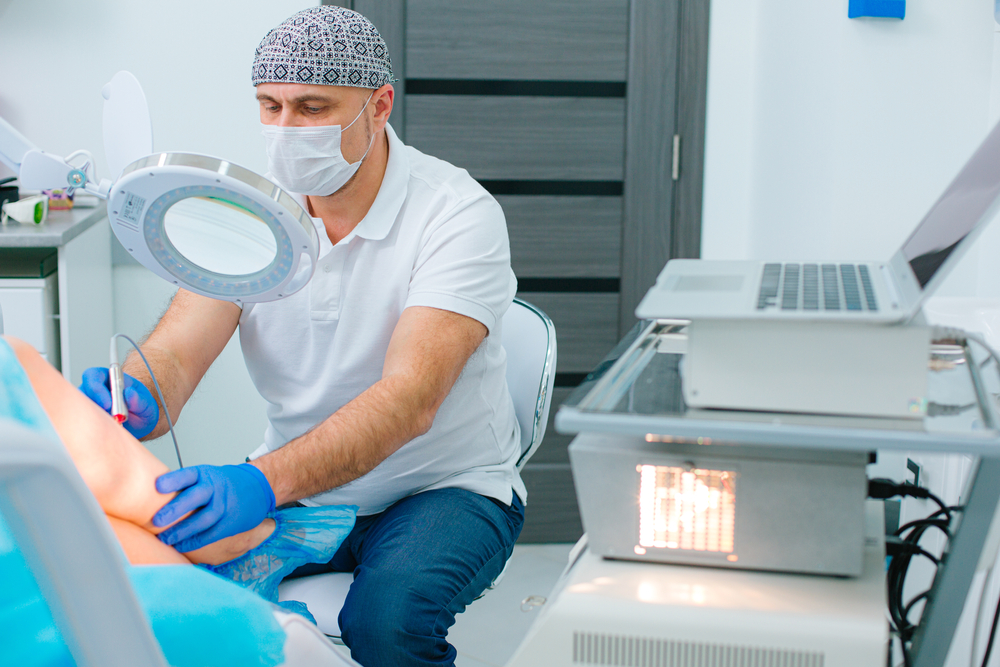
A premier Manhattan vein clinic will always have ultrasound capabilities on-site. The duplex ultrasound is the stethoscope of the vein doctor. It allows them to see beneath the skin and visualize the blood flowing through your veins.
Why is this crucial for spider veins? Because about 25% of people with “cosmetic” spider veins actually have underlying Chronic Venous Insufficiency (CVI). If you have vein symptoms in legs like heaviness, swelling, or aching, an ultrasound is mandatory before any cosmetic treatment begins.
If you go to a clinic for a consultation and they only look at your legs with the naked eye before booking a procedure, consider that a red flag. A true specialist will want to map your anatomy first. Learn more about comprehensive diagnostics at Manhattan vein treatment.
Experience with Specific Technologies
Vein treatment technology has evolved rapidly. You want a specialist who is proficient in the latest, minimally invasive techniques.
- Sclerotherapy: The gold standard for spider veins. The doctor injects a solution (sclerosant) into the vein to close it. Ask if they use “foam” sclerotherapy, which is often more effective for larger feeder veins. Visit the Spider Vein Treatment page for details on sclerotherapy.
- Cutaneous Lasers: Useful for tiny veins on the face or for patients afraid of needles.
- Endovenous Laser Ablation (EVLA) / Radiofrequency Ablation (RFA): These are treatments for the deeper, underlying veins. A comprehensive specialist should offer these if your spider veins are caused by deeper reflux. See all minimally invasive options at the Manhattan Vein Treatment page.
The Consultation: Your Interview Opportunity
Asking the Right Questions
Think of your consultation not just as a medical exam, but as an interview. You are hiring this doctor to perform a procedure on your body. Do not be afraid to ask direct questions.
Here are some questions to ask when you visit a vein specialist near me:
- “Is this primarily a cosmetic issue, or is there an underlying medical problem?” A good doctor will be honest. They won’t try to sell you a medical procedure if you don’t need it, but they also won’t ignore medical signs just to sell a cosmetic package. For more about the difference, see our Spider Vein Treatment page.
- “What specific treatment do you recommend and why?” Do they explain why sclerotherapy is better than laser for your specific leg? One-size-fits-all approaches rarely work in vascular medicine. Read about available options at Manhattan Vein Treatment.
- “Who performs the actual procedure?” Is it the doctor, a nurse practitioner, or a technician? If it’s not the doctor, ask about the training and supervision of the staff member.
- “What are the risks and side effects?” If a doctor says “there are no risks,” run. Every medical procedure has risks, such as bruising, staining (hyperpigmentation), or clotting. An honest doctor will prepare you for these possibilities. See what to expect in recovery on our Spider Vein Treatment information.
- “How many treatments will I likely need?” Be wary of promises of “one-and-done” results. Spider veins typically require multiple sessions. A realistic estimate manages your expectations.
If your main interest is the appearance of your veins, start by reading through our Spider Vein Treatment page for a thorough overview of the process, benefits, and what to expect from a qualified Manhattan vein clinic.
Evaluating the Clinic Environment
Pay attention to the atmosphere of the Manhattan vein clinic.
- Cleanliness: Is the facility sterile and well-maintained?
- Staff: Are the receptionists and nurses friendly and knowledgeable? You will be interacting with them as much as the doctor.
- Punctuality: Does the clinic respect your time? Manhattanites are busy; you don’t want to spend hours in a waiting room.
- Transparency: Are they clear about pricing? Cosmetic vein treatments are rarely covered by insurance, so you should get a clear, written quote before booking. More on the costs and expectations can be found on our Spider Vein Treatment page.
Red Flags to Watch Out For
The “Groupon” Trap
We all love a deal, but medical procedures are not the place to bargain hunt. You will often see heavily discounted spider veins treatments on daily deal sites. While some reputable clinics use these for marketing, proceed with caution.
Low prices often mean:
- Diluted sclerosing solution (less effective).
- Inexperienced providers.
- Rushed appointments.
- Hidden fees.
Remember, you are paying for the skill of the hand holding the needle. A botched sclerotherapy job can result in matting (a cloud of tiny red vessels), staining, or even skin ulcers. For details on choosing qualified providers and avoiding treatment complications, visit our Spider Vein Treatment page. It is often more expensive to fix a bad job than to pay for a good one initially.
High-Pressure Sales Tactics
A doctor’s office should not feel like a used car lot. If you feel pressured to sign up for a package of 10 treatments immediately, or if they try to scare you into booking a procedure by exaggerating the risks of your condition, take a step back. Instead, look for a provider who encourages you to learn more before making a decision—our manhattan vein clinic emphasizes patient education and empowerment.
A reputable vein specialist near me will educate you, give you their recommendations, and let you make the decision in your own time.
Ignoring Your Symptoms
If you tell the doctor, “My legs ache and throb at the end of the day,” and they ignore it and just offer to zap the spider veins, they are doing you a disservice. Those symptoms are classic signs of venous insufficiency. Treating the surface veins without investigating the pain is like painting over a water stain on the ceiling without fixing the leaky roof. A comprehensive evaluation at a chronic vein condition specialist near me is critical to addressing symptoms and the root cause.
Reading Reviews and Testimonials
The Power of Social Proof
In the digital age, patient reviews are a powerful tool. When researching a Manhattan vein clinic, look at Google Reviews, Yelp, and RealSelf to see what real patients are saying about their experiences.
However, read them with a critical eye.
- Look for patterns: Does everyone mention how gentle the doctor is? Or are there repeated complaints about billing issues or rude staff?
- Look for specifics: “Great doctor” is nice, but “Dr. Smith took the time to explain my ultrasound results and the bruising was gone in two weeks” is more helpful.
- Check the dates: Are the reviews recent? A clinic that was great five years ago might have changed management.
- Response to negative reviews: How does the clinic respond to complaints? Do they get defensive, or do they offer to rectify the situation professionally? This shows how they handle conflict and patient satisfaction.
For a deeper look at actual spider vein treatment outcomes and to see real-world patient feedback, explore the Fox Vein Care spider vein gallery and testimonials.
Before and After Photos
A picture is worth a thousand words. Most clinics will have a gallery of before-and-after photos on their website or in the office, such as the one available on the Fox Vein Care spider veins treatment page.
- Consistency: Look for photos that have consistent lighting and angles. It’s easy to make veins look better just by changing the exposure of the camera.
- Realism: Do the “after” photos look natural? Are the legs 100% perfect, or do they show realistic, significant improvement?
- Relevance: Look for patients who have skin types and vein patterns similar to yours.
The Importance of Location and Convenience
Why “Near Me” Matters
When you search for vein treatment near me, location is more than just a convenience factor—it’s a compliance factor. Spider vein treatments often require multiple sessions spaced 4-6 weeks apart.
If you choose a clinic that is an hour away or difficult to get to, you are more likely to skip appointments or delay your follow-ups. A Manhattan vein clinic that is centrally located, easily accessible by subway or car, makes it easier to stick to your treatment plan.
Furthermore, if you have any complications or concerns post-treatment, you want to be able to pop in for a quick check-up without it being a major logistical headache.
Navigating Insurance and Cost
Cosmetic vs. Medical Necessity
This is the most confusing part for many patients.
- Cosmetic: Treatment for spider veins that are painless and purely an aesthetic concern is almost never covered by insurance. You will pay out of pocket.
- Medical Necessity: If you have varicose veins or vein symptoms in legs (pain, swelling, ulcers) backed by ultrasound evidence of reflux, the treatment for the underlying cause (like EVLA) is often covered.
Sometimes, a patient has both. They need a medical procedure to close the saphenous vein (covered) and then cosmetic sclerotherapy to clean up the spider veins (not covered).
A high-quality vein specialist near me will have a knowledgeable billing department that can navigate these waters for you. They should be able to verify your benefits, explain what is covered, and provide a clear estimate for any out-of-pocket costs.
Transparency in Pricing
For cosmetic procedures, pricing can vary wildly in Manhattan. Costs may depend on:
- The experience of the provider.
- The location of the clinic.
- The number of vials of medication used.
- The time spent per session.
Ask exactly how they bill. Is it per session? Per leg? Per 15 minutes? Knowing this upfront prevents sticker shock at the front desk.
Beyond Veins: Comprehensive Care
The Whole-Patient Approach
The best vein specialists understand that the vascular system is connected to the rest of the body. They look at your overall health and tailor care to suit your unique needs. For a complete overview of available vein treatments, visit the Manhattan Vein Treatment page.
For example, many patients with leg pain assume it is all vein-related. However, knee pain is a common comorbidity. A patient might search for a knee specialist near me or a knee pain specialist near me only to find out their pain is a mix of arthritis and venous congestion.
Advanced vascular clinics, such as Fox Vein Care, now offer treatments like Genicular Artery Embolization (GAE) for knee osteoarthritis. If you are suffering from chronic knee pain doctor NYC visits haven’t fully resolved, a vascular specialist might offer a new perspective.
For patients seeking non-surgical knee pain relief, Genicular Artery Embolization (GAE) is one of the most advanced osteoarthritis treatments available today.
If you’re concerned about spider veins or want to learn more about the different treatment options, check out the Spider Veins Treatment page for detailed information.
Finding a specialist who understands these connections—between vein pain, joint pain, and arterial health—ensures you get holistic care, not just a cosmetic touch-up.
Conclusion: Trust Your Instincts
Choosing a specialist for spider veins is a personal decision. Credentials and technology are vital, but so is your gut feeling.
Do you feel heard? Do you feel safe? Do you trust the doctor’s judgment?
Your legs do a lot of work for you. They carry you through the busy streets of Manhattan every day. They deserve the best care possible. Don’t settle for a quick fix at a discount shop. Invest in a specialist who views vein care as both a science and an art.
If you are ready to take the next step, start by scheduling a consultation with a reputable Manhattan vein clinic like Fox Vein Care. Let them map your veins, explain your options, and tailor a plan that fits your body and your goals. Whether you want to get ready for summer shorts or simply want to relieve the ache of a long day, the right specialist is out there.
For more information on specific treatments and what a top-tier clinic offers, you can explore further here: https://foxvein.com/manhattan-vein-treatment/spider-veins/.
Frequently Asked Questions
1. Do I really need a specialist for spider veins?
While many providers offer vein treatments, a vascular specialist or phlebologist has the specific training to diagnose underlying issues that others might miss. This reduces the risk of recurrence and complications.
2. How do I know if a doctor is board-certified in veins?
You can check the American Board of Venous & Lymphatic Medicine website or the American Board of Surgery website. Most reputable doctors will also list their certifications clearly on their bio page.
3. What is the difference between a vein clinic and a med-spa?
A vein clinic is a medical facility overseen by a physician specialized in vascular conditions, equipped with diagnostic ultrasound. A med-spa focuses on aesthetic treatments and may not have the diagnostic tools or medical expertise to treat complex vein disease.
4. Will my consultation be covered by insurance?
If you are experiencing symptoms like pain, swelling, or heaviness, the consultation and ultrasound are typically covered by insurance as a medical evaluation. If it is purely for cosmetic advice, there may be a consultation fee. Always check with the clinic beforehand.
5. How many specialized vein doctors are in Manhattan?
Manhattan has a high concentration of medical professionals, but the number of board-certified vascular surgeons specializing specifically in venous disease is smaller than you might think. It is worth doing your research to find the best vein specialist near me.
Leading Manhattan Vascular & Vein Specialist
At Fox Vein Care, we provide state-of-the-art vascular and venous treatments, combining advanced diagnostic technology with minimally invasive procedures that prioritize comfort, safety, and outstanding results.
Contact Us