
Shockwave therapy is often presented as the step to try when stretching, inserts and injections have not been enough. So it is discouraging to finish a course and still have heel pain. Before you decide it failed, it helps to know what the trials really found, how long the treatment takes to show its effect, and which options are still open to you.
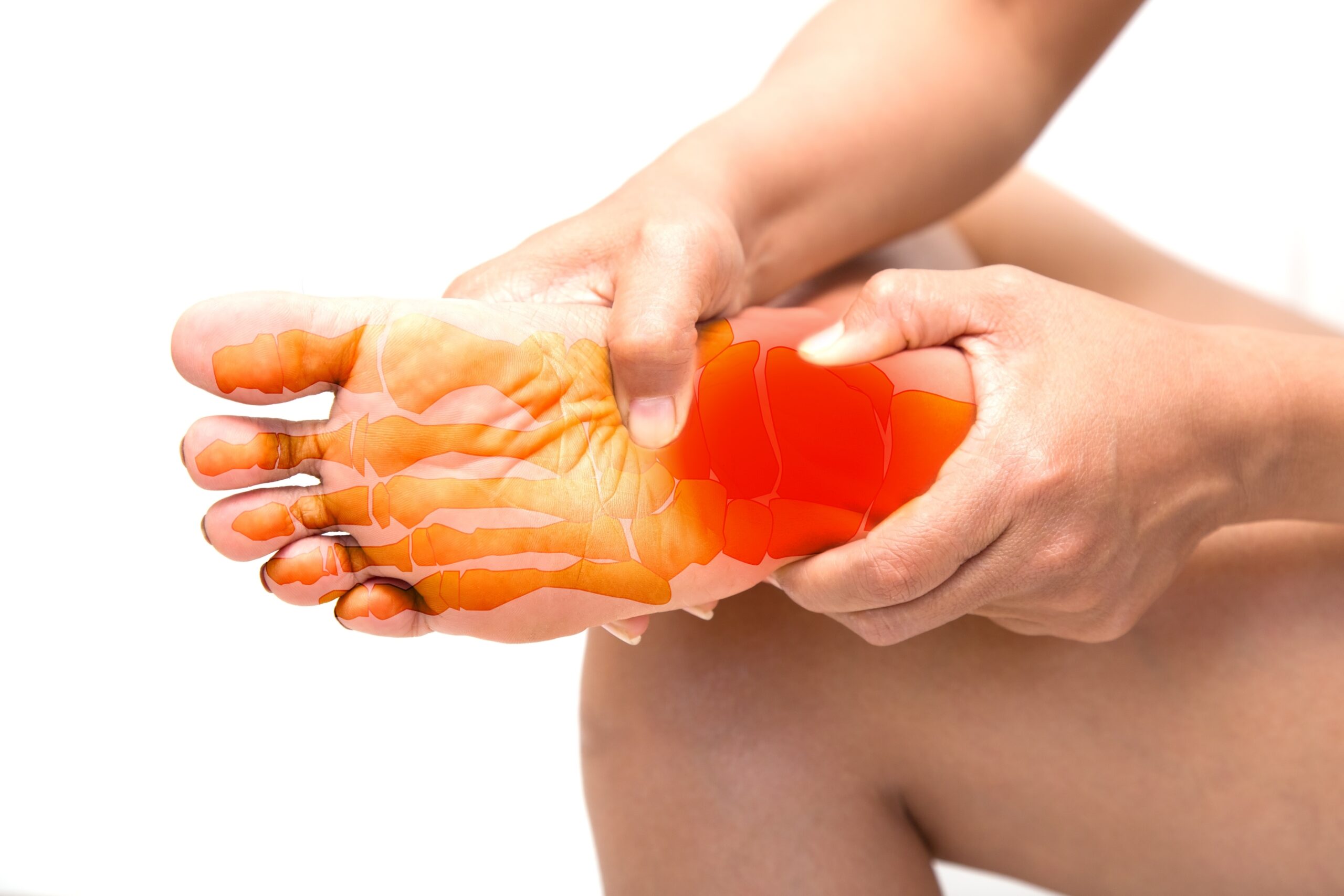
What shockwave therapy is meant to do
Extracorporeal shockwave therapy (ESWT) sends pulses of sound energy through the skin into the sore part of the plantar fascia. The aim is to prompt a healing response in tissue that has stalled. It is done in an office, usually in a few sessions about a week apart, with no incision.
There are two main types. Focused shockwave concentrates energy at a set depth in the tissue. Radial shockwave, sometimes called pressure wave therapy, spreads energy outward from the applicator at the skin. Clinics do not all use the same machine, energy level or number of pulses. A 2019 review in American Family Physician noted there is no consensus on the best intensity, type or protocol for plantar fasciitis.
What the trials show
The honest summary is that shockwave helps some people and not others, and the studies do not all agree.
| Study | Who was treated | Result |
|---|---|---|
| Gerdesmeyer et al., 2008 (radial, randomized, placebo-controlled) | 245 patients with chronic plantar fasciitis, 3 sessions | Overall success at 12 weeks: 61.0% with shockwave, 42.2% with placebo. The gap was larger at 12 months. |
| Gollwitzer et al., 2015 (focused, randomized, placebo-controlled) | 250 patients, 3 weekly sessions | Heel pain score fell 69.2% with shockwave and 34.5% with placebo at 12 weeks. The authors put success rates between 50% and 65%. |
| Buchbinder et al., 2002 (randomized, placebo-controlled) | 166 patients, 3 weekly sessions | Both groups improved. No significant difference between shockwave and placebo at 6 or 12 weeks. |
| Chuckpaiwong et al., 2009 (retrospective) | 225 patients with pain for more than 6 months | Success in 70.7% at 3 months and 77.2% at 12 months. |
Three things stand out. First, even in the positive trials, roughly 35% to 50% of people who got real shockwave did not meet the definition of success. Not responding is common, and it is not a sign you did something wrong. Second, the placebo groups improved a lot too, which tells you that time and the rest of your care are doing part of the work. Third, at least one careful trial found no benefit over placebo at all.
That mixed record is why the American Academy of Orthopaedic Surgeons says it is not clear that shockwave is helpful, while also noting that its low risk means it is sometimes tried before surgery is considered. In the 2015 trial, temporary pain and swelling during and after treatment were the only device-related side effects.
How long to wait before judging it
Longer than most people are told. The large trials did not measure their main result at the last session. They measured it 12 weeks after the last session. In the 2008 radial trial, the advantage over placebo was greater at 12 months than at 12 weeks, and in the 225-patient review the success rate was a little higher at 12 months than at 3 months.
A fair rule of thumb, based on how the trials were run: give it about three months after your final session before calling it a failure. If you are only a few weeks out, keep up your stretching and footwear habits and reassess later. If you are well past three months with no meaningful change, it is reasonable to move on.
Questions about your treatment options? Dr. Fox can help.
Book a ConsultationThis article is part of our Heel Pain Guide.
Focused or radial: does the type matter?
It might, but the research does not settle it. A 2017 pooled analysis of 9 trials with 935 patients concluded that focused shockwave relieved pain in chronic plantar fasciitis and that no firm conclusion could be drawn for radial. A 2018 network analysis of 19 trials with 1,676 patients came out the other way and recommended radial, with focused as an alternative.
When two large reviews reach opposite conclusions, the safest reading is that neither type has been proven better. If you had one type at a low energy setting, a course of the other is a possibility to discuss, but there is no trial showing that switching rescues people who did not respond the first time.
Why it may not have worked for you
- Dose. Energy levels varied widely across studies, and the trial that found no benefit has been questioned on that basis. Ask your provider what settings and how many pulses were used.
- Health factors. In the 225-patient review, diabetes, psychological issues and older age were linked to poorer results. Earlier cortisone shots, body weight, how long symptoms had lasted and fascia thickness were not.
- Timing. Shockwave is studied mainly for chronic cases. In a trial of 102 people with heel pain for six weeks or less, a stretching program beat radial shockwave at two months.
- The rest of the plan stopped. Shockwave does not loosen a tight calf or change your shoes.
- The diagnosis. Nerve entrapment, a stress fracture or a thinned heel pad will not respond to treatment aimed at the fascia. If your pain burns, tingles or is worst after long periods on your feet, ask for a re-evaluation.
What options remain
Not responding to shockwave does not leave you at surgery by default. Depending on what you have already tried, the next steps may include:
- Returning to supervised rehab with a physical therapist, with a program built around loading and stretching.
- Injection-based treatments, such as platelet-rich plasma, which the AAOS describes as still needing more research.
- Needle-based tissue procedures. We compare one of them with embolization in plantar fasciitis embolization vs. Tenex.
- Embolization. A catheter procedure that targets blood flow, not the fascia itself.
- Surgery. The AAOS says this is generally saved for people who have not improved after 12 months of aggressive nonsurgical care.
Our overview of alternatives to plantar fasciitis surgery walks through these in more depth, and the heel pain guide links to every related page.
Where embolization fits after shockwave
Plantar fasciitis embolization (PFE) takes a different route. Long-lasting plantar fasciitis can develop small abnormal blood vessels around the painful tissue. During PFE, a doctor guides a thin catheter through an artery under X-ray and reduces flow through those vessels. Our plantar fasciitis embolization page explains the procedure, and our embolization guide covers the wider approach.
Be clear about the evidence. Shockwave has been tested in randomized, placebo-controlled trials. PFE has not. Its support comes from small series: in a 2026 prospective study, 17 of 24 patients (70.8%) responded at 6 months, and in a 2026 retrospective study, 8 of 11 (72.7%) did. People in these studies had already tried other treatments, but the studies did not report results separately for people who had not responded to shockwave, and no study has compared the two directly. Our page on PFE vs. shockwave therapy sets them side by side.
PFE is also not suitable for everyone. Dr. Fox, a board-certified vascular surgeon, reviews your circulation, kidney health and any history of reactions to contrast dye before recommending it.
When to be seen urgently
Mild soreness or swelling after a shockwave session is expected. Get prompt medical attention if you have a sudden pop in the heel or arch with bruising, pain so severe you cannot bear weight, new numbness, a foot that turns cold or pale, fever with spreading redness, or deep pain at night that does not ease.
Frequently Asked Questions
How long does shockwave therapy take to work for plantar fasciitis?
The main trials measured results 12 weeks after the final session, and in one trial the benefit over placebo was larger at 12 months. It is reasonable to wait about three months after your last session before deciding it did not work.
What is the success rate of shockwave therapy for plantar fasciitis?
It varies by study. Two large randomized trials reported success in roughly 50% to 65% of treated patients at 12 weeks, while another randomized trial of 166 patients found no difference from placebo.
Is focused shockwave better than radial?
It is not settled. A 2017 analysis of 9 trials favored focused shockwave, and a 2018 analysis of 19 trials recommended radial. Neither type has been proven better.
Should I repeat shockwave therapy if it did not work?
There is no trial showing that a second course helps people who did not respond to the first. Ask what energy settings were used and discuss with your doctor whether a different approach makes more sense.
Can I have embolization after shockwave therapy?
Prior shockwave therapy does not by itself rule out embolization, but the decision depends on your diagnosis and overall health. Embolization evidence is early, from small studies without comparison groups.
Keep Reading
- Plantar Fasciitis Embolization (PFE) in Manhattan
- What If Plantar Fasciitis Embolization (PFE) Does Not Work?
- Which Doctor Should You See for Plantar Fasciitis?
- Why Plantar Fasciitis Keeps Coming Back
- Alternatives to Plantar Fasciitis Surgery: The Options Side by Side
- Heel Pain That Is Not Plantar Fasciitis: 8 Conditions That Mimic It
- Heel Pain Guide: causes, treatments and PFE
Sources
- Gerdesmeyer L et al., Am J Sports Med, 2008: Radial shock wave therapy for chronic plantar fasciitis, randomized placebo-controlled trial
- Gollwitzer H et al., J Bone Joint Surg Am, 2015: Focused shock wave therapy for chronic plantar fasciitis, randomized controlled trial
- Buchbinder R et al., JAMA, 2002: Ultrasound-guided shock wave therapy for plantar fasciitis, randomized controlled trial
- Chuckpaiwong B et al., J Foot Ankle Surg, 2009: Shock wave for chronic plantar fasciitis, 225 patients with outcome predictors
- Sun J et al., Medicine (Baltimore), 2017: Shock wave therapy in chronic plantar fasciitis, meta-analysis of randomized trials
- Li X et al., Medicine (Baltimore), 2018: Shock wave and other physical therapies for plantar fasciitis, network meta-analysis
- Rompe JD et al., J Bone Joint Surg Am, 2010: Plantar fascia-specific stretching versus radial shock-wave therapy as initial treatment
- American Family Physician, 2019: Plantar fasciitis (review)
- American Academy of Orthopaedic Surgeons, OrthoInfo: Plantar fasciitis and bone spurs
- Gill S et al., J Vasc Interv Radiol, 2026: Transarterial embolization for plantar heel pain, 6-month prospective case series
- Kumar N et al., J Vasc Interv Radiol, 2026: Superselective embolization for refractory plantar fasciitis (retrospective, 12 patients)
Medically reviewed by David Fox, MD, FACS, RPVI. This article is general information, not a substitute for a medical evaluation.
Living with joint or tendon pain that hasn’t improved? Schedule a consultation with Dr. David Fox at Fox Vein & Vascular in Manhattan to find out whether embolization is right for you. Call (212) 362-3470 or request an appointment online.
