If you are considering hip embolization, it is natural to wonder how much it will hurt. The honest answer is that most people describe it as manageable, but it is not painless, and the hip has been studied in far fewer patients than the knee. This article explains what you are likely to feel before, during and after the procedure, based on what published hip studies report. For background on the treatment itself, see our main hip embolization page.
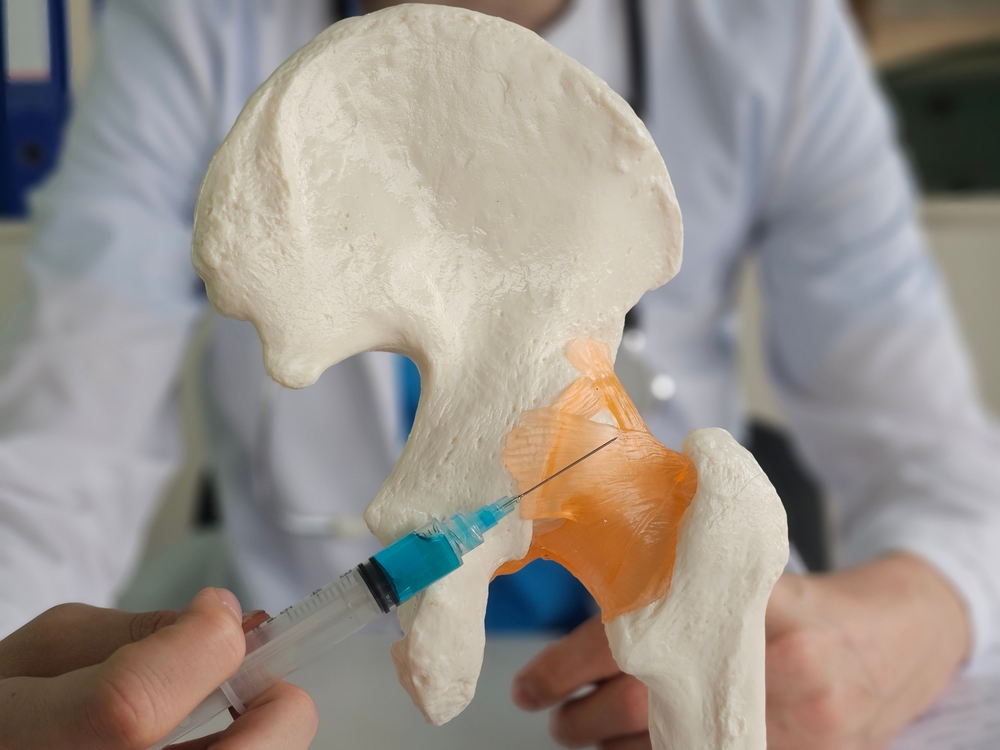
The short answer
Hip embolization is done through a small needle puncture in an artery, usually in the groin or the arm, not through an incision in the hip. The skin over the artery is numbed with local anesthetic. Most people feel a brief sting from the numbing medicine, some pressure, and possibly a short flare of their familiar hip ache while the doctor tests the target vessels. Afterward, soreness around the hip and at the puncture site is common for a few days. Lasting, severe pain is not typical in the published reports, but it can happen.
Numbing and sedation
In the hip studies published so far, the procedure was done under local anesthesia, meaning the puncture site is numbed and you stay awake. A 2022 Brazilian study of 13 patients deliberately used no sedation at all, so patients could fully cooperate and report what they felt during the procedure. A 2026 study from Berlin also relied on real-time feedback from patients.
Why would doctors want you awake? Being able to talk helps the team. If a small vessel being tested reproduces your usual pain, that can help confirm it supplies the painful area. If you feel tingling or numbness down the leg, the doctor can stop and reassess, because nerves near the hip share some of the same small arteries.
Some practices offer light sedation to help you relax. Ask your doctor what they use and why.
What you may feel during the procedure
- The numbing injection. A quick sting and burning feeling for a few seconds at the groin or arm.
- Pressure, not sharp pain, as a thin tube called a catheter is placed into the artery. Arteries do not have much sensation on the inside, so most people do not feel the catheter moving.
- A warm feeling when contrast dye is injected for X-ray pictures. This passes in seconds.
- A brief return of your usual hip ache. In the Berlin study, one way the team chose a target vessel was whether injecting it reproduced the patient's familiar hip pain. That pain eases once the injection stops.
- Lying still on your back for the length of the procedure, which some people with hip pain find uncomfortable. Tell the team if you need padding or a position change.
As for how long it takes, the Berlin study of 41 patients reported a median procedure time of about 42 minutes from artery access to removal of the sheath. Preparation and recovery time add to that.
Questions about your treatment options? Dr. Fox can help.
Book a ConsultationThis article is part of our Embolization Guide.
What you may feel in the first day or two
Once the catheter is removed, pressure or a closure device is used to seal the artery. What follows is usually mild, but here is what has been reported:
- Soreness or aching around the hip. A 2026 comparison study listed short-lived pain after the procedure as one of the expected effects.
- Tenderness or bruising at the puncture site. Small bruises or collections of blood under the skin (hematomas) were the most common side effect across several hip studies. In the HipE study of 49 patients, two had minor groin hematomas.
- Skin color change over the hip. In the Berlin study, 3 of 41 patients (7.3%) had temporary skin discoloration, and it went away within 24 hours in all of them.
Published hip studies handled the first hours differently. In the 2025 pilot study, which used an artery in the arm, patients were watched for at least four hours, with checks of the puncture site and leg nerves and circulation, and then went home. In the Berlin study, which used the groin, patients stayed overnight and had an ultrasound of the groin the next morning before discharge. Your plan for the first night depends on the practice, the access site and your health.
Could pain last longer than a few days?
Occasionally. The best data on this question come from other joints, not the hip. A 2025 Japanese study of 431 patients treated in the knee, shoulder, elbow, foot and other joints found that pain at the treated area lasting more than seven days happened in about 6% to 22% of patients, depending on the type of temporary embolic material used. It was more common in the elbow. Whether the hip behaves the same way is not known.
A different kind of discomfort has also been reported in the hip: numbness in the back of the thigh. Two of 13 patients in one study and two of 31 in a follow-up study had this, and it improved on its own within 30 days. Our article on hip embolization risks and side effects covers these in more detail.
When does the hip pain itself start to ease?
Relief, when it comes, is often gradual. In a 2025 pilot study of 18 older adults with hip arthritis, average pain scores dropped from 7.8 to 4.2 out of 10 by one week and stayed near that level at 12 weeks. A 2026 comparison study found the largest drop happened in the first three months, then leveled off. Not everyone improves. In the Berlin study, about 64% of patients reached a meaningful reduction in pain at 12 months, which means roughly one in three did not. For a week-by-week view, see our hip embolization recovery timeline.
Making the experience more comfortable
- Ask ahead whether you will have sedation and whether you need a driver.
- Tell the team about back or hip pain that makes lying flat hard. Simple padding can help a lot.
- Follow the instructions you are given about blood thinners, eating and drinking before the procedure.
- Ask what pain medicine you can use afterward and for how long.
- Plan a quiet day or two, and keep the puncture site clean and dry as instructed.
When to call the office right away
Contact your doctor promptly, or seek urgent care, if you notice a growing, painful lump at the puncture site, bleeding that does not stop with firm pressure, a cold, pale or numb leg or hand, fever, a dark or worsening patch of skin over the hip, or numbness or weakness in the leg that is getting worse rather than better. These are uncommon but should be checked quickly.
To see how hip embolization fits with other joint procedures, visit our embolization guide.
Frequently Asked Questions
Will I be asleep for hip embolization?
In published hip studies the procedure was done under local anesthesia with the patient awake, and one study used no sedation so patients could report what they felt. Some practices offer light sedation, so ask your doctor what they use.
How long does hip embolization take?
In a 2026 study of 41 patients, the median procedure time was about 42 minutes. Check-in, preparation and observation afterward add more time.
Is the recovery from hip embolization painful?
Most people have mild soreness around the hip and at the puncture site for a few days. In studies of other joints, pain lasting more than a week happened in a minority of patients, and the hip has not been studied as closely.
Why might the doctor want me awake?
Being awake lets you tell the team if testing a small artery reproduces your usual pain or causes tingling down the leg. That feedback helps target the right vessels and avoid nearby nerves.
Keep Reading
- Hip Embolization in Manhattan
- Hip Arthritis: Symptoms, Diagnosis and Treatment Options
- Hip Embolization: Am I a Candidate?
- Hip Embolization Recovery Timeline
- Hip Embolization Research: What the Studies Show
- Hip Embolization Risks and Side Effects: What Studies Report
- Embolization Guide: knee, heel, shoulder, elbow and hip
Sources
- Fleckenstein et al., Cardiovasc Intervent Radiol, 2026 — Transarterial embolization for symptomatic hip osteoarthritis (41 patients)
- Correa et al., Cardiovasc Intervent Radiol, 2022 — 6-month follow-up of lateral femoral circumflex artery embolization for hip OA and GTPS (13 patients)
- Giordani et al., Cardiovasc Intervent Radiol, 2025 — Latino-Hip registry: midterm follow-up of embolization for GTPS (31 patients)
- Cavalheiro, Marinho Lopes et al., Cardiovasc Intervent Radiol, 2026 — HipE study: hip embolization for hip OA and GTPS, 12-month follow-up
- Feier et al., Cureus, 2025 — Periarticular embolization via brachial access in older adults with hip OA: pilot study (18 patients)
- Feier, Bloj et al., J Clin Med, 2026 — Periarticular embolization vs conservative care in surgery-ineligible hip OA (prospective comparative study)
- van Zadelhoff, Okuno et al., J Vasc Interv Radiol, 2025 — Safety of 3 temporary embolic agents in joint embolization (431 patients, non-hip joints)
Medically reviewed by David Fox, MD, FACS, RPVI. This article is general information, not a substitute for a medical evaluation.
Living with joint or tendon pain that hasn’t improved? Schedule a consultation with Dr. David Fox at Fox Vein & Vascular in Manhattan to find out whether embolization is right for you. Call (212) 362-3470 or request an appointment online.