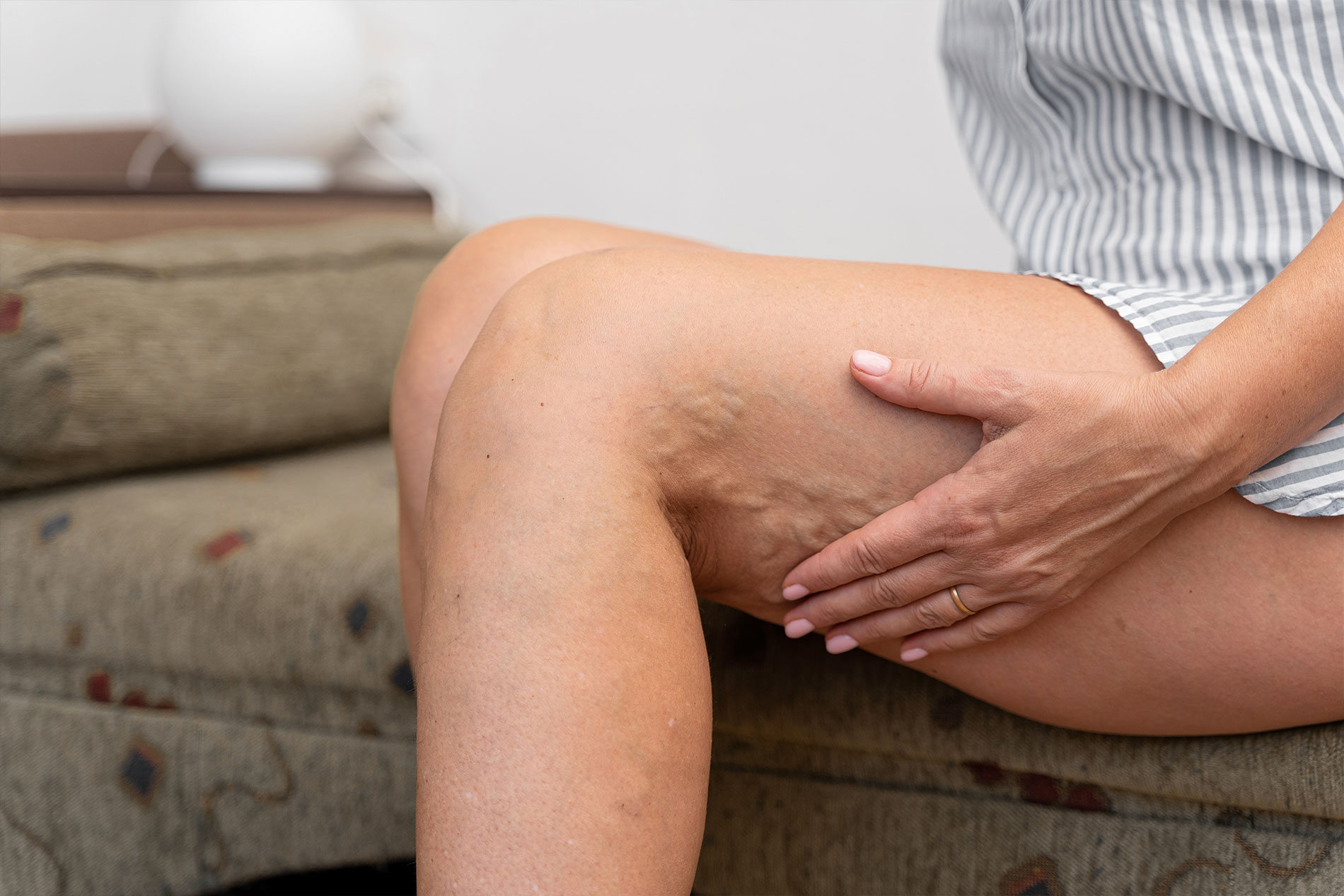
Not too long ago, the primary solution for varicose veins was a daunting surgical procedure known as “vein stripping.” It involved a hospital stay, general anesthesia, multiple incisions, and a long, painful recovery. The very thought of this process caused countless people to endure years of pain, swelling, and discomfort, choosing to live with their vein disease rather than face the treatment. Today, that world of vein care is a distant memory. The field of phlebology has been completely transformed by technological innovation.
Modern vein treatment is now characterized by minimally invasive, highly effective procedures performed in a comfortable office setting with little to no downtime. This remarkable shift is no accident; it’s the direct result of specific technological advancements that have revolutionized how vein specialists diagnose and treat venous disease. From advanced imaging that allows doctors to see inside the body to sophisticated energy sources that seal veins from within, technology has made vein care safer, more comfortable, and more successful than ever before.
For a deeper look at the comprehensive treatments now available, you can explore more about Manhattan vein treatment.
Additionally, as you read about procedures such as Endovenous Laser Therapy, sclerotherapy, and phlebectomy, you can find detailed descriptions and what to expect on the Manhattan vein treatment page. This resource outlines the various minimally invasive options offered by Dr. Fox to address vein issues both cosmetically and medically.
Later in this article, when we discuss the patient benefits and evolving technologies, you’ll discover many of these advancements are featured at Fox Vein and Vascular. If you want to compare treatments or see real patient testimonials, visit their comprehensive treatment page to learn more about individualized plans for lasting results and improved well-being.
For those considering their first step toward treatment, scheduling a consultation through the Manhattan vein treatment portal provides easy access to expert evaluation. This ensures each patient receives personalized care and guidance on the most advanced procedures available in Manhattan.
This article will explore the key technologies that have redefined modern vein care. We will delve into how these innovations are used, from initial diagnosis to final treatment, and highlight the profound benefits for patients. Understanding this evolution will show you why seeking help from a vein specialist in Manhattan is no longer something to fear, but rather a simple step toward a healthier, more comfortable life.
The Diagnostic Revolution: The Power of Ultrasound
Perhaps the single most important technological advancement in vein care is the use of duplex ultrasound. Before its widespread adoption, doctors had to rely on physical exams and patient-reported symptoms alone. This was like trying to fix a plumbing issue without being able to see the pipes. You could see the external signs of a problem, but you couldn’t pinpoint the exact source of the leak. Duplex ultrasound changed everything, giving specialists a clear window into the body’s vascular system.
What is Duplex Ultrasound?
Duplex ultrasound is a non-invasive imaging technique that combines two types of ultrasound technology:
- Standard B-mode Ultrasound: This creates a two-dimensional, black-and-white image of the structures inside the body, such as the veins, muscles, and surrounding tissues. This allows the specialist to visualize the anatomy of your venous system, mapping out the location and size of different veins.
- Doppler Ultrasound: This measures the flow of blood through the vessels. It uses color-coding (Color Doppler) to show the direction and speed of blood flow. Blood flowing toward the ultrasound probe might appear red, while blood flowing away appears blue. This allows the doctor to see, in real-time, if blood is flowing correctly toward the heart or if it is flowing backward (refluxing) through a faulty valve.
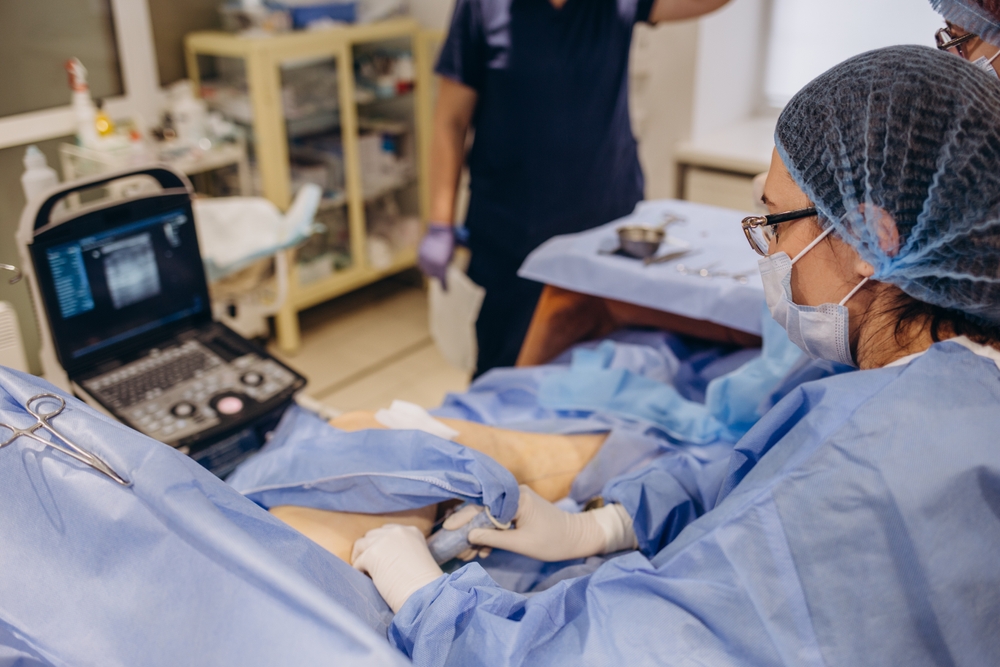
During a diagnostic ultrasound exam for venous insufficiency, a patient will stand while a technician applies a gel to the leg and moves a small handheld device called a transducer over the skin. The transducer emits sound waves and records the echoes that bounce back, creating the live images on a screen. The specialist will often gently squeeze the calf to simulate the muscle pump and observe how the vein valves respond.
The Impact of Ultrasound on Diagnosis and Treatment Planning
The information gained from a duplex ultrasound is invaluable and forms the foundation of every modern vein treatment plan.
- Accurate Diagnosis: Ultrasound provides definitive proof of chronic venous insufficiency (CVI). A doctor can directly observe the faulty valves and measure the duration of the reflux, confirming that a medical issue exists beyond the cosmetic appearance of varicose veins.
- Precise Mapping: The ultrasound creates a detailed “road map” of the patient’s unique venous anatomy. It identifies the exact veins that have failed and are causing the problem. Often, the source of the issue is a large, deep vein like the great saphenous vein (GSV), which is not visible on the surface. Without ultrasound, treating only the visible surface veins would be like trimming the leaves of a dying weed without pulling out the root.
- Personalized Treatment Strategy: Armed with this detailed map, a chronic vein condition specialist near me can devise a highly specific and effective treatment plan. They know which veins need to be treated, their size and depth, and the best procedure to use for each one. This level of precision was unimaginable in the era of vein stripping.
Furthermore, ultrasound technology is not just for diagnosis; it is an essential tool during the treatment itself. Procedures like endovenous laser therapy are performed under constant ultrasound guidance, ensuring the safe and accurate placement of the treatment device within the targeted vein.
The Endovenous Revolution: Treating Veins from the Inside
The next great leap forward was the development of endovenous (“inside the vein”) thermal ablation techniques. These technologies provided a way to close the main source of varicose veins—the large, refluxing truncal veins like the GSV—without surgically removing them. Endovenous Laser Therapy (EVLT) and Radiofrequency Ablation (RFA) were the pioneering procedures in this space.
Endovenous Laser Therapy (EVLT)
EVLT is now considered the gold standard for treating incompetent saphenous veins. It is a minimally invasive procedure performed in-office and has fundamentally replaced vein stripping for the vast majority of patients.
How it Works:
- The area is numbed using local anesthetic.
- Using ultrasound guidance, the vein specialist makes a tiny entry point, usually near the knee.
- A very thin, flexible laser fiber is inserted through this entry point and threaded up into the diseased vein to its highest point of reflux.
- More local anesthetic (tumescent anesthesia) is injected along the length of the vein. This numbs the area, protects surrounding tissues from the heat, and gently compresses the vein around the laser fiber for better contact.
- The laser is activated, and the fiber is slowly withdrawn. The laser emits a precise beam of energy that heats the vein wall, causing it to collapse and seal shut permanently.
The entire procedure typically takes less than an hour. Once the diseased vein is sealed, the blood that was pooling in it is naturally and immediately rerouted to the network of healthy veins. This instantly resolves the underlying pressure problem, leading to a rapid improvement in symptoms.
The Benefits of Endovenous Technology
The shift from vein stripping to endovenous ablation has been a game-changer for patients. The benefits are dramatic:
- Minimally Invasive: It requires only a tiny entry point, not a long incision in the groin. This means less pain, minimal to no scarring, and a much lower risk of infection.
- No General Anesthesia: The procedure is performed using only local anesthetic, which eliminates the risks associated with general anesthesia and allows for a much quicker recovery.
- In-Office Procedure: Patients can have the treatment performed in the comfort and convenience of a specialized Manhattan vein clinic rather than a hospital operating room.
- Immediate Return to Activity: Patients are encouraged to walk immediately after the procedure and can typically resume normal daily activities the same or the next day. This is a stark contrast to the weeks of recovery needed after vein stripping.
- High Success Rates: Long-term studies show that EVLT has a success rate of 95-98% in closing the treated vein, making it not only more convenient but also more effective than traditional surgery.
Advances in Chemical Ablation: The Science of Sclerotherapy
Sclerotherapy is a procedure that has been around for many years, primarily for treating small spider veins. However, technology has enhanced this technique as well, expanding its use and improving its effectiveness. Sclerotherapy involves injecting a medical solution, called a sclerosant, directly into a vein. The solution irritates the inner lining of the vein, causing it to swell, stick together, and eventually close off. The body then gradually absorbs the treated vein.
Ultrasound-Guided Foam Sclerotherapy
One of the most significant advancements is the combination of sclerotherapy with ultrasound and the use of foam. Instead of a standard liquid sclerosant, a specialist can create a foam by mixing the solution with a small amount of gas (like air or CO2).
Why Foam is a Technological Improvement:
- Better Vein Contact: The foam has a thicker consistency than liquid, allowing it to push blood out of the way and have better, more uniform contact with the entire vein wall. This results in a more effective and complete closure.
- Increased Potency: Because it displaces blood, the sclerosant is not diluted as quickly, allowing a smaller amount of the medication to be used more effectively.
- Visibility on Ultrasound: The micro-bubbles in the foam are visible on an ultrasound screen. This allows the specialist to perform ultrasound-guided foam sclerotherapy, where they can watch the foam being injected and guide it precisely into larger, deeper varicose veins that are not visible on the surface.
This technology has expanded the application of sclerotherapy far beyond small spider veins. It is now an effective tool for treating medium-sized varicose veins and can sometimes be used as an alternative to thermal ablation or in combination with it to treat complex vein networks.
The Future of Vein Care: Continuous Innovation
The technological advancements in vein care are not stopping. The field continues to evolve with new devices and techniques designed to further improve patient comfort, safety, and outcomes.
Non-Thermal, Non-Tumescent (NTNT) Techniques
While EVLT is incredibly effective, it does involve heat and requires the injection of tumescent anesthesia. The newest wave of technology aims to close veins without using heat and without the need for multiple anesthetic injections.
- VenaSeal™ Closure System: This system uses a medical-grade adhesive (a cyanoacrylate-based glue) to physically shut the diseased vein. Using a tiny catheter, the specialist delivers small “drops” of the adhesive along the vein, pressing down with the ultrasound probe to seal it. The procedure is very fast and requires only a single injection of local anesthetic at the entry site.
- Mechanochemical Ablation (MOCA): Devices like ClariVein® use a combination of mechanical and chemical methods. A special catheter with a rotating wire at its tip is inserted into the vein. The rotating wire gently damages the vein’s inner lining while simultaneously spraying a liquid sclerosant, leading to a quick and effective closure.
These NTNT methods offer even greater patient comfort during the procedure and may eliminate the need for post-procedure compression stockings in some cases, further simplifying the patient experience.
Partnering with a Technologically Advanced Specialist
The incredible progress in vein treatment technology has made getting relief from varicose veins and CVI easier and more accessible than ever. However, technology is only as good as the person wielding it. The success of these advanced procedures is highly dependent on the skill, knowledge, and experience of the physician.
This is why choosing the right specialist is so important. You need a vein specialist in Manhattan who is not only familiar with these technologies but is an expert in their application. A board-certified vascular surgeon like Dr. David Fox possesses a deep understanding of the entire circulatory system and has the extensive training required to master these sophisticated tools.
A top-tier clinic like Fox Vein and Vascular invests in the latest proven technologies and offers a full spectrum of treatment options. This allows them to create a truly personalized vein care treatment Manhattan plan, selecting the ideal technology—or combination of technologies—for your specific condition.
Don’t let outdated fears of painful surgery keep you from addressing your vein health. The technological revolution in phlebology means that you can achieve lasting relief from pain and discomfort through a quick, comfortable, and highly effective office-based procedure. Schedule a consultation to learn how modern technology can help you restore the health and beauty of your legs.
Leading Manhattan Vascular & Vein Specialist
At Fox Vein Care, we provide state-of-the-art vascular and venous treatments, combining advanced diagnostic technology with minimally invasive procedures that prioritize comfort, safety, and outstanding results.
Contact Us