Genicular Artery Embolization (GAE) offers a remarkable breakthrough osteoarthritis treatment for those suffering from chronic knee pain. By targeting and reducing the inflammation that drives pain, this minimally invasive procedure can dramatically improve your quality of life, allowing you to move with a freedom you may not have felt in years. If you want a more detailed overview about how the procedure works, visit our GAE procedure information page for further details. However, achieving significant pain relief is just the first step. To truly maximize and prolong the incredible benefits of GAE, it is essential to pair this advanced medical treatment with a strategic exercise program.
Movement is medicine. While the GAE procedure quiets the inflammatory storm inside your knee, targeted exercise rebuilds the strong, stable foundation your joint needs to function optimally. Years of living with knee pain often lead to muscle weakness, stiffness, and poor movement patterns. Correcting these issues after GAE is the key to transforming short-term relief into long-term functional improvement.
At Fox Vein and Vascular, we see our patients’ GAE treatment as a partnership. Dr. David Fox provides the state-of-the-art intervention to eliminate the pain, and you provide the commitment to rebuilding your strength. This guide will walk you through the types of exercises that best support GAE outcomes, explaining why movement is so critical and how you can safely and effectively get started on the path to a stronger, more resilient knee.
The Goal of Post-GAE Exercise: Beyond Pain Relief
Before your GAE procedure, exercise was likely a painful, frustrating experience. The goal was simply to get through it. After GAE, the entire purpose of exercise changes. With the inflammatory pain significantly reduced, you are no longer just “managing” your knee; you are actively rehabilitating and strengthening it.
The primary goals of a post-GAE exercise program are:
- Strengthening Supporting Muscles: The muscles around your knee—quadriceps, hamstrings, glutes, and calves—act as crucial shock absorbers and stabilizers. Years of OA pain often cause these muscles to weaken (atrophy), placing more stress on the joint itself. Rebuilding this muscular “scaffolding” is the most important thing you can do to protect your knee.
- Improving Range of Motion: Chronic pain and inflammation lead to stiffness. Gentle movement helps to restore flexibility, allowing your knee to bend and straighten more fully and fluidly.
- Enhancing Proprioception: Proprioception is your body’s awareness of its position in space. OA can disrupt the nerve signals between your knee and your brain, leading to a feeling of instability. Specific exercises can retrain these pathways, making your knee feel more stable and trustworthy.
- Promoting Cartilage Health: While GAE does not regrow cartilage, movement is essential for the health of your remaining cartilage. The cartilage in your joints has no direct blood supply. It gets its nutrients from the synovial fluid inside the joint. The gentle compression and release of movement—like a sponge being squeezed—is what circulates this fluid, nourishing the cartilage and keeping it as healthy as possible.
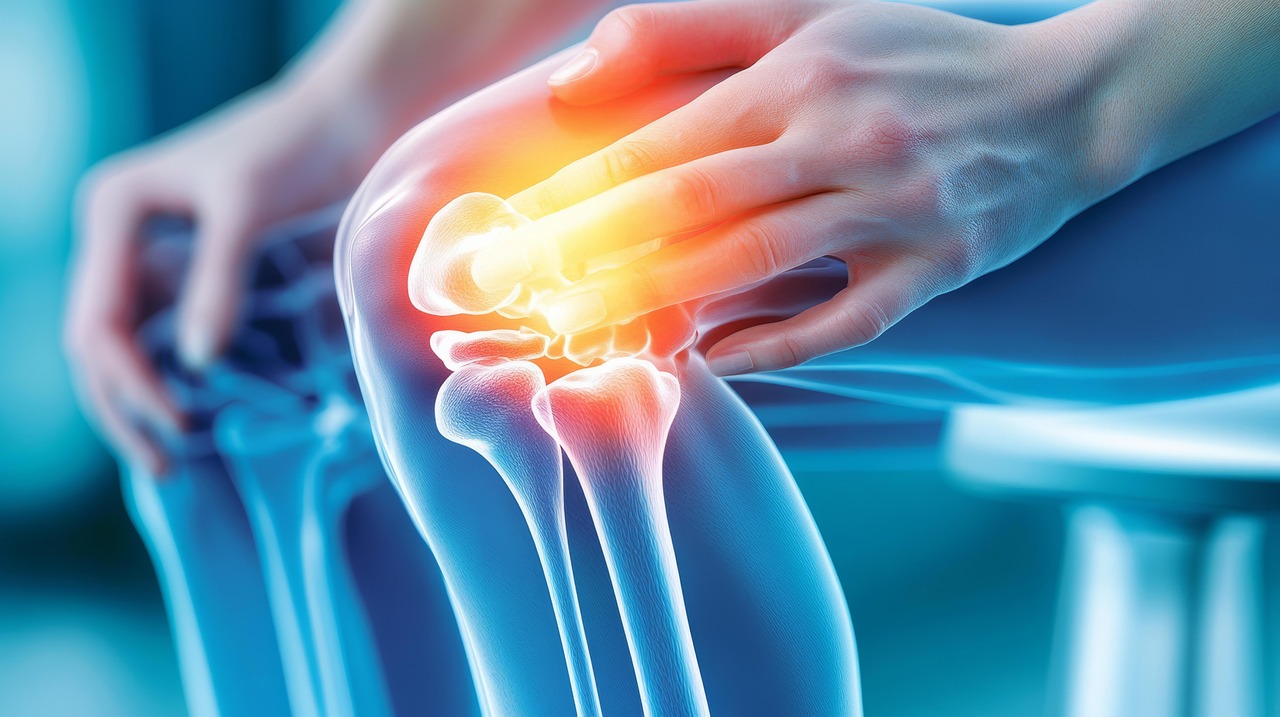
Getting Started: The First Few Weeks After GAE
One of the greatest benefits of the GAE procedure is the rapid recovery. You will walk out of the office the same day. However, it’s important to respect the healing process.
- Days 1-3 (The Rest and Recovery Phase): Your body has undergone a procedure, and the access site (usually in the ankle or groin) needs to heal. Focus on rest. You can and should walk around your home, but avoid any strenuous activity. Gentle ankle pumps (flexing your foot up and down) can help promote circulation.
- Days 4-14 (The Gentle Activation Phase): As any minor soreness subsides, you can begin to introduce gentle, non-weight-bearing exercises. The goal here is simply to get the joint moving and start activating the muscles without stressing them.
- Heel Slides: Lie on your back and slowly slide the heel of your treated leg toward your buttock, bending the knee as far as is comfortable. Then slowly straighten it back out.
- Quad Sets: Lie down with your leg straight. Tighten the large muscle on the front of your thigh (the quadriceps) and hold for 5-10 seconds. You should feel your kneecap pull upward slightly.
- Straight Leg Raises: Lie on your back with your untreated leg bent. Keeping your treated leg straight and your quad tight, slowly lift the leg about 12 inches off the floor. Hold for a moment, then slowly lower it.
Always listen to your body. These exercises should not be painful. If you feel sharp pain, stop.
The Core Program: Building Strength with Low-Impact Exercise
After the first couple of weeks, you can begin to build a more structured program. The guiding principle for post-GAE exercise is low-impact. High-impact activities like running or jumping can put excessive stress on the joint. Low-impact exercises build strength and cardiovascular fitness without the jarring force.
1. Aquatic Exercise (The Gold Standard)
If you have access to a pool, water-based exercise is the single best activity you can do for your knee. The buoyancy of the water supports your body weight, removing almost all impact from the joint. This allows you to strengthen your muscles and improve your range of motion in a virtually pain-free environment.
- Water Walking/Jogging: Simply walking or jogging in chest-deep water provides excellent resistance for your leg muscles.
- Leg Swings: Hold onto the side of the pool and gently swing your leg forward and backward, and side to side.
- Water Aerobics Classes: These are a fun and effective way to get a full-body workout.
2. Stationary Cycling
A stationary bike is another fantastic tool for knee rehabilitation. It provides a smooth, controlled, circular motion that is very gentle on the joint.
- Start with no resistance: Your initial goal is just to get your knee moving through the full range of motion.
- Adjust seat height: Make sure the seat is high enough so that your knee is almost, but not quite, straight at the bottom of the pedal stroke.
- Gradually add resistance: As you get stronger, you can slowly increase the resistance to build strength in your quadriceps and hamstrings.
3. Strength Training (Focus on Form)
Building muscle is essential. A formal strength training program, guided by a physical therapist or a knowledgeable trainer, is highly recommended. To learn more about how physical therapy can enhance your results, check out our resources on improving GAE outcomes.
Key exercises include:
- Glute Bridges: Lie on your back with your knees bent. Squeeze your glutes and lift your hips off the floor until your body forms a straight line from your shoulders to your knees. This strengthens your glutes, which are critical for stabilizing your pelvis and knees.
- Wall Sits: Lean your back against a wall and slide down until your knees are at a 45 to 90-degree angle, as if you are sitting in a chair. Hold this position. It is an excellent way to build quadriceps strength without putting pressure on the knee joint.
- Step-Ups: Using a low step or stair, step up with your treated leg, then step back down. This is a functional exercise that mimics stair climbing.
- Hamstring Curls: These can be done standing or using a machine at the gym. They isolate and strengthen the muscles on the back of your thigh.
4. Balance and Proprioception Exercises
Retraining your knee’s sense of stability is vital.
- Single-Leg Stance: Simply try to stand on one leg near a counter or wall for support. Start with 10-15 seconds and build up to a minute. To make it harder, you can close your eyes.
- Tai Chi: This ancient martial art involves slow, flowing movements that are excellent for improving balance, flexibility, and body awareness.
Questions about your treatment options? Dr. Fox can help.
Book a ConsultationEnhancing Your GAE Results for the Long Term
The relief you feel after Genicular Artery Embolization is your window of opportunity. By committing to a consistent exercise program, you can fortify your knee against future stress and pain.
- Consistency is Key: It is far better to exercise for 20-30 minutes three to four times a week than to do one long, intense session once a week.
- Listen to Your Body: It’s normal to feel muscle soreness after a workout. It is not normal to feel sharp, stabbing pain in the joint. Learn to distinguish between “good” muscle pain and “bad” joint pain.
- Consider Professional Guidance: Working with a physical therapist who understands knee osteoarthritis can be invaluable. They can design a program tailored specifically to your weaknesses and goals, ensuring you are performing exercises with proper form.
At Fox Vein and Vascular, we want to ensure you are a good candidate for GAE and that you have all the tools for success afterward. For more details about candidacy, visit our GAE candidacy information page. Part of our comprehensive approach involves discussing how a return to activity fits into your recovery plan.
Why Vascular Expertise is Your First Step
Before you can even begin this strengthening journey, you need to address the pain. That’s where Dr. Fox’s expertise comes in. As a board-certified vascular surgeon with 28+ years of experience, he has mastered the intricate arterial interventions that define the GAE procedure. His deep understanding of the vascular system allows him to safely and precisely target the source of your inflammation.
By choosing a specialist like Dr. Fox, you ensure that your procedure is performed with the highest level of skill, setting you up for the best possible outcome. This allows you to confidently transition from a state of pain to a state of active rehabilitation. Our practice is a destination for patients across Manhattan, the 5 Boroughs, Nassau, Suffolk, South Western Ct., and North East NJ, who are seeking the most advanced, non surgical knee pain treatment. For more information about our treatment options and how we personalize care for each patient, visit our non-surgical knee pain relief page to learn more.
For patients seeking non-surgical knee pain relief, Genicular Artery Embolization (GAE) is one of the most advanced osteoarthritis treatments available today.
Your New Beginning Starts After GAE
Think of your GAE procedure as clearing the path. The inflammation that was blocking your way has been removed. Now, it’s up to you to walk that path and rebuild your strength. Exercise is not just a suggestion; it is an integral part of the treatment, the essential follow-through that solidifies your results.
By embracing a smart, low-impact exercise program, you can strengthen the muscles that protect your joint, improve your mobility, and ensure that the incredible pain relief from GAE translates into years of improved function and a return to the active life you love.
Ready to clear the path to a pain-free life? Schedule a consultation with Dr. Fox to learn if GAE is the right first step for you.
Fox Vein and Vascular – Manhattan, NY
📞 (212) 362-3470
🌐 foxvein.com
📍 1041 Third Avenue, New York, NY 10065