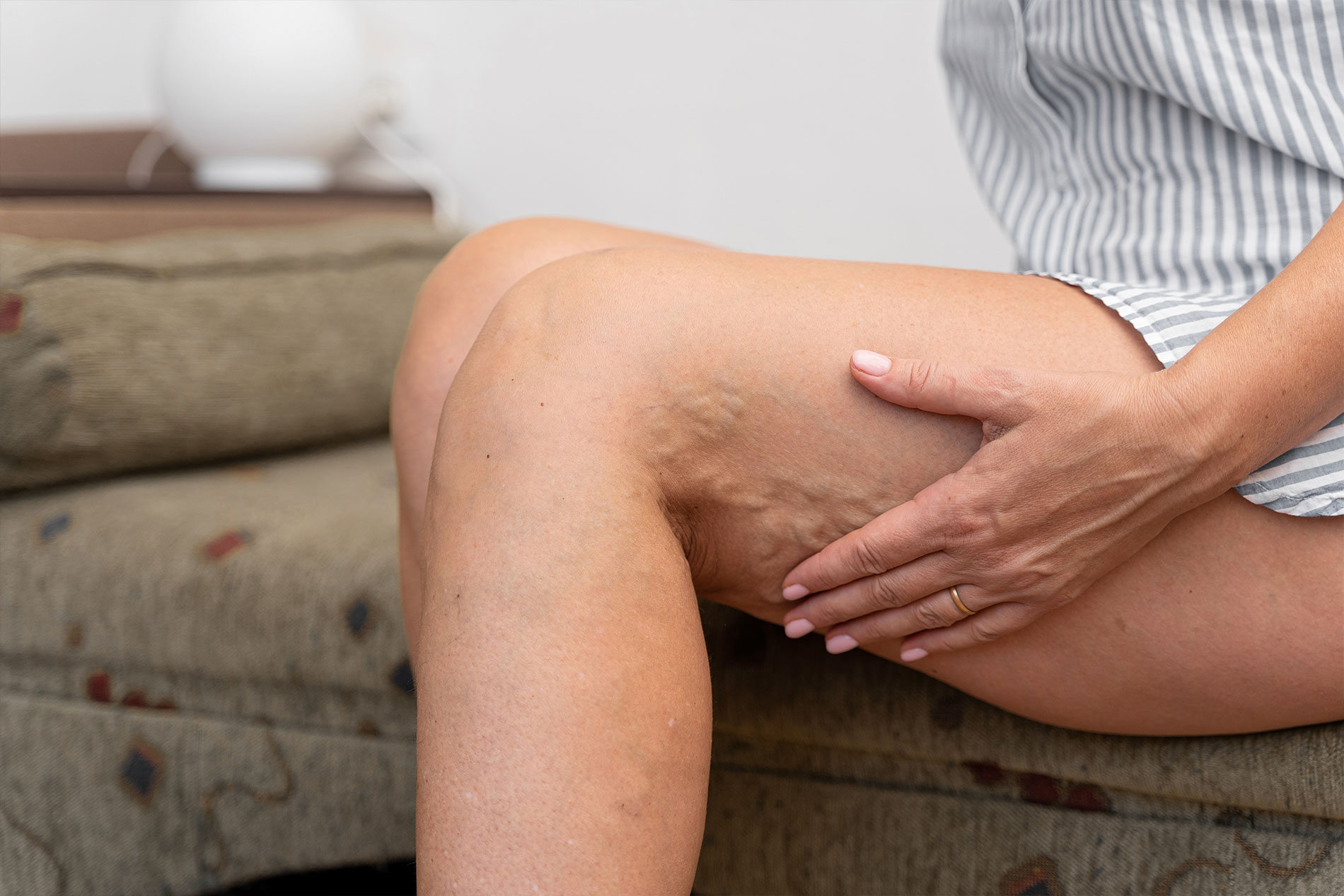

It’s a phrase uttered with certainty in households across the country: “My knee is aching. Rain must be on the way.” For millions of people living with chronic joint pain, especially from osteoarthritis, this isn’t just folklore; it’s a lived reality. They feel a tangible connection between a brewing storm and the throbbing in their knees, an unwelcome synergy that acts as a personal, and painful, weather forecast. While friends and family might dismiss it as a coincidence, the phenomenon is too common to be ignored.
But is there any scientific truth to this belief? Can a change in barometric pressure, a drop in temperature, or a rise in humidity actually make knee pain worse? The answer, according to a growing body of scientific evidence and countless patient anecdotes, is a resounding yes. The environment around us can have a profound impact on how our bodies feel, particularly when a joint is already compromised by a condition like osteoarthritis.
At Fox Vein and Vascular in Manhattan, we specialize in understanding the complex factors that contribute to chronic knee pain. Dr. David Fox, a board-certified vascular surgeon, recognizes that pain is not just a mechanical issue of “wear and tear.” It’s a biological process influenced by inflammation, circulation, and even external triggers like the weather. This article will delve into the science behind why your knees might hurt more when it rains, explore the mechanisms at play, and discuss advanced, modern treatments that can offer lasting relief, no matter what the forecast says.
Unpacking the Link: How Weather Influences Joint Pain
For years, the medical community was skeptical about the link between weather and pain. However, as more research has emerged, several plausible scientific theories have been developed that explain this connection. The main culprits appear to be barometric pressure, temperature, and humidity, all of which can interact with the delicate, inflamed environment of an osteoarthritic knee.
The Barometric Pressure Theory: The Body as a Barometer
The most widely accepted theory revolves around barometric pressure—the weight of the air in the atmosphere pressing down on us. This pressure isn’t constant; it fluctuates as different weather systems move through an area. High-pressure systems are usually associated with clear, calm weather, while low-pressure systems bring clouds, wind, and precipitation.
Your knee joint is an enclosed capsule containing synovial fluid, cartilage, bone, ligaments, and a soft tissue lining called the synovium. The nerves within this capsule are accustomed to a certain level of external pressure. When a low-pressure system approaches (before a storm), the weight of the air pushing against your body decreases.
Think of the tissues inside your knee joint as a tiny, sensitive balloon. In response to the drop in external pressure, these tissues can expand ever so slightly. In a healthy joint, this microscopic expansion is unnoticeable. However, in a knee already afflicted with osteoarthritis, the situation is entirely different. The joint capsule is already a crowded, inflamed space. Cartilage may be worn down, bone spurs might be present, and the synovium is likely swollen.
In this compromised environment, even a minimal expansion of tissues can:
- Stretch the joint capsule: This stretching can pull on sensitive nerve endings, triggering pain signals.
- Increase pressure on nerves: The expanded tissues can press against sensory nerves that are already on high alert due to chronic inflammation.
- Exacerbate inflammation: The physical stress of tissue expansion can further irritate the inflamed synovium, leading to increased pain and stiffness.
A notable study from Tufts University in Boston involving over 200 patients with knee osteoarthritis found a direct correlation between changes in barometric pressure and the severity of their knee pain. Similar studies have replicated these findings, lending strong scientific support to what patients have been saying for decades: they can feel the weather changing in their joints.
Temperature’s Role: From Fluid Viscosity to Muscle Guarding
Temperature is another significant environmental factor. Many people with arthritis report that cold weather, in particular, makes their symptoms flare up.
One explanation lies in the synovial fluid within the joint. This fluid acts as a lubricant and shock absorber. When the temperature drops, this fluid can become more viscous, or thicker—much like how honey thickens in a cold room. Thicker fluid doesn’t lubricate the joint as effectively, leading to increased friction, stiffness, and pain when you move.
Furthermore, cold weather causes muscles and ligaments to contract and become less flexible. Your body naturally tenses up in the cold to conserve heat. This “muscle guarding” can pull on the knee joint, increasing stress and making movement more painful. Inactivity also plays a part; people are less likely to go for a walk or exercise when it’s cold and dreary, and this lack of movement can lead to even more stiffness and discomfort.
Humidity and Its Impact
Humidity, or the amount of moisture in the air, often works in tandem with temperature and pressure. High humidity, especially when combined with cold temperatures (a “damp cold”), is frequently reported as a major trigger for joint pain. While the exact mechanism is less clear, some researchers believe that humidity might affect the way mechanoreceptors (sensory nerves that respond to pressure and distortion) in the joint capsule fire, making them more sensitive to pain signals.
Osteoarthritis and Inflammation: The Internal Storm
To fully understand why weather affects an arthritic knee, it’s essential to appreciate what is happening inside the joint. Osteoarthritis is not just a simple mechanical problem of cartilage wearing away. It is an active disease process driven by chronic, low-grade inflammation.
The synovium, the delicate membrane lining the knee joint, becomes inflamed in osteoarthritis. This condition, called synovitis, is a primary source of pain. An inflamed synovium is swollen, angry, and riddled with pain-sensitive nerve endings. It is this internal storm of inflammation that makes the joint so vulnerable to the external atmospheric changes. A healthy knee can easily accommodate slight expansions and contractions from weather shifts, but an inflamed knee has lost that resilience.
This is also where circulation comes into play. The body responds to chronic inflammation by growing a new, excessive network of tiny blood vessels to the synovium. These are called the genicular arteries. While the body’s intention is to help, these arteries create a vicious cycle. They deliver a constant supply of inflammatory cells and proteins to the joint, fueling the synovitis and keeping the pain cycle going. This abnormal hypervascularity (excessive blood supply) makes the knee a hotbed of inflammatory activity, ready to be aggravated by the slightest external trigger.
Breaking the Cycle: Advanced Treatment Beyond Weather-Watching
While you can’t change the weather, you don’t have to be a victim to it. Relying on heating pads, over-the-counter pain relievers, or simply staying indoors on bad days is a reactive approach that limits your quality of life. The key to lasting relief is to address the underlying inflammation that makes your knee so sensitive in the first place.
For many years, the options were limited. Physical therapy and medications offer some help. Steroid injections can provide powerful but temporary relief by dampening the inflammation. When these fail, the next step has traditionally been total knee replacement surgery. But what about the millions of people who fall into the gap—those who need more than temporary injections but want to avoid or delay a major operation?
Genicular Artery Embolization (GAE): Calming the Storm from Within
A revolutionary, minimally invasive procedure called Genicular Artery Embolization (GAE) offers a new path forward. Performed by specialized vascular surgeons like Dr. David Fox, GAE is not surgery. It is a targeted procedure that quiets the inflammation at its vascular source, providing long-lasting relief.
The logic behind GAE is simple yet brilliant: if the excessive blood flow from the genicular arteries is fueling the inflammation, then reducing that blood flow should calm the inflammation down.
The procedure works by blocking the specific, abnormal arteries that feed the inflamed synovium. Using real-time X-ray guidance, Dr. Fox navigates a tiny catheter—thinner than a strand of spaghetti—through your body’s arterial system to the knee. Once there, microscopic, medical-grade beads are injected into the targeted genicular arteries. These beads permanently block the vessels, drastically reducing the blood supply to the inflamed tissue.
By “starving” the inflammation, GAE achieves several goals:
- Reduces Pain: With less inflammation, the pain signals from the over-sensitive nerves in the synovium quiet down.
- Decreases Swelling: Reducing blood flow helps diminish the swelling and pressure inside the joint capsule.
- Improves Mobility: As pain and swelling recede, patients find it easier to move, walk, and participate in physical therapy, creating a positive cycle of recovery.
The results of this non-surgical knee pain relief method are durable, with many patients experiencing significant relief for 12, 24, or even more months. By treating the root inflammatory cause, GAE makes the knee joint more resilient and far less susceptible to external triggers like changes in barometric pressure. Your knee may no longer have to be your personal weather forecaster. To learn more about this innovative procedure, you can find detailed information at foxvein.com.
Take Control of Your Knee Pain, Rain or Shine
Living with chronic knee pain can feel like a constant battle, made even more frustrating when the weather dictates how you will feel on any given day. While the connection between weather and joint pain is real and scientifically plausible, it doesn’t have to control your life.
Modern medicine offers advanced solutions that go beyond managing symptoms. Genicular Artery Embolization targets the biological engine of osteoarthritic pain—the inflammation. By calming the internal storm, you can find consistent, lasting relief that isn’t dependent on a sunny forecast. If you’re ready to explore a treatment that offers a long-term solution, learn about your options at foxvein.com.
If you have been struggling with knee pain from osteoarthritis and are tired of planning your life around the weather report, it’s time to seek an expert evaluation. Dr. David Fox has the specialized vascular expertise to determine if GAE is the right treatment to help you reclaim your mobility and live pain-free.
Don’t let another rainy day keep you from doing what you love. Take the first step toward lasting relief by scheduling a consultation.
Fox Vein and Vascular – Manhattan, NY
(212) 362-3470
foxvein.com
Leading Manhattan Vascular & Vein Specialist
At Fox Vein Care, we provide state-of-the-art vascular and venous treatments, combining advanced diagnostic technology with minimally invasive procedures that prioritize comfort, safety, and outstanding results.
Contact Us