
When Chronic Knee Pain May Be Vascular — Not Just Orthopedic
Knee pain is one of the most common medical complaints among adults in the United States. For many people, it begins gradually — stiffness in the morning, discomfort when climbing stairs, or swelling after activity. Over time, it may progress to daily pain that limits walking, exercise, and overall quality of life.
Most patients are told their knee pain is caused by osteoarthritis, cartilage wear, or joint degeneration. While this is often true, emerging research has shown that chronic knee pain — especially in osteoarthritis — may also have a vascular and inflammatory component.
At Fox Vein & Vascular in Manhattan, we specialize in evaluating the vascular contributors to knee pain and offering advanced, minimally invasive treatment options designed to reduce inflammation and improve mobility — without open surgery.
If you have been told that knee replacement is your only option, there may be another path worth exploring.

Understanding Chronic Knee Pain
The knee is a complex joint composed of cartilage, bone, ligaments, tendons, and a lining called the synovium. In osteoarthritis, cartilage gradually breaks down, causing friction and inflammation.
Traditionally, osteoarthritis pain has been viewed purely as “wear and tear.” However, modern imaging studies have shown that abnormal blood vessel growth and increased inflammatory circulation around the knee joint may significantly contribute to pain levels.
In other words, inflammation — fueled by excess or abnormal blood flow — can amplify discomfort beyond what joint damage alone would suggest.
This is where vascular treatment enters the conversation.
Common Causes of Knee Pain
Knee pain can result from:

Osteoarthritis
Rheumatoid arthritis
Prior sports injuries
Meniscus tears
Ligament damage
Tendonitis
Overuse
Age-related degeneration
However, even after orthopedic evaluation, physical therapy, and injections, some patients continue to experience persistent pain.
When conservative treatments fail, patients are often presented with two options:
1.) Continue managing pain with medications or injections
2.) Proceed to total knee replacement
But for patients who are not ready for surgery — or who are poor surgical candidates — minimally invasive vascular options may provide relief.
Signs Your Knee Pain May Have a Vascular Component
You may benefit from a vascular evaluation if:
- Pain persists despite physical therapy
- Cortisone or gel injections provided only temporary relief
- Swelling and inflammation are ongoing
- Pain worsens with activity
- You are trying to delay knee replacement
- You have medical conditions that increase surgical risk
- Imaging shows osteoarthritis but symptoms feel disproportionately severe
Many Manhattan patients seek consultation after exhausting traditional orthopedic treatments.
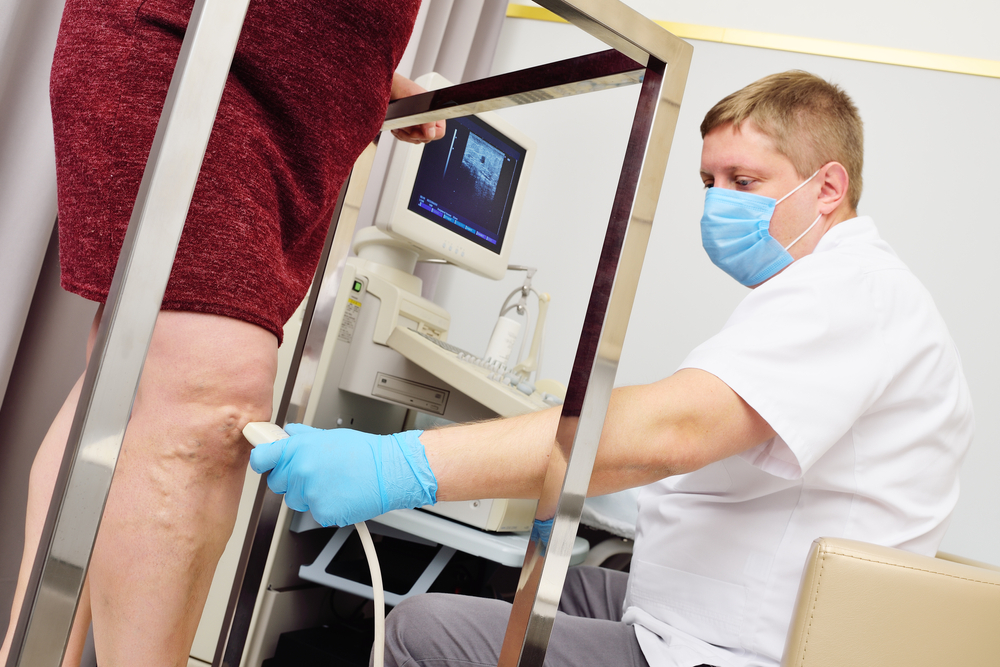

The Link Between Inflammation and Blood Flow
In osteoarthritis, inflammatory chemicals stimulate the growth of tiny abnormal blood vessels around the knee joint. These vessels can contribute to:
- Persistent inflammation
- Increased sensitivity of pain fibers
- Swelling
- Chronic discomfort
By addressing this abnormal blood flow, it may be possible to reduce inflammation and alleviate pain — without replacing the joint.
This approach represents a shift in how we think about knee pain management.
Genicular Artery Embolization (GAE)
A Minimally Invasive Option for Chronic Knee Pain
Genicular Artery Embolization (GAE) is an advanced outpatient procedure designed to reduce abnormal inflammatory blood flow in the knee.
During GAE:
- A small catheter is inserted through a tiny needle access point
- Targeted blood vessels contributing to inflammation are identified
- Tiny particles are used to reduce abnormal circulation
- The procedure is performed under image guidance
- Patients go home the same day
GAE does not remove bone or cartilage. It does not replace the joint. Instead, it reduces one of the drivers of inflammatory pain.
For appropriate candidates, this can result in meaningful symptom improvement.

Who Is a Candidate for GAE?
You may be a candidate if you:
Have mild to moderate osteoarthritis
Have persistent pain despite conservative therapy
Want to avoid or delay knee replacement
Are not an ideal surgical candidate
Prefer a minimally invasive approach
A consultation and imaging review are necessary to determine candidacy.

Benefits of Minimally Invasive Knee Pain Treatment
Compared to open surgery, minimally invasive vascular procedures offer:
- No large incisions
- No joint replacement
- Same-day discharge
- Faster recovery time
- Lower procedural risk
- Preservation of natural anatomy
Many patients return to normal activity quickly.
Why Early Evaluation Matters
Chronic inflammation can worsen over time. The earlier vascular contributors are identified, the sooner treatment can be considered.
Even if GAE is not appropriate, understanding the full picture of your knee pain helps guide future treatment decisions.
Why Choose Fox Vein & Vascular?
At Fox Vein & Vascular, we provide:
- Board-certified vascular expertise
- Advanced imaging and diagnostic technology
- Experience with minimally invasive vascular procedures
- Personalized treatment planning
- Convenient Manhattan location
Our focus is not simply symptom suppression — it is identifying the underlying source of inflammation and creating a strategy rooted in vascular medicine.

Frequently Asked Questions
- Is GAE a replacement for knee surgery?
No. GAE is a minimally invasive option for selected patients seeking to delay or avoid knee replacement. - How long does recovery take?
Most patients return home the same day and resume light activities shortly thereafter.
- Is it safe?
As with any procedure, risks exist. A thorough consultation will review benefits and potential risks in detail. - Will insurance cover it?
Coverage varies. Our team can help guide you through insurance considerations.


Schedule a Knee Pain Consultation in Manhattan
If chronic knee pain is limiting your mobility, affecting your work, or reducing your quality of life, you deserve a comprehensive evaluation.
A vascular assessment may uncover options beyond traditional orthopedic treatments.
We Accept Most Insurances
We work with most major insurance providers. Contact us to confirm coverage.