



Can You Walk Immediately After GAE?

December 17, 2025

When facing a medical procedure for chronic knee pain, particularly one related to osteoarthritis, the first question on almost every patient’s mind is about recovery. We are conditioned to associate “knee treatment” with “downtime.” We picture crutches, walkers, bulky braces, and weeks spent navigating the world from a couch or a bed. This fear of immobility is often the primary reason patients delay seeking help, suffering in silence rather than risking a long disruption to their work and family lives.

This anxiety makes sense in the context of traditional orthopedic surgery. Total knee replacement, while effective, involves significant trauma to the body, requiring the cutting of bone and muscle. Recovery is a marathon, not a sprint.

But Genicular Artery Embolization (GAE) is rewriting the rules of recovery. As a breakthrough, minimally invasive vascular procedure, it operates on an entirely different set of principles. Consequently, the answer to the question, “Can I walk immediately after GAE?” is a resounding and refreshing yes.

At Fox Vein and Vascular in Manhattan, we find that the ability to walk out of the office on the same day is one of the most encouraging aspects of GAE for our patients. It signifies a shift from “major surgery” to “advanced intervention.”

In this detailed guide, we will explore exactly what you can expect regarding mobility after your GAE procedure. We will explain why immediate walking is possible, the benefits of getting back on your feet quickly, and how to navigate your activity levels in the days following your treatment with Dr. David Fox.

What Is Genicular Artery Embolization (GAE)?

To understand why the recovery is so rapid, it is essential to understand what GAE actually is—and, perhaps more importantly, what it is not.

GAE is not orthopedic surgery. It does not involve opening the knee joint, scraping away cartilage, sawing bone, or inserting metal implants. It is an endovascular (inside the blood vessel) procedure performed by a vascular specialist.

The Mechanism of Action

The pain from knee osteoarthritis is often driven by inflammation in the lining of the knee joint, known as the synovium. This inflammation (synovitis) is fueled by an abnormal overgrowth of tiny blood vessels sprouting from the main knee arteries (the genicular arteries).

During the GAE procedure:

  1. Access: Dr. Fox makes a tiny pinhole puncture into an artery, typically in the upper thigh (groin) or near the ankle.
  2. Navigation: A micro-catheter, thinner than a strand of angel hair pasta, is guided through your body’s natural arterial highways to the knee.
  3. Embolization: Tiny microscopic beads are injected into the specific abnormal capillaries that are feeding the inflammation.
  4. Result: The “fuel” for the fire is cut off. The inflammation subsides, and the pain decreases.

Because the procedure is performed entirely through a needle puncture that is millimeters wide, there is no structural damage to the knee. Your muscles, ligaments, and tendons remain untouched. This anatomical preservation is the secret to why you can stand up and walk almost immediately.

Learn more about the science behind GAE here.

The Immediate Recovery: From Table to Walking

The timeline for mobility after GAE is incredibly compressed compared to surgical interventions. Here is a realistic look at the first few hours following your treatment.

The Recovery Room Phase

The procedure itself typically takes between 45 and 90 minutes. You will be under “twilight sedation,” meaning you are relaxed and sleepy but not under general anesthesia. Once the procedure is complete, you will be moved to a comfortable recovery bay.

  • The First Hour: The primary focus immediately post-procedure is not your knee, but the access site (the puncture in your artery). To ensure this tiny hole seals completely and safely, you will need to lie flat and keep your leg straight for a brief period, usually about one to two hours.
  • Vital Signs: Our clinical team will monitor your blood pressure and the pulses in your feet to ensure your circulation is stable.
  • Sensation: Most patients feel very little pain. You might notice a small bandage on your thigh or ankle. Your knee will likely feel similar to how it felt before the procedure, perhaps with some mild numbness from local anesthetic.

Taking Your First Steps

Once the required rest period is over and the access site is confirmed to be stable, a nurse will assist you in sitting up. If you don’t feel dizzy from the sedation, you will be invited to stand.

This is the moment of truth for many patients. They tentatively put weight on the treated leg, expecting pain or weakness. Instead, they find that their leg supports them just as it did that morning. You will be encouraged to walk to the restroom or take a few laps around the recovery area.

Walking Out the Door

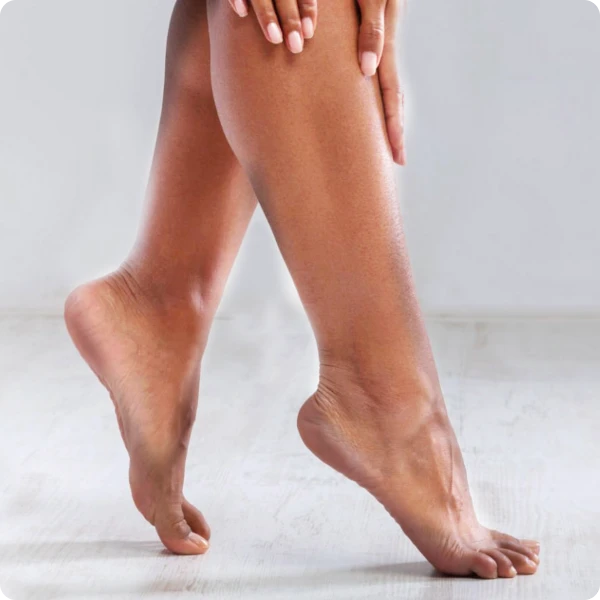
Because GAE is an outpatient procedure, you will be discharged the same day. You will walk out of our office and to your car (with your designated driver). There is no need for a wheelchair, a walker, crutches, or a cane, unless you relied on those devices prior to the procedure. You are walking out on your own power, on day one.

Why Early Walking Is Beneficial

Walking immediately after GAE isn’t just “allowed”; it is actively encouraged. Unlike a broken bone that needs to be immobilized to knit back together, your vascular system and your joints benefit from gentle movement.

1. Improved Circulation and Clot Prevention

Any medical procedure carries a small risk of Deep Vein Thrombosis (DVT), or blood clots in the legs. The most effective natural defense against DVT is the “calf muscle pump.” Every time you take a step, your calf muscles contract, squeezing the veins and pumping blood back up toward your heart. By walking immediately, you keep your blood moving efficiently, significantly reducing the risk of complications.

2. Combating Joint Stiffness

Knee arthritis is characterized by stiffness, a phenomenon known as the “gel phenomenon.” When the joint sits still, the inflammatory fluid inside thickens, making the knee feel like a rusty hinge. Immobilization is the enemy of an arthritic knee. Gentle walking keeps the joint lubricated and prevents that profound stiffness from setting in.

3. Psychological Confidence

Chronic pain takes a mental toll. It creates a fear of movement (kinesiophobia). Being able to walk immediately after treatment provides a massive psychological boost. It reinforces the fact that you have chosen a minimally invasive path and helps you visualize a successful recovery. It proves to you, instantly, that your leg is still strong and capable.

Read about the full recovery timeline for GAE.

Activity Guidelines: Graduating Your Movement

While you can walk immediately, it is important to distinguish between “walking to the bathroom” and “power walking for exercise.” Your return to activity should be gradual and respectful of the healing process happening at the arterial access site.

Phase 1: The First 24-48 Hours

The Goal: Healing the Access Site
During the first two days, your activity should be limited to light, necessary movements.

  • Walking: Walk around your home as needed. Feel free to walk to the kitchen, the bedroom, or the bathroom. Short, gentle walks of 5-10 minutes every hour or two are excellent.
  • Stairs: You can climb stairs if necessary to get to your bedroom, but take them slowly.
  • Rest: Spend a good portion of the day resting with your leg elevated. This helps minimize any minor swelling.

Phase 2: Days 3 to 7

The Goal: Returning to Routine
By day three, the access site is typically well-sealed. You can begin to expand your world.

  • Daily Life: You can resume grocery shopping, light housework, and working at a desk.
  • Exercise Walking: You can begin taking longer walks outside for exercise. Start with 15-20 minutes on flat, even surfaces. Avoid uneven terrain like hiking trails where you might slip or strain the groin area.
  • Listen to Your Knee: You might experience a temporary increase in knee soreness during this week (a sign the embolization is working). Let your comfort dictate your distance. If it hurts, stop and rest.

Phase 3: Week 2 and Beyond

The Goal: Building Strength
Once you are past the first week or two, you are generally cleared for unrestricted walking.

  • Increase Intensity: You can pick up the pace and the distance.
  • Low-Impact Exercise: This is the ideal time to reintroduce other low-impact movements like stationary cycling or swimming (once the puncture site is fully healed and waterproof).

Find out if you are a candidate for GAE.

What to Avoid During Early Recovery

To ensure that your ability to walk remains uninterrupted, there are a few specific precautions you must take to protect the arterial puncture site. Complications are rare, but they are almost always caused by doing too much, too soon.

No Heavy Lifting

For the first 5-7 days, do not lift anything heavier than 10 pounds (roughly the weight of a gallon of milk). Lifting creates intra-abdominal pressure. This pressure travels down your arteries and can push against the healing seal in your groin or leg, potentially causing it to re-open or bleed under the skin (hematoma).

No High-Impact Activities

Walking is great; running is not (yet). The impact of running, jumping, or high-intensity aerobics puts stress on the vascular system and the access site. Avoid:

  • Running/Jogging
  • Tennis or Pickleball
  • Jumping rope
  • Heavy squats or lunges

No Soaking

While you can walk, you shouldn’t swim just yet. Keep the puncture site dry for at least 3-5 days. Showers are fine (let the water run over it), but avoid bathtubs, hot tubs, and pools until the scab has fully healed to prevent infection.

The Role of Physical Therapy

Because GAE allows for immediate mobility, it creates a unique opportunity for rehabilitation. Many patients with chronic knee pain have developed muscle weakness because they have been avoiding movement for years.

Once the GAE procedure has reduced the pain and inflammation (typically within 2-6 weeks), your knee is primed for strengthening. Walking is the first step, but targeted physical therapy is the second.

  • Gait Training: A therapist can help you fix your walking pattern. Often, patients walk with a limp even after the pain is gone simply out of habit.
  • Muscle Building: Strengthening the quadriceps takes pressure off the knee joint.
  • Range of Motion: Stretching exercises help regain full extension and flexion.

Because you are walking from day one, there is no muscle atrophy (wastage) associated with the procedure itself, putting you ahead of the game compared to surgical patients who lose muscle mass during bed rest.

Explore our approach to comprehensive vascular care.

How GAE Compares to Knee Replacement Recovery

To truly appreciate the benefit of walking immediately, it is helpful to contrast GAE with total knee replacement (TKA).

Feature Genicular Artery Embolization (GAE) Total Knee Replacement (TKA)
Hospital Stay None (Outpatient) 1-3 Days
Immediate Mobility Walk immediately without assistance Walk with walker/crutches within 24 hours
Assistive Devices None needed Walker, crutches, or cane for weeks
Driving Resume in 24-48 hours Resume in 4-6 weeks (if right leg)
Physical Therapy Optional / Strengthening focused Mandatory / Intense & painful
Full Recovery Days to Weeks 6 to 12 Months

For patients who cannot afford the “downtime” of a replacement—parents with young children, professionals who cannot take a month off work, or caregivers for elderly spouses—the ability to remain mobile with GAE is a life-changing advantage.

Why Choose Fox Vein and Vascular?

Your ability to walk immediately after GAE depends heavily on the skill and precision of the physician performing the procedure.

Dr. David Fox is a board-certified vascular surgeon in Manhattan with over 20 years of experience in complex arterial interventions. His expertise ensures that:

  • Access is Precise: He uses ultrasound and fluoroscopic guidance to gain access to the artery with pinpoint accuracy, minimizing trauma to the surrounding tissue.
  • Closure is Secure: We utilize advanced vascular closure devices or specialized manual compression techniques to ensure the artery is sealed instantly and securely, allowing you to stand up sooner.
  • Safety is Prioritized: Our team monitors you closely to ensure you are safe to walk before you ever leave our care.

We are proud to offer this advanced technology to patients across the 5 Boroughs, Nassau, Suffolk, South Western Ct., and North East NJ.

Meet Dr. David Fox and our team.

Conclusion: Walking Toward a Pain-Free Future

The question “Can I walk immediately after GAE?” has a simple answer, but the implications are profound. It means you don’t have to put your life on hold to treat your pain. It means you maintain your independence. It means you can recover in the comfort of your own home, moving on your own terms.

GAE offers a middle ground between conservative management (pills and shots) and major surgery. It provides the intervention you need to stop the inflammation without the destruction that requires months of healing.

If you are living with recurrent knee pain and are looking for a solution that keeps you on your feet, Genicular Artery Embolization may be the answer you have been waiting for.

Take the first step today—literally and figuratively.

Schedule your consultation with Dr. Fox in Manhattan.

Fox Vein and Vascular – Manhattan, NY
📍 1041 Third Avenue, New York, NY 10065
📞 (212) 362-3470
🌐 foxvein.com

Book your appointment online now.

Note: This content is for informational purposes and does not constitute medical advice. Always follow the specific post-procedure instructions provided by your healthcare team.


You and Your Veins

Treatment for painful or embarrassing spider veins and varicose veins is now available without the need for invasive vein surgery. Fox Vein Care, a leading vein treatment center in Manhattan offers a range of minimally invasive, state-of-the-art alternatives to vein surgery, including Transdermal Laser Treatment and sclerotherapy, in the convenience of our Manhattan office.

Learn More
Blog post Image
Blog post Image
Book Online
Close

Book Online