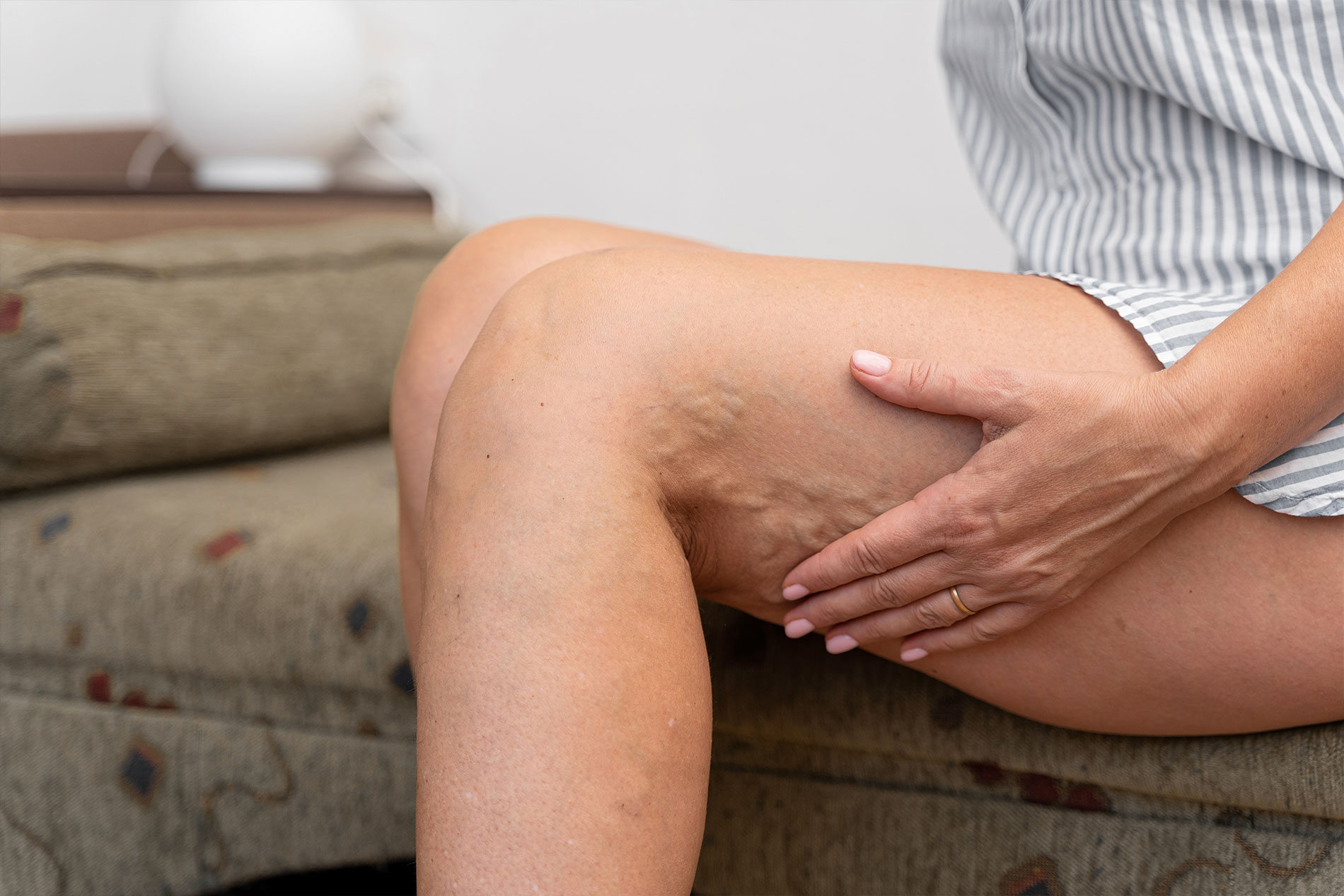
The thought of undergoing surgery can be intimidating. For many people dealing with the discomfort and appearance of varicose veins, spider veins, and other symptoms of vein disease, the fear of a surgical procedure often leads them to delay seeking help. Not long ago, the primary treatment for significant varicose veins was a hospital-based operation known as vein stripping, which involved general anesthesia, incisions, and a lengthy, painful recovery. Fortunately, the field of phlebology has advanced dramatically. Today, treating vein disease without surgery is not just a possibility; it is the standard of care.
Modern, non-surgical techniques have revolutionized vein care, offering highly effective, minimally invasive options that are performed in a comfortable office setting. These procedures require little to no downtime, allowing you to return to your daily activities almost immediately. If you’re searching for a “vein specialist near me” because you’re experiencing vein pain, leg swelling, or are concerned about bulging veins, this guide will explore the state-of-the-art, non-surgical treatments available at a leading Manhattan vein clinic. You can achieve relief and restore the health and beauty of your legs without ever stepping into an operating room.
To learn more about specific non-surgical options available in Manhattan, visit this detailed page on Manhattan vein treatments.
You can also browse the full list of vein & vascular services offered at Fox Vein and Vascular to understand more about the treatments provided.
Understanding the Shift from Surgical to Non-Surgical Vein Care
To appreciate the benefits of modern vein treatments, it’s helpful to understand what they replaced. Vein ligation and stripping was an invasive surgical procedure that required a surgeon to make an incision in the groin and another near the ankle or knee. The problematic vein, typically the great saphenous vein, was tied off (ligated) and then physically pulled out (stripped) from the leg. This approach was effective but came with significant drawbacks, including the risks of general anesthesia, a high likelihood of scarring and nerve damage, and a recovery period that could last for weeks.
The development of ultrasound technology and catheter-based techniques in the late 1990s and early 2000s marked a turning point. Specialists could now see inside the veins in real-time and treat them from within. This led to the creation of endovenous procedures that are far less invasive, safer, and produce superior long-term results. A modern “varicose vein doctor Manhattan” now has a suite of tools to address vein disease at its source, offering patients a much better experience.
The Cornerstone of Modern Treatment: Accurate Diagnosis
Effective non-surgical treatment begins with a precise diagnosis. The symptoms you see on the surface—like spider veins or varicose veins—are often caused by a deeper issue called chronic venous insufficiency (CVI). This condition occurs when the tiny, one-way valves inside your veins weaken and fail to close properly. As a result, gravity causes blood to flow backward and pool in the lower legs, a process known as venous reflux. This increased pressure leads to the “vein symptoms in legs” that prompt people to seek care, including pain, swelling, cramping, and visible vein changes.
To learn more about diagnostic evaluations, visit Diagnostic Vascular Laboratory Testing.
The Role of Duplex Ultrasound
A qualified “chronic vein condition specialist near me” will never recommend a treatment plan without first performing a thorough diagnostic evaluation. The most critical tool for this is the duplex ultrasound. This non-invasive exam is essential for several reasons:
- Pinpointing the Source: It allows the specialist to visualize the blood flow and identify the exact veins with faulty valves that are causing the reflux.
- Mapping the Veins: It creates a detailed map of your venous anatomy, which is crucial for planning the procedure and guiding the instruments with precision.
- Ensuring Safety: The ultrasound helps rule out more serious conditions, like a deep vein thrombosis (DVT), which would require a different course of treatment.
This detailed diagnostic step ensures that the treatment targets the underlying cause of your vein disease, not just the visible symptoms, which is the key to achieving lasting results. If you want to know what to expect during your assessment, the What Happens During a Vein Ultrasound Exam? resource is a great place to start.
Leading Non-Surgical Vein Treatments Explained
Today’s “vein care treatment Manhattan” centers offer a variety of sophisticated, minimally invasive procedures. These techniques are designed to close or remove diseased veins, forcing the body to reroute blood flow through nearby healthy veins. This restores normal circulation and alleviates symptoms. Here are the most common and effective non-surgical options.
You can explore more about treatment types, including sclerotherapy and laser therapies, within the vein treatment procedures overview.
Endovenous Laser Therapy (EVLT)
Endovenous Laser Therapy, often called EVLT or endovenous laser ablation (EVLA), is the gold standard for treating large, incompetent veins like the great saphenous vein (GSV) or small saphenous vein (SSV). These are the main superficial veins in the leg that are most often the root cause of varicose veins.
Read more about how EVLT is performed at Fox Vein and Vascular.
How it Works:
- Preparation: The leg is cleaned, and a local anesthetic is applied to numb the area where the catheter will be inserted. No general anesthesia is needed.
- Catheter Insertion: Using ultrasound guidance, the vein specialist inserts a very thin laser fiber through a tiny entry point, typically near the knee.
- Positioning: The fiber is carefully advanced through the diseased vein to the starting point of the treatment area, a location precisely determined by the ultrasound map.
- Anesthesia Application: A tumescent anesthetic (a dilute lidocaine solution) is injected along the length of the vein being treated. This numbs the area completely, protects surrounding tissues from the laser’s heat, and gently compresses the vein around the fiber for optimal energy delivery.
- Ablation: As the specialist slowly withdraws the laser fiber, it delivers targeted energy to the vein wall, causing it to heat up and seal shut.
The entire procedure usually takes less than an hour. You are able to walk immediately afterward and can typically resume normal activities the same day, with the main instruction being to stay active and wear a compression stocking for a short period. EVLT is highly effective, with success rates consistently reported above 95%.
Sclerotherapy
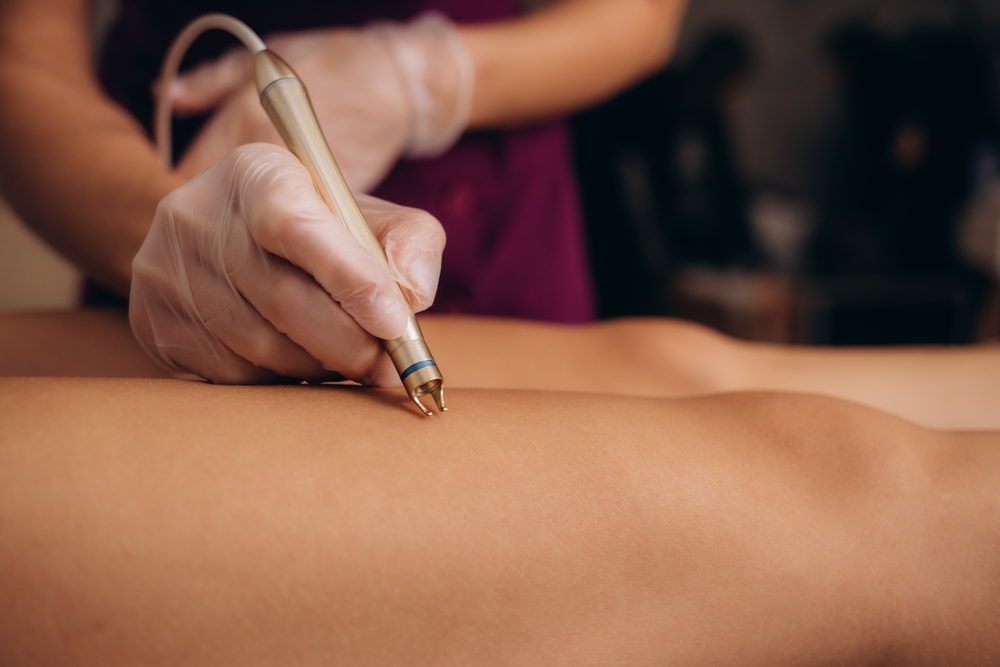
Sclerotherapy is the primary treatment for spider veins and smaller varicose veins (reticular veins). It has been used for decades, but modern techniques and solutions have made it safer and more effective than ever.
To discover more about this popular procedure, see the information on Spider Vein Treatment (Sclerotherapy, Transdermal Laser).
How it Works:
- Injection: The specialist uses a micro-needle to inject a small amount of a sclerosant solution directly into the targeted spider or reticular veins. Common sclerosants include polidocanol and sodium tetradecyl sulfate.
- Vein Reaction: The solution irritates the inner lining of the vein, causing it to swell, collapse, and stick together.
- Fading Away: Over the following weeks, the treated vein turns into scar tissue and is gradually absorbed by the body, fading from view.
A single sclerotherapy session can treat numerous veins. Depending on the extent of the spider veins, multiple sessions may be needed to achieve the desired cosmetic result. For larger or deeper veins that are not visible on the surface, a specialist may use ultrasound-guided sclerotherapy to ensure the sclerosant is injected with perfect accuracy.
Ambulatory Phlebectomy
While endovenous ablation closes the source vein, it doesn’t remove the large, bulging veins you can see and feel on the surface. For these, ambulatory phlebectomy is the ideal non-surgical solution. It offers immediate cosmetic improvement by physically removing the problematic veins.
To learn more about this procedure, review the Varicose Vein Treatment page.
How it Works:
- Marking and Anesthesia: While you are standing, the specialist will mark the varicose veins to be removed. Then, a local anesthetic is injected to numb the areas.
- Micro-Incisions: The doctor makes tiny incisions, as small as 1-2 millimeters, alongside the marked vein.
- Vein Removal: Using a small, hook-like instrument, the specialist gently extracts the vein segment through the micro-incision. This is repeated along the length of the vein.
- Closure: The incisions are so small that they do not require stitches and are simply covered with a small bandage. They typically heal without any noticeable scarring.
Phlebectomy is often performed at the same time as EVLT or in a follow-up appointment. It provides excellent, long-lasting results for removing bulky “bulging veins.”
Combining Treatments for Optimal Results
The “best vein doctor near me” will recognize that a single approach is rarely sufficient. A comprehensive, non-surgical treatment plan often involves a combination of the procedures described above, tailored to your specific needs. A typical treatment journey might look like this:
- Consultation and Ultrasound: The initial visit to diagnose the problem and create a personalized plan. You can conveniently schedule a consultation here.
- Endovenous Ablation (EVLT): The first procedure focuses on closing the main underlying source of venous reflux (e.g., the great saphenous vein). This addresses the root cause of the pressure and symptoms like vein pain and swelling.
- Ambulatory Phlebectomy and/or Sclerotherapy: In subsequent visits, the specialist will address the remaining visible veins. Phlebectomy is used for large varicosities, while sclerotherapy targets the smaller varicose veins and spider veins.
This multi-faceted approach ensures that the problem is treated from the inside out, leading to both symptomatic relief and a superior cosmetic outcome. This is a hallmark of high-quality “vein treatment near me“.
The Benefits of Choosing Non-Surgical Vein Care
The advantages of modern, non-surgical treatments over traditional surgery are overwhelming. Patients who choose these minimally invasive options benefit from:
- Safety: Performed with local anesthesia, avoiding the risks associated with general anesthesia.
- Comfort: Minimal discomfort during and after the procedure. Most patients report feeling only the initial small needle pricks for the anesthetic.
- Convenience: Procedures are performed in a comfortable office setting in under an hour.
- No Downtime: Patients walk out of the clinic immediately and can return to work and most normal activities the same or the next day.
- Excellent Results: High success rates for both medical symptom relief and cosmetic improvement.
- No Scarring: Procedures use tiny entry points that heal with virtually no visible marks.
Visit the Why Patients Trust Fox Vein and Vascular section to read patient testimonials and learn why so many people choose their clinic for minimally invasive care.
Finding the Right Specialist for Your Treatment
While the procedures themselves are revolutionary, the success of your treatment ultimately depends on the skill and experience of the physician performing them. When searching for a “vein specialist Manhattan” offers, it is crucial to choose a provider who is not just familiar with these techniques but is an expert in them.
Look for a board-certified vascular surgeon, like Dr. David Fox. Meet Dr. Fox and learn about his expertise and why choosing a vascular surgeon makes a difference. A vascular surgeon has dedicated years of rigorous training specifically to the diseases of veins and arteries. Their deep understanding of the entire circulatory system ensures you receive the most accurate diagnosis and safest, most effective treatment. A practice dedicated to vein care, such as Fox Vein and Vascular, will have state-of-the-art equipment and experienced support staff needed to provide a seamless and successful treatment experience.
Your Path to Healthier Legs Starts Here
Living with vein disease can mean enduring daily pain, hiding your legs due to cosmetic concerns, and worrying about potential long-term health complications. The good news is that relief is more accessible and convenient than ever before. With today’s advanced, non-surgical treatments, you no longer have to consider invasive surgery to address your varicose veins, spider veins, or other symptoms.
By choosing a highly qualified specialist at a dedicated Manhattan vein clinic, you can access procedures like EVLT, sclerotherapy, and ambulatory phlebectomy. These treatments are proven to be safe, effective, and require no significant downtime. The first step is to schedule a consultation for a comprehensive evaluation. This will allow a specialist to identify the root cause of your issues and design a non-surgical treatment plan to restore the health and appearance of your legs, helping you get back to living your life to the fullest.
For more details about all available treatments and services offered in Manhattan, don’t hesitate to check the complete Manhattan Vein Treatment overview.
Leading Manhattan Vascular & Vein Specialist
At Fox Vein Care, we provide state-of-the-art vascular and venous treatments, combining advanced diagnostic technology with minimally invasive procedures that prioritize comfort, safety, and outstanding results.
Contact Us