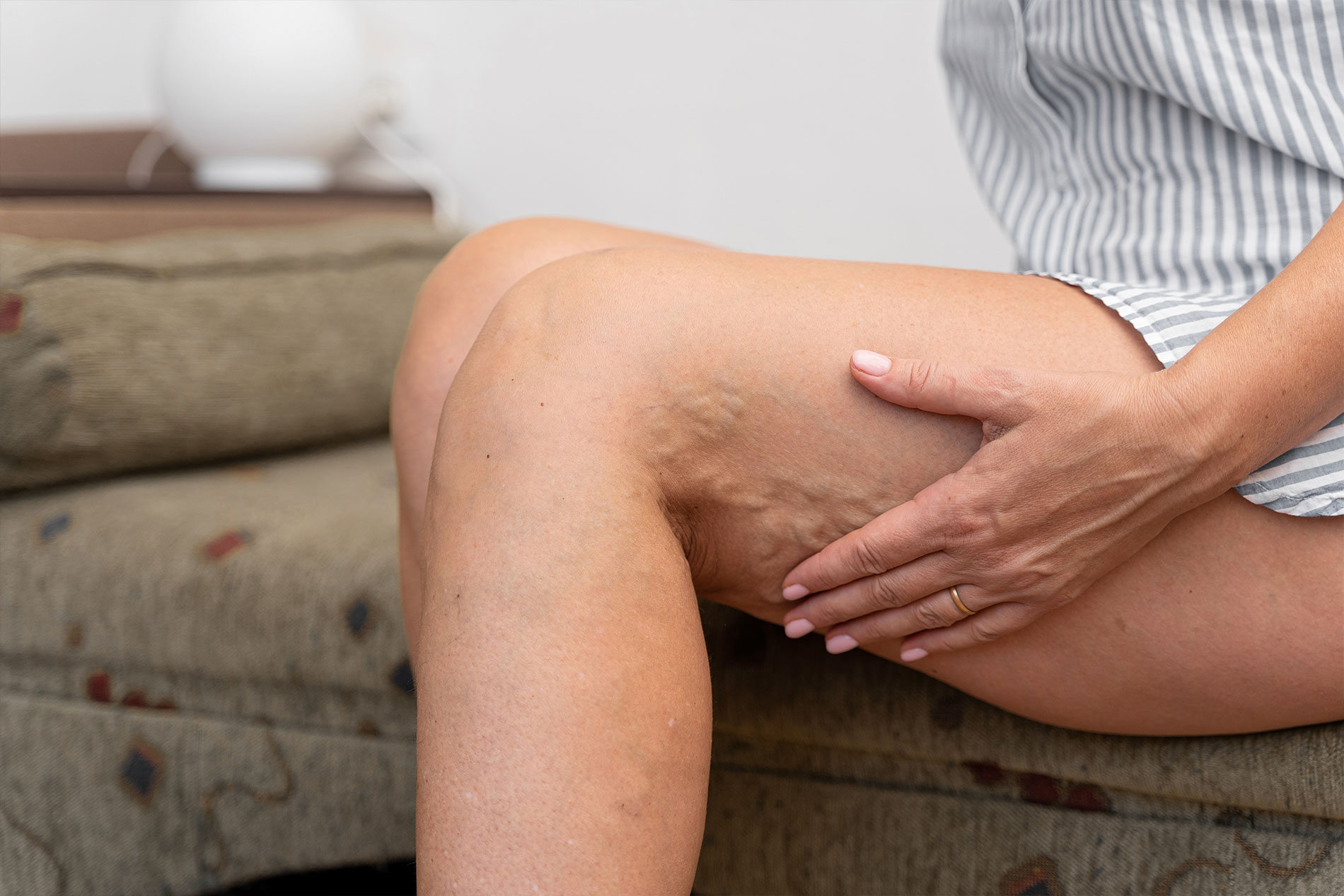

You probably don’t spend much time staring at your feet. We tend to ignore our lower limbs until they hurt. But sometimes, the most dangerous warning signs of vascular disease aren’t painful at first—they are visual.
Have you noticed that the skin on your legs looks shinier than usual? Perhaps the hair on your toes has disappeared. Maybe your feet turn a strange pale white color when you prop them up on the recliner, only to flush a deep red or purple when you stand up. Or perhaps you nicked your shin while shaving or developed a small blister from a new pair of shoes weeks ago, and it simply refuses to heal.
These are not just cosmetic annoyances or signs of getting older. They are the distress signals of a body part that is suffocating.
Skin discoloration and slow-healing wounds are classic, yet frequently overlooked, symptoms of Peripheral Arterial Disease (PAD). They indicate that the blood flow to your legs has become so compromised that your skin and soft tissues are no longer receiving the oxygen and nutrients they need to maintain themselves or repair damage.
At Fox Vein and Vascular, we believe that recognizing these visual cues is crucial for limb preservation. Ignoring them can lead to gangrene and amputation, but catching them early allows for minimally invasive treatments that can save your legs and your life. In this comprehensive guide, we will explore the hidden language of your skin, what it reveals about your circulation, and how Manhattan vascular surgeon Dr. David Fox can help you restore healthy blood flow.
What Is Peripheral Arterial Disease (PAD)?
Peripheral Arterial Disease (PAD) is a common, yet serious, circulatory problem. It occurs when the arteries that supply blood to your limbs—most typically the legs—become narrowed or blocked.
The Mechanism: A Clogged Pipe
The root cause is almost always atherosclerosis (or arteriosclerosis). Over time, fatty deposits called plaque (made of cholesterol, calcium, and fibrous tissue) build up along the inner walls of your arteries. Imagine the plumbing in an old house; as mineral deposits accumulate inside the pipes, the channel for water gets narrower and narrower. Eventually, the water pressure drops to a trickle.
In your body, this “trickle” has profound consequences. Your blood carries oxygen and nutrients that are the fuel for every cell in your body. When that fuel supply is cut off, the tissues begin to starve.
A Systemic Warning
It is important to understand that PAD is rarely an isolated event. If you have plaque buildup in your leg arteries, it is highly likely that you have similar blockages in the arteries leading to your heart and brain. This is why PAD is a major predictor of heart attack and stroke.
Risk factors include:
- Smoking: This is the biggest enemy of your arteries. It damages the lining of the vessels and accelerates plaque growth.
- Diabetes: High blood sugar is toxic to blood vessels and nerves.
- High Blood Pressure and Cholesterol.
- Age: The risk jumps significantly for those over 60.
If you have these risk factors and notice changes in your skin, you need a PAD screening Manhattan immediately.
Why Poor Circulation Changes Your Skin
Your skin is an organ, and like any organ, it needs a constant supply of blood to stay healthy. When poor blood flow in legs becomes chronic, the skin undergoes visible changes as it attempts to survive on limited resources.
1. The Color Change: Dependent Rubor vs. Pallor
One of the most striking signs of PAD is a phenomenon called dependent rubor.
- Pallor on Elevation: When you lie down and elevate your legs, gravity works against the weak blood flow. The blood drains out of your feet, and because the arteries are blocked, new blood cannot pump up to replace it. Your feet may turn a sickly pale or white color (pallor).
- Rubor on Dependency: When you sit up and dangle your legs over the edge of the bed, gravity pulls the blood down. Because the starved blood vessels are fully dilated (trying desperately to catch any drop of blood), the rush of blood causes the feet to turn a bright red or deep reddish-purple color (rubor).
This “red foot” is often mistaken for infection (cellulitis), but the key difference is that with PAD, the foot is usually cool to the touch, whereas an infection is hot.
2. Shiny, Thin Skin and Hair Loss
Healthy skin is elastic and has hair follicles fed by tiny capillaries. In PAD, the body enters a “rationing” mode. It diverts the limited blood supply to the most vital muscles, leaving the skin with just enough to survive.
- Hair Loss: You may notice you no longer need to shave your legs, or the hair on your toes disappears completely.
- Texture Changes: The skin becomes thin, brittle, and shiny (atrophic). It may look like tight plastic wrap.
- Nails: Toenails may become thickened, brittle, and grow very slowly.
3. The Danger of Slow-Healing Wounds
This is the most critical sign. Healing is an energy-intensive process. When you get a cut, your body needs to rush extra blood to the site, carrying white blood cells to fight infection and platelets to close the wound.
If you have blocked leg arteries, that “rush” never arrives. A minor scratch, a blister from a shoe, or an ingrown toenail sits stagnant. Without oxygen, the tissue cannot repair itself.
- If a wound on your foot or leg has not healed after two weeks, it is a medical red flag.
- These non-healing wounds are often the precursors to ulcers and gangrene.
Is It PAD, Veins, or Diabetes? Knowing the Difference
Not all leg ulcers are the same. Distinguishing between an arterial ulcer (PAD), a venous ulcer, and a diabetic ulcer is crucial because the treatments are completely different.
Arterial Ulcers (PAD)
- Location: Usually on the toes, heels, or the outer ankle (pressure points).
- Appearance: They often have a “punched-out” appearance with well-defined borders. The base of the wound is usually pale, gray, or yellow, with no bleeding (because there is no blood!).
- Pain: These are typically very painful, especially at night or when the leg is elevated.
- Surrounding Skin: The foot is cold, pale, and may have no pulse.
Venous Stasis Ulcers
- Location: Usually on the inner side of the lower leg, just above the ankle.
- Appearance: Shallow, irregular borders, and often “weepy” with fluid.
- Pain: Generally less painful than arterial ulcers; often feels like a heavy ache.
- Surrounding Skin: The leg is often swollen (edema) and the skin is discolored a brownish-red or rust color (hemosiderin staining). This is caused by blood pooling in the veins, not a lack of blood supply.
Diabetic (Neuropathic) Ulcers
- Location: Pressure points on the bottom of the foot (plantar surface) or tops of toes.
- Appearance: Deep, often with a callus ring around them.
- Pain: Paradoxically, these are often painless. Diabetic foot ulcer/wound issues arise because neuropathy (nerve damage) prevents the patient from feeling the injury.
- Surrounding Skin: The foot might be warm, and pulses might be present, but micro-circulation is poor.
Note: It is possible to have mixed disease (e.g., both PAD and diabetes). This is why a comprehensive evaluation by a vascular specialist is essential.
Learn more about our diagnostic expertise here.
The Risks of Ignoring Skin Changes: Critical Limb Ischemia
It is easy to rationalize these symptoms. You might think the discoloration is just “bad circulation” that you have to live with, or that the wound is slow to heal because of your age. But PAD is progressive.
If left untreated, these symptoms can advance to Critical Limb Ischemia (CLI).
CLI is the most severe form of peripheral artery disease. It means the blood flow is so severely blocked that the tissues are dying.
- Ischemic Rest Pain: Severe burning pain in the feet that keeps you awake at night.
- Leg Ulcer / Foot Ulcer: Open sores that invite infection.
- Gangrene: The tissue turns black and dries up.
Once gangrene sets in, the window for saving the limb closes rapidly. Amputation prevention becomes a race against time. Sadly, many amputations occur because patients waited too long to seek help for a “small” wound.
How We Diagnose PAD at Fox Vein Care
At Fox Vein and Vascular, we utilize a state-of-the-art vascular lab Manhattan facility to evaluate your circulation non-invasively. We can determine the cause of your skin discoloration or wound usually within a single visit.
1. Physical Inspection and History
Dr. Fox will examine the color, temperature, and texture of your skin. He will check for pulses in your groin, behind the knee, and at the ankle. A lack of pulses is a strong indicator of PAD.
2. Ankle-Brachial Index (ABI)
This is the gold standard screening test. We measure the blood pressure in your ankle and compare it to the pressure in your arm.
- If the ankle pressure is significantly lower, it confirms a blockage between the heart and the leg.
- For patients with diabetes (who often have stiff, calcified arteries), we may use Digital Studies (toe pressures) for more accuracy.
3. Duplex Ultrasound
We use sound waves to visualize the blood flowing through your arteries. This allows us to see exactly where the plaque is, how narrow the vessel is, and how much blood is getting through to the foot.
4. Angiography
If intervention is needed to heal a wound, we need a roadmap. Angiography involves injecting a contrast dye into the vessels to make them visible on X-ray. This helps Dr. Fox plan the precise Peripheral Artery Disease treatment strategy.
Explore our diagnostic capabilities.
Treatment Options: Restoring Flow to Heal the Skin
The goal of treating PAD-related wounds and discoloration is revascularization. We must reopen the pipes to get oxygen back to the tissue. Without blood flow, no amount of antibiotic ointment or wound dressing will heal the ulcer.
Dr. Fox specializes in minimally invasive treatment options for PAD that avoid the trauma and recovery time of open bypass surgery.
1. Angioplasty and Stenting
- Balloon Angioplasty: A thin catheter is threaded into the blocked artery. A balloon at the tip is inflated to push the plaque aside and widen the vessel.
- Stenting for PAD: A metal mesh scaffold (stent) is placed to keep the artery open permanently. This is crucial for larger arteries in the thigh or pelvis.
2. Atherectomy Procedure
For hard, calcified plaque that doesn’t respond well to balloons, Dr. Fox may use an atherectomy device. This catheter has a tiny blade or laser on the tip that shaves or vaporizes the plaque, effectively cleaning out the artery. This restores a wider channel for blood flow.
3. Specialized Limb Salvage
For patients with non-healing wound/ulcer of toe, leg, foot, Dr. Fox performs targeted limb salvage procedures. This often involves treating the smaller arteries below the knee (tibial arteries) to ensure a direct line of blood flow all the way to the wound site.
- Once flow is restored, the wound can finally begin to heal.
- The skin color often improves, returning to pink and warm.
- The pain of ischemia subsides.
4. Wound Care Integration
While revascularization is the engine of healing, proper wound care is the steering wheel. We work closely with podiatrists and wound care specialists to ensure the ulcer is kept clean, free of pressure (off-loading), and free of infection while the blood flow does its work.
See our full range of vascular treatments.
A Note on Other Leg Pain: Is It Your Knees?
While evaluating patients for leg pain and circulation issues, we sometimes find that the arteries are clear, but the patient is still suffering. If you have chronic knee pain that isn’t vascular, it might be osteoarthritis.
Fox Vein and Vascular is proud to offer Genicular Artery Embolization (GAE).
- What is genicular artery embolization? It is a minimally invasive knee pain treatment where we block the tiny, abnormal blood vessels that fuel inflammation in the knee lining.
- It is a game-changer for knee osteoarthritis and serves as an alternative to knee replacement.
- If you are researching GAE knee pain treatment or Genicular artery embolization for osteoarthritis, Dr. Fox can evaluate you for this procedure as well.
This highlights our holistic approach: we ensure we treat the right problem, whether it is blocked leg arteries or knee arthritis.
Prevention: Protect Your Skin from the Inside Out
If you have early signs of PAD, you can take steps to stop it from progressing to wounds and ulcers.
- Quit Smoking: This is non-negotiable. Smoking starves your skin of oxygen.
- Inspect Your Feet Daily: If you have PAD or diabetes, look for small cuts, blisters, or color changes every day. Use a mirror to check the bottoms of your feet.
- Footwear Matters: Wear comfortable, well-fitting shoes to avoid friction blisters.
- Manage Diabetes: Keep your blood sugar in range to protect your micro-circulation.
Conclusion: Don’t Ignore the Visuals
Your skin is trying to tell you something. That pale foot, that shiny shin, that small sore that lingers for weeks—these are not random occurrences. They are the visible evidence of a circulation system in crisis.
If you have skin discoloration or a slow-healing wound, do not wait for the pain to become unbearable. By then, tissue damage may be irreversible. Early intervention is the key to limb preservation.
At Fox Vein and Vascular, we serve patients across the 5 Boroughs, Nassau, Suffolk, South Western Ct., and North East NJ. Dr. David Fox and our compassionate team are dedicated to getting your blood flowing and your wounds healing.
Restore your circulation. Save your skin.
Schedule your consultation with Dr. Fox today.
Fox Vein and Vascular – Manhattan, NY
📍 1041 Third Avenue, New York, NY 10065
📞 (212) 362-3470
🌐 foxvein.com
Note: This content is for informational purposes and does not constitute medical advice. Always consult a healthcare professional for diagnosis and treatment.
Leading Manhattan Vascular & Vein Specialist
At Fox Vein Care, we provide state-of-the-art vascular and venous treatments, combining advanced diagnostic technology with minimally invasive procedures that prioritize comfort, safety, and outstanding results.
Contact Us