You have made an exciting and proactive decision. After living with the debilitating effects of chronic knee pain, you have chosen to pursue Genicular Artery Embolization (GAE)—a breakthrough non surgical knee pain treatment that targets the inflammatory source of your discomfort. This procedure represents a new chapter, one with the promise of less pain, better mobility, and a higher quality of life, all without the rigors of major surgery.
While the GAE procedure itself is quick and the recovery is rapid, proper preparation is the key to ensuring everything goes as smoothly as possible. Knowing what to do before your appointment can help minimize anxiety, streamline your experience on the day of treatment, and set you up for a successful and comfortable recovery.
At Fox Vein and Vascular, we believe that a well-informed patient is an empowered one. This comprehensive guide will walk you through everything you need to know to prepare for your GAE procedure with Dr. David Fox, from your initial consultation to the moment you arrive at our state-of-the-art Manhattan facility.
The First Step: The Consultation and Evaluation
Your preparation for GAE begins long before the day of the procedure. The most critical step is a thorough consultation and evaluation with a vascular specialist to confirm that GAE is the right treatment for you. This visit is your opportunity to get answers, understand the process, and build a partnership with your care team.
Reviewing Your History and Symptoms
During your consultation, Dr. Fox will conduct a detailed review of your knee pain history. Be prepared to discuss:
- The location, nature, and severity of your pain.
- How long you have been suffering from knee arthritis.
- Which treatments you have already tried (e.g., physical therapy, NSAIDs, steroid injections, gel injections like Synvisc or Orthovisc).
- How the pain impacts your daily life, activities, and sleep.
- Your complete medical history, including any heart conditions, diabetes, or peripheral artery disease (PAD).
This conversation helps establish that your pain is consistent with the inflammatory pattern of knee osteoarthritis that GAE is designed to treat.
The Importance of Imaging
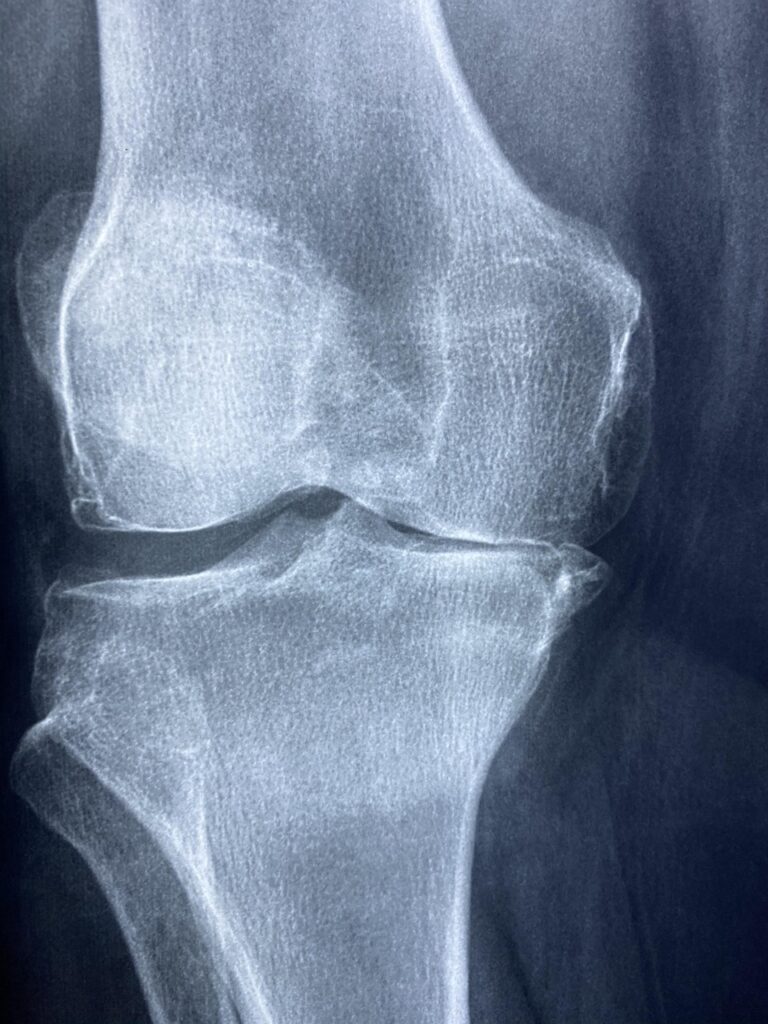
GAE is a precision-guided procedure, and that precision starts with high-quality imaging. You will be asked to bring any recent X-rays or MRI scans of your knee.
- X-rays show the bone structure and the degree of cartilage loss, helping to stage the severity of your osteoarthritis.
- An MRI can provide detailed images of the soft tissues, including the synovial membrane, and can help to visualize the extent of the synovial inflammation (synovitis).
In our office, Dr. Fox may also perform a diagnostic ultrasound to assess the soft tissues and blood flow around the knee, further confirming the presence of inflammation. This comprehensive imaging review is essential to ensure you are an ideal candidate. GAE is most effective as an osteoarthritis treatment for patients with mild to moderate OA, and less so for end-stage, “bone-on-bone” disease where the pain is purely mechanical.
Learn more about what makes someone a good candidate for GAE.
The Week Before Your Procedure: Setting the Stage
Once you and Dr. Fox have decided to proceed with GAE, our team will schedule your procedure and provide you with a set of specific pre-procedure instructions. Following these guidelines carefully is crucial for your safety and the success of the treatment.
Medication Management
One of the most important aspects of preparation is managing your current medications.
- Blood Thinners: If you take anticoagulant or antiplatelet medications—such as warfarin (Coumadin), apixaban (Eliquis), rivaroxaban (Xarelto), clopidogrel (Plavix), or even daily aspirin—you will be given specific instructions on when to stop them before your procedure. This is critical to minimize the risk of bleeding from the arterial access site. Never stop these medications without explicit guidance from your doctor.
- NSAIDs: You may be asked to stop taking non-steroidal anti-inflammatory drugs (NSAIDs) like ibuprofen (Advil, Motrin) or naproxen (Aleve) for a few days before the procedure.
- Diabetes Medications: If you are diabetic, particularly if you take metformin, you may receive special instructions regarding your medication schedule around the time of the procedure, as the contrast dye used during GAE can interact with it.
Always provide Dr. Fox with a complete list of all medications, vitamins, and supplements you are taking so we can give you personalized advice.
Hydration is Key
You will be encouraged to drink plenty of water in the days leading up to your GAE procedure. Good hydration has several benefits:
- It makes your veins easier to access if an IV is needed.
- It helps your kidneys process and flush out the contrast dye used during the imaging portion of the procedure.
Arranging Logistics
Since you will receive light sedation, you will not be able to drive yourself home.
- Arrange for a Driver: You must have a responsible adult friend or family member available to drive you home from our Manhattan office. Taxis or ride-sharing services are generally not permitted unless you are accompanied by a responsible adult.
- Plan for a Restful Afternoon: Clear your schedule for the remainder of the day after your procedure. Plan to go home and rest. While you will be able to walk, you should avoid any demanding tasks.
The Day Before: Final Preparations
The day before your GAE procedure is about simple, final preparations to ensure you are ready.
Fasting Instructions
You will be given specific instructions about when to stop eating and drinking. Typically, this involves:
- No solid food for 6-8 hours before your scheduled arrival time.
- Clear liquids (like water, black coffee, or apple juice) may be allowed up to 2 hours before the procedure.
Fasting is a standard safety precaution for any procedure that involves sedation, as it reduces the risk of aspiration.
What to Wear
Choose loose, comfortable clothing to wear to your appointment. This will make it easier to change if needed and will be more comfortable to wear home after the procedure. Avoid wearing jewelry or bringing valuables to the office.
Pack a Small Bag (Optional)
While you will be going home the same day, you might want to have a few things with you:
- Your ID and insurance information.
- A list of your current medications.
- A book or tablet to use while you wait or during recovery.
Read our FAQ for more answers to common questions about GAE.
The Day of Your GAE Procedure: What to Expect
Arriving at our office, you can feel confident that you are in the hands of a highly experienced team dedicated to your comfort and safety.
Check-in and Pre-Op
- Arrival: You will check in with our front desk staff.
- Pre-Procedure Area: You will be brought to a comfortable pre-procedure area where you will change into a gown. A nurse will review your medical history, confirm your medications, and answer any last-minute questions.
- IV Access: An intravenous (IV) line will be placed in your arm. This is used to administer fluids and the light sedation medication that will keep you relaxed and comfortable throughout the procedure.
- Meeting with Dr. Fox: Dr. Fox will meet with you again to review the plan, confirm the correct knee is being treated, and address any final concerns.
The Procedure Itself
You will be brought into our advanced procedure suite, which looks similar to an operating room but is designed for minimally invasive, image-guided treatments.
- Positioning: You will lie comfortably on a procedure table.
- Anesthesia and Sedation: The access site (usually the groin or ankle) will be cleaned and numbed with a local anesthetic. You will also receive medication through your IV to help you feel deeply relaxed and drowsy. You will not be under general anesthesia but in a state of “twilight sleep.” Most patients doze through the procedure and have little to no memory of it.
- The Embolization: Dr. Fox will perform the GAE procedure as planned, using real-time X-ray imaging to guide the catheter and precisely deliver the embolization particles. The entire process is painless and typically takes 45-90 minutes.
Learn more about the technology and steps of the GAE procedure.
Mental and Emotional Preparation: Setting Realistic Expectations
Preparing for a medical procedure isn’t just about logistics; it’s also about mindset. Understanding what to expect can greatly reduce anxiety.
Remember: It Is Not Major Surgery
The most important thing to remember is that GAE is minimally invasive. There are no large incisions, no general anesthesia, and no lengthy, painful rehabilitation. The risks are very low, and the recovery is very fast. Remind yourself that you have chosen a modern, gentler path to pain relief.
Understand the Recovery Timeline
It is crucial to have realistic expectations about pain relief.
- Some patients feel better immediately.
- Most patients notice a significant improvement within 2-6 weeks.
- Maximum benefit is typically reached around 3-6 months.
The pain relief is gradual because it takes time for the inflammation to fully subside after its fuel supply has been reduced. Do not be discouraged if you don’t feel a dramatic change on day one. Some patients even experience a temporary increase in soreness as the knee responds to the treatment—this is a normal and often positive sign.
Read our detailed guide on what to expect after your GAE procedure.
Why Choose Fox Vein and Vascular for Your GAE?
Proper preparation is made easier when you have a trusted, expert team guiding you. At Fox Vein and Vascular, we pride ourselves on providing a seamless and supportive patient experience.
- Expert Guidance: Dr. David Fox is a board-certified and fellowship-trained vascular surgeon in Manhattan with deep expertise in arterial embolization procedures. You are in the hands of a true specialist.
- Clear Communication: Our team provides clear, step-by-step instructions and is always available to answer your questions.
- Patient Comfort: From our welcoming office to our use of light sedation, every aspect of your experience is designed with your comfort in mind. We are a trusted destination for patients from the 5 Boroughs, Nassau, Suffolk, South Western Ct., and North East NJ.
Meet Dr. Fox and the Fox Vein and Vascular team.
Conclusion: You Are Ready for Relief
Preparing for your Genicular Artery Embolization procedure is a straightforward process. By following instructions, arranging logistics, and mentally preparing for a smooth experience and gradual recovery, you are setting the stage for an outstanding outcome.
You have already done the hard part: living with recurrent knee pain and taking the initiative to seek out an innovative solution. The preparation is simply the final step on the path to leaving that pain behind.
If you are ready to prepare for a life with less knee pain, your journey starts here.
Schedule your consultation with Dr. Fox today.
Fox Vein and Vascular – Manhattan, NY
📍 1041 Third Avenue, New York, NY 10065
📞 (212) 362-3470
🌐 foxvein.com
Note: This content is for informational purposes and does not constitute medical advice. Always follow the specific instructions provided by your healthcare team.
Leading Manhattan Vascular & Vein Specialist
At Fox Vein Care, we provide state-of-the-art vascular and venous treatments, combining advanced diagnostic technology with minimally invasive procedures that prioritize comfort, safety, and outstanding results.
Contact Us