For many years, a diagnosis of severe Peripheral Arterial Disease (PAD) often meant one thing: major open surgery. The prospect of a leg bypass operation, with its large incisions, general anesthesia, hospital stay, and lengthy recovery, was daunting for patients. While effective, this traditional approach was a significant undertaking, especially for older individuals or those with other health problems.
Today, the landscape of Peripheral Artery Disease treatment has been revolutionized. A new philosophy, centered on minimally invasive techniques, has transformed how vascular specialists approach even the most complex cases of arterial disease. Instead of creating a new path around a blockage, modern endovascular procedures work from inside the artery itself to reopen the original vessel.
This shift from open surgery to minimally invasive repair represents one of the most significant advancements in modern vascular medicine. But is bypass surgery now obsolete? When is an endovascular procedure the right choice, and when is a traditional bypass still the best option?
At Fox Vein and Vascular, Manhattan vascular surgeon Dr. David Fox is an expert in the full spectrum of PAD treatments, from advanced atherectomy to complex surgical bypass. Understanding the differences, benefits, and applications of each approach is crucial for patients to make informed decisions about their health. In this comprehensive guide, we will compare minimally invasive PAD treatment with bypass surgery, helping you understand the future of vascular care NYC.
The Traditional Approach: What Is Bypass Surgery?
Leg bypass surgery is the classic “re-plumbing” solution for a severely blocked artery. The concept is straightforward: if the main highway is blocked, you build a detour.
How It Works
During a peripheral bypass operation, a vascular surgeon creates a new pathway for blood to flow around the diseased segment of the artery. This is done by grafting a new vessel—the bypass—that connects the healthy artery above the blockage to the healthy artery below it.
The graft material can be:
- An Autologous Vein: The patient’s own saphenous vein (a long vein running down the inner leg) is often used. This is typically the preferred material as it is natural tissue and tends to have better long-term durability.
- A Prosthetic Graft: A tube made of a synthetic material like Dacron or PTFE can be used, especially for bypasses in larger arteries or when a suitable vein is not available.
The procedure requires one or more large incisions to expose the arteries, sew the graft into place, and then close the wounds. It is performed in a hospital operating room under general or spinal anesthesia.
When Is Bypass Surgery Used?
Bypass surgery has historically been the gold standard for treating:
- Long-Segment Chronic Total Occlusions (CTOs): When a very long section of an artery (e.g., the entire femoral artery in the thigh) is completely blocked.
- Failed Endovascular Attempts: If multiple attempts to open a blockage with minimally invasive techniques have been unsuccessful.
- Specific Anatomical Challenges: In some cases, the location or nature of the plaque makes an endovascular approach technically impossible.
- Young, Healthy Patients: For a young, otherwise healthy patient with a very long blockage, a vein bypass may offer the best long-term durability, lasting for many years.
The Modern Revolution: Minimally Invasive Endovascular Treatment
The term “endovascular” means “inside the blood vessel.” This modern approach avoids large incisions by using catheters and wires that are guided through the vascular system to the site of the problem. Instead of going around the blockage, these techniques go through it.
These procedures are performed through a tiny needle puncture, usually in the groin or foot. They are typically done on an outpatient basis, meaning you go home the same day.
The primary minimally invasive treatments for PAD include:
- Balloon Angioplasty: A small balloon is inflated inside the artery to compress the plaque and widen the channel.
- Stenting for PAD: A metal mesh tube (stent) is placed inside the artery to act as a scaffold, holding the vessel open permanently.
- Atherectomy Procedure: A specialized device is used to physically remove the plaque by shaving, grinding, or vaporizing it. This is highly effective for hard, calcified blockages.
These techniques can be used alone or in combination to achieve the best result. For example, Dr. Fox might first use an atherectomy to debulk a calcified lesion and then use a balloon to smooth the vessel, a strategy known as “vessel preparation.”
Explore our minimally invasive treatment options here.
Head-to-Head: Minimally Invasive vs. Bypass Surgery
Choosing the right approach requires a careful comparison of several key factors. Here’s how the two methods stack up.
1. The Procedure Itself
- Bypass Surgery: A major open operation requiring general anesthesia, large incisions, and significant tissue dissection. Hospitalization is required.
- Minimally Invasive: A catheter-based procedure performed through a needle puncture. It uses local anesthetic and light sedation. It is typically done in an outpatient setting.
2. Recovery Time
- Bypass Surgery: Recovery is extensive. It involves a hospital stay of several days, followed by weeks or even months of limited activity, pain management, and wound care.
- Minimally Invasive: Recovery is rapid. Patients rest for a few hours after the procedure and go home the same day. Most can return to normal, non-strenuous activities within a day or two.
3. Risks and Complications
- Bypass Surgery: Carries the risks associated with any major surgery, including adverse reactions to anesthesia, significant bleeding, surgical site infections, and heart or lung complications. There is also a risk that the graft can fail or become blocked over time.
- Minimally Invasive: The risks are much lower. They are primarily related to the access site, such as bleeding or bruising. While rare, complications can include vessel perforation or re-blockage of the treated area (restenosis).
4. Patient Suitability
- Bypass Surgery: Patients need to be healthy enough to tolerate a major operation. For elderly patients or those with significant heart, lung, or kidney disease, bypass surgery may be too high-risk.
- Minimally Invasive: Because it is less taxing on the body, endovascular treatment is an excellent option for nearly all patients, including those who are older, frailer, or have multiple medical comorbidities. It opens the door to treatment for many who would be considered “inoperable” by traditional standards.
5. Durability and Effectiveness
This is the most nuanced part of the comparison.
- Bypass Surgery: For very long blockages in young, healthy patients, a vein bypass can be extremely durable, potentially lasting 10-15 years or more.
- Minimally Invasive: The durability of endovascular procedures has improved dramatically with modern technology like drug-eluting stents and atherectomy. For shorter blockages, the results are often equivalent to surgery. While a treated segment might re-narrow over time, the great advantage is that it can often be easily treated again with another simple, minimally invasive procedure. It doesn’t “burn any bridges.”
The modern philosophy is often an “endovascular-first” approach. We try the less invasive option first. If it works, the patient has been spared a major operation. If it fails or re-narrows years later, the option for bypass surgery still exists.
Who Is a Candidate for Each Approach?
The decision is highly individualized and made after a thorough evaluation at our vascular lab Manhattan. Dr. Fox considers the patient’s overall health, symptoms, and the specific anatomy of the blockage.
Candidates for Minimally Invasive Treatment
This is now the preferred first-line treatment for the vast majority of PAD patients, including:
- Patients with limiting leg pain when walking (claudication).
- Patients with Critical Limb Ischemia (CLI), including ischemic rest pain, non-healing wounds, or gangrene. The quick recovery and immediate blood flow restoration are vital for amputation prevention.
- Elderly or high-risk patients who cannot tolerate open surgery.
- Patients with focal or moderately long blockages in the iliac, femoral, or popliteal arteries.
- Patients with blocked arteries below the knee (BTK), where surgery is often not feasible.
Candidates for Bypass Surgery
Bypass surgery is now reserved for a smaller, more specific subset of patients:
- Young, healthy patients with very long, continuous blockages of the main leg arteries where a vein bypass is expected to offer superior long-term durability.
- Patients with extensive, complex disease that is not amenable to endovascular techniques.
- Cases where multiple, well-performed endovascular procedures have failed to provide lasting relief.
- Certain rare anatomical situations, such as when a popliteal aneurysm is present with the blockage.
Learn about our state-of-the-art diagnostic services.
The Clear Advantages of a Minimally Invasive Philosophy
For patients, the benefits of choosing an endovascular-first approach are profound. This shift in PVD treatment has fundamentally improved the patient experience.
- Outpatient Convenience: No hospital stay is required. You can have your procedure and be home in your own bed the same evening.
- Faster, Less Painful Recovery: You avoid the pain of large incisions and the long, slow recovery from major surgery. Most patients are back on their feet almost immediately.
- Reduced Risk: By avoiding general anesthesia and large surgical wounds, the risk of serious complications is significantly lower.
- Preservation of Future Options: Endovascular treatment works on the native vessel. If it re-narrows years down the line, it can be treated again. A bypass, on the other hand, is a major anatomical alteration.
- Immediate Symptom Relief: Patients often feel a dramatic improvement in blood flow right away, with warm feet and relief from rest pain as soon as they are in the recovery room.
- Key to Limb Salvage: For patients with a diabetic foot ulcer/wound or a toe wound threatening their limb, a fast, low-risk procedure to restore flow is the cornerstone of modern limb preservation.
Read more about our commitment to limb preservation.
The Fox Vein and Vascular Approach: The Best of Both Worlds
Choosing a surgeon who is an expert in both open and endovascular techniques is critical. A specialist who only performs one type of procedure may not be able to offer you the truly best option for your specific condition.
Dr. David Fox is a board-certified vascular surgeon with extensive training and experience in complex open surgical reconstructions and the most advanced minimally invasive procedures. This dual expertise allows him to offer a truly unbiased, patient-centered recommendation. He can perform a complex endovascular revascularization on one patient and a traditional bypass on the next, ensuring that every patient receives the ideal treatment for their unique situation.
We believe in a tailored approach for every patient we see from the 5 Boroughs, Nassau, Suffolk, South Western Ct., and North East NJ.
Meet Dr. David Fox and learn about his expertise.
A Special Note on Knee Pain: Another Minimally Invasive Solution
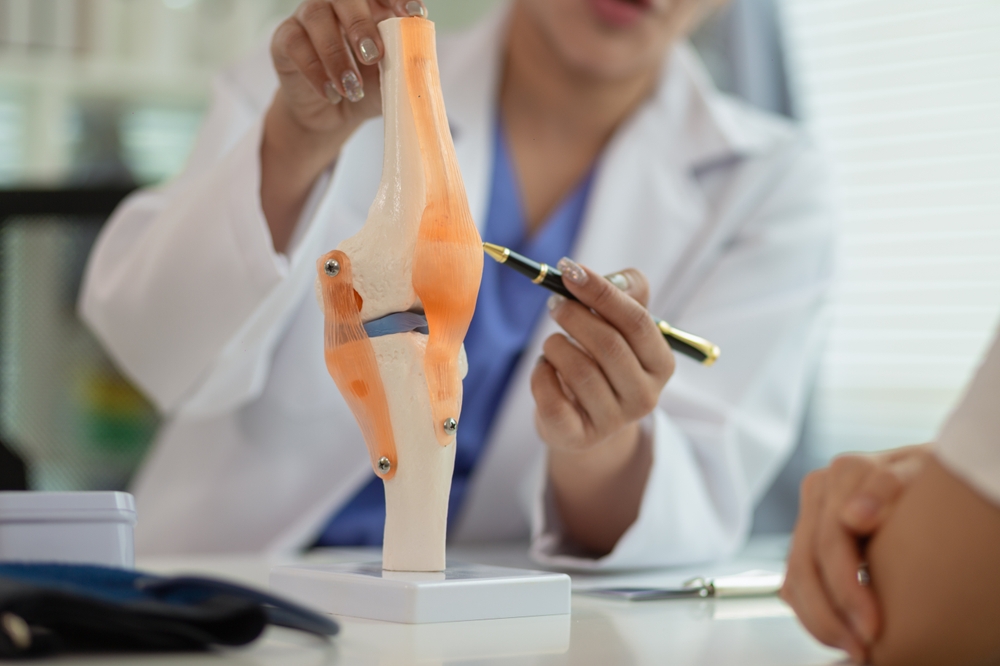
Our commitment to minimally invasive care extends beyond PAD. Many patients with leg pain assume it’s their circulation when it’s actually knee osteoarthritis. For these patients, Fox Vein and Vascular offers Genicular Artery Embolization (GAE), a breakthrough alternative to knee replacement. This procedure, what is genicular artery embolization, involves blocking the tiny arteries that cause inflammation in the knee, providing significant pain relief without surgery. Whether your leg pain is from blocked leg arteries or knee arthritis, we have a minimally invasive solution.
Learn more about GAE for chronic knee pain.
Conclusion: A New Era in PAD Treatment
The debate of minimally invasive PAD treatment vs. bypass surgery is largely settling with a clear winner for most patients. The endovascular revolution has made it possible to treat severe leg circulation problems with outpatient procedures that are safer, faster, and less painful than ever before.
While bypass surgery remains an important tool for a select group of patients, the “endovascular-first” philosophy is now the standard of care. It offers a lifeline to patients who were once considered too high-risk for treatment, and it provides a more convenient and comfortable path to recovery for everyone else.
If you have been diagnosed with PAD, or if you are suffering from symptoms like leg pain, foot pain, or non-healing wounds, don’t assume that major surgery is your only option. Explore the world of minimally invasive vascular care.
Take the first step toward a faster, less invasive solution for your PAD.
Schedule a consultation with Dr. Fox to discuss your personalized treatment plan.
Fox Vein and Vascular – Manhattan, NY
📍 1041 Third Avenue, New York, NY 10065
📞 (212) 362-3470
🌐 foxvein.com
Note: This content is for informational purposes and does not constitute medical advice. Always consult a healthcare professional for diagnosis and treatment.
Leading Manhattan Vascular & Vein Specialist
At Fox Vein Care, we provide state-of-the-art vascular and venous treatments, combining advanced diagnostic technology with minimally invasive procedures that prioritize comfort, safety, and outstanding results.
Contact Us