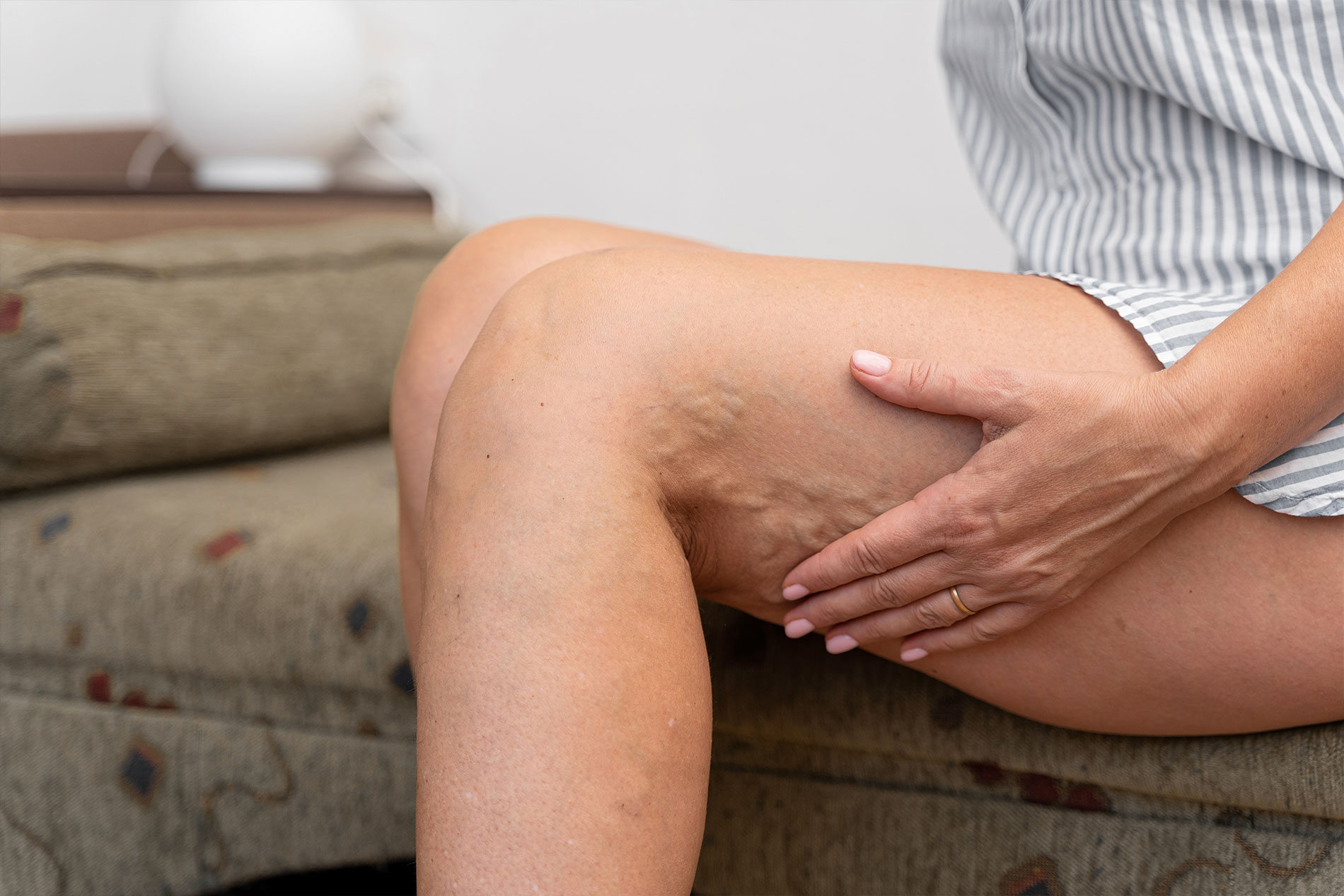
If you’re experiencing persistent leg pain, numbness, or cramping when you walk, you might be worried about what’s causing it. The thought of a medical evaluation can be intimidating, especially when you don’t know what to expect. For those concerned about Peripheral Arterial Disease (PAD), understanding the diagnostic process can ease anxiety and empower you to take the first step toward better health. A PAD evaluation is a straightforward, often non-invasive process designed to give you clear answers about your circulatory health.
At Fox Vein and Vascular, we believe that knowledge is power. A thorough evaluation is the cornerstone of effective treatment and preventing serious complications like non-healing wounds or amputation. Led by Dr. David Fox, a board-certified vascular surgeon, our team provides comprehensive PAD evaluations in our state-of-the-art facility. This guide will walk you through each step of the process, so you know exactly what to expect when you come in for your appointment.
Why is a PAD Evaluation So Important?
Before diving into the steps, it’s crucial to understand why this evaluation matters. PAD occurs when arteries in the legs become narrowed by plaque, restricting blood flow. Because its symptoms can be subtle or mimic other conditions, it often goes undiagnosed until it becomes severe.
An early and accurate PAD diagnosis allows for timely intervention, which can:
- Alleviate symptoms like leg pain when walking (claudication).
- Prevent the progression to Critical Limb Ischemia (CLI), a severe form of PAD.
- Drastically reduce the risk of non-healing ulcers, infection, and amputation.
- Identify a significant risk factor for heart attack and stroke.
A proper evaluation by a vascular specialist is the only way to confirm or rule out PAD definitively.
Your PAD Evaluation: A Step-by-Step Breakdown
Your visit to our vascular lab Manhattan is designed to be as efficient and comfortable as possible. Here is what a typical PAD evaluation entails.
Step 1: The Consultation and Medical History Review
The first and most important step is a detailed conversation with Dr. Fox. This is your opportunity to share your story and for us to understand your unique situation. Be prepared to discuss:
- Your Symptoms: When did the leg pain or foot pain start? What does it feel like (cramping, burning, aching)? What makes it better or worse?
- Your Walking Ability: Have you noticed a change in how far or how fast you can walk? Do you experience fatigue or heaviness in your legs?
- Your Medical History: We will review your full health history, paying close attention to PAD risk factors such as diabetes, high blood pressure, high cholesterol, and a history of smoking.
- Your Family History: A family history of vascular disease, heart attacks, or strokes can increase your own risk.
This conversation provides critical clues that help guide the physical portion of the exam.
Step 2: The Physical Examination
Next, Dr. Fox will perform a focused physical exam of your legs and feet. This is a hands-on assessment to look for the physical signs of poor blood flow in legs. This includes:
- Checking Pulses: Dr. Fox will feel for the strength of the pulses in various locations on your legs and feet (e.g., behind the knee, on top of the foot). Weak or absent pulses are a classic sign of an arterial blockage.
- Inspecting Skin: We will look at the color, temperature, and texture of your skin. Legs and feet affected by PAD may be cool to the touch, appear pale or bluish, and have shiny skin.
- Assessing Hair and Nail Growth: Reduced blood flow can cause slow nail growth and hair loss on the shins, feet, and toes.
- Looking for Wounds: We will carefully examine your feet and legs for any sores, ulcers, or areas of skin breakdown that are slow to heal.
This physical assessment helps build a complete clinical picture before moving on to diagnostic testing.
Step 3: Ankle-Brachial Index (ABI) Screening
The Ankle-Brachial Index (ABI) is the primary screening tool for PAD. This quick, painless test is a cornerstone of our PAD screening Manhattan protocol and provides objective data about your circulation.
- How it Works: You will lie down comfortably on an exam table. We place blood pressure cuffs on both of your arms and both of your ankles. Using a small, hand-held Doppler device (a type of ultrasound), we listen to the blood flow and measure the systolic blood pressure in each limb.
- Interpreting the Results: We then calculate a ratio by dividing the highest pressure in your ankle by the highest pressure in your arm.
- Normal ABI: 1.0 to 1.4
- Mild to Moderate PAD: 0.5 to 0.9
- Severe PAD: Below 0.5
An abnormal ABI result confirms a diagnosis of PAD. For more detailed insights, we may perform a Multilevel ABI/PVR, which uses additional cuffs to help pinpoint the general location of the blockage.
Step 4: Duplex Ultrasound Imaging
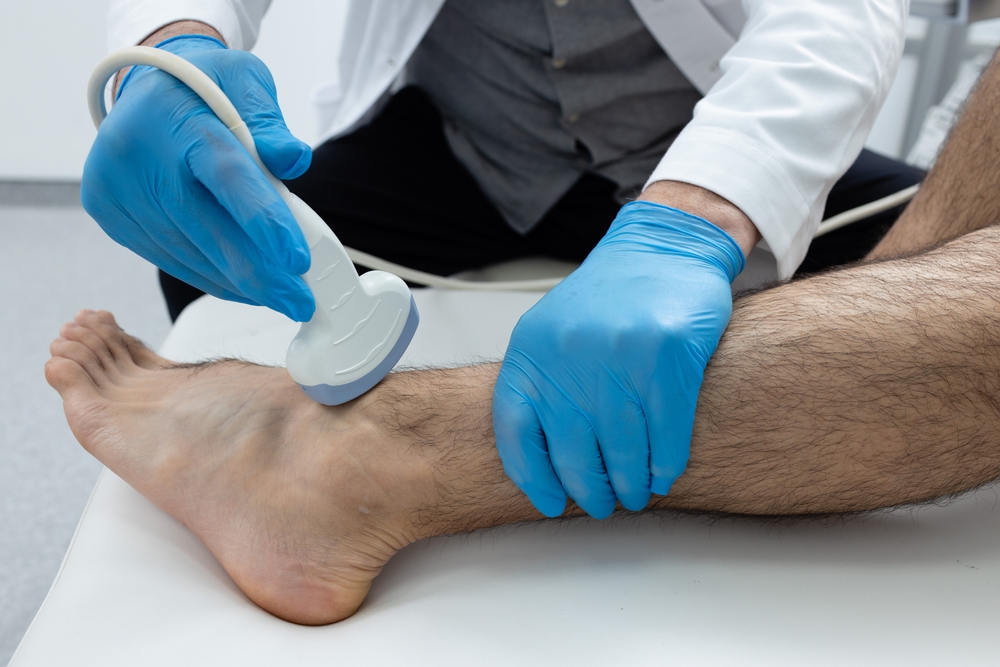
If the ABI test confirms PAD, the next step is typically a Duplex Ultrasound. This is a non-invasive imaging test that gives Dr. Fox a real-time “map” of your arteries.
- How it Works: Similar to an ultrasound for pregnancy, a gel is applied to your leg, and a transducer is moved over the skin. It uses sound waves to create images of your arteries and measure the blood flowing through them.
- What it Shows: This powerful tool reveals:
- The precise location of any blockages or narrowing.
- The severity of the blockages.
- The characteristics of the plaque (soft or hard/calcified).
- The speed and direction of blood flow.
This detailed information is vital for planning the most effective and least invasive treatment for you. You can learn more about our advanced diagnostic capabilities on our website.
Step 5: Advanced Arterial Imaging (When Necessary)
In a small number of cases, particularly for complex blockages or when planning a specialized procedure, more advanced imaging may be needed. These tests provide an extremely detailed, 3D-like view of your arterial system. Options include:
- CT Angiography (CTA): Uses a CT scanner and contrast dye to create a 3D roadmap of your arteries.
- MR Angiography (MRA): Uses an MRI machine and contrast dye to visualize the blood vessels.
- Invasive Angiography: Considered the “gold standard,” this is a minimally invasive procedure where a catheter is guided to the leg arteries and contrast dye is injected to capture X-ray images. This is often done at the same time as treatment.
After the Evaluation: Your Personalized Treatment Plan
Once your evaluation is complete, Dr. Fox will sit down with you to explain the findings in clear, easy-to-understand terms. You will have a definitive answer about what is causing your symptoms. If PAD is diagnosed, we will create a personalized treatment plan tailored to your specific needs.
For many patients, this involves minimally invasive treatments for PAD, such as angioplasty, atherectomy, or stenting. These outpatient procedures are performed by Dr. Fox, vascular specialist, and are designed to restore blood flow quickly, with minimal downtime.
Schedule Your PAD Evaluation Today
Ignoring leg pain is a risk you don’t have to take. A PAD evaluation is a simple, painless process that provides the answers you need to protect your health and maintain your mobility. Our practice serves patients from all 5 Boroughs, Nassau, Suffolk, South Western CT, and North East NJ, offering expert care in a modern setting.
If you’re ready to get to the bottom of your leg or foot pain, contact us to schedule your consultation. Learn more about our approach to vascular care NYC and our commitment to amputation prevention.
Fox Vein and Vascular – Manhattan, NY
📞 (212) 362-3470
🌐 foxvein.com
Leading Manhattan Vascular & Vein Specialist
At Fox Vein Care, we provide state-of-the-art vascular and venous treatments, combining advanced diagnostic technology with minimally invasive procedures that prioritize comfort, safety, and outstanding results.
Contact Us