Spider veins are incredibly common. These tiny, thread-like red, blue, or purple lines that appear just beneath the skin’s surface can be a source of cosmetic frustration for millions of people. Often found on the legs and face, they are frequently dismissed as a simple, harmless part of aging. But a nagging question often lingers: could these seemingly minor blemishes be a warning sign of a more significant underlying health issue? For those noticing these patterns, it’s natural to wonder if it’s time to find a vein specialist near me.
The short answer is: sometimes. While many cases of spider veins are purely cosmetic, they can also be the first visible indication of an underlying condition known as Chronic Venous Insufficiency (CVI). Understanding the connection between these small veins and the broader health of your circulatory system is crucial for knowing when to seek professional evaluation. This article will delve into the relationship between spider veins and more serious vein problems, outline the symptoms to watch for, and explain why consulting a specialist at a Manhattan vein clinic is a vital step toward long-term leg health.
Understanding the Venous System: A Quick Refresher
If you’re interested in learning more about spider veins, their causes, or available treatments, you can visit our dedicated spider vein page for additional resources and expert insights.
To appreciate why spider veins might signal a deeper issue, it’s essential to understand how the veins in your legs are supposed to function. Unlike arteries, which have thick, muscular walls to pump oxygenated blood from the heart, veins are less muscular. They are designed to carry deoxygenated blood back to the heart, and in the legs, this means working against the constant pull of gravity.
To achieve this upward journey, your leg veins rely on two key mechanisms:
- One-Way Valves: Your veins are lined with a series of tiny, flap-like valves. As blood flows upward toward the heart, these valves open. They then snap shut to prevent blood from flowing backward.
- The Calf Muscle Pump: The muscles in your lower legs act as a powerful “second heart.” When you walk or contract these muscles, they squeeze the deep veins, propelling blood upward and helping it return to the heart.
A healthy venous system is a model of efficiency. However, when parts of this system begin to fail, problems arise, starting from the smallest vessels to the largest.
The Common Culprit: Chronic Venous Insufficiency (CVI)
If you’re concerned that your spider veins may indicate a more serious issue, such as CVI, you can learn more about available treatments and evaluation at Fox Vein Care’s spider vein treatment page.
When we talk about a “bigger vein problem,” we are most often referring to Chronic Venous Insufficiency. CVI is a progressive medical condition that occurs when the one-way valves in your leg veins become damaged or weakened. This damage prevents them from closing properly, a condition known as valvular incompetence.
When these valves fail, gravity causes blood to leak backward and pool in the lower veins. This backward flow is called venous reflux. The pooling of blood significantly increases the pressure inside the affected veins, a state known as venous hypertension. This sustained pressure is the root cause of nearly all vein-related problems in the legs, from the tiniest spider veins to the largest, most painful varicose veins.
How CVI Creates Spider Veins
Think of your venous system as a tree. The deep veins are the trunk, larger superficial veins are the main branches, and the tiny capillaries just under your skin are the smallest twigs. CVI often starts in the larger veins—the “branches.” When pressure builds in these larger veins due to faulty valves, that pressure is transmitted outward into the smaller tributary vessels.
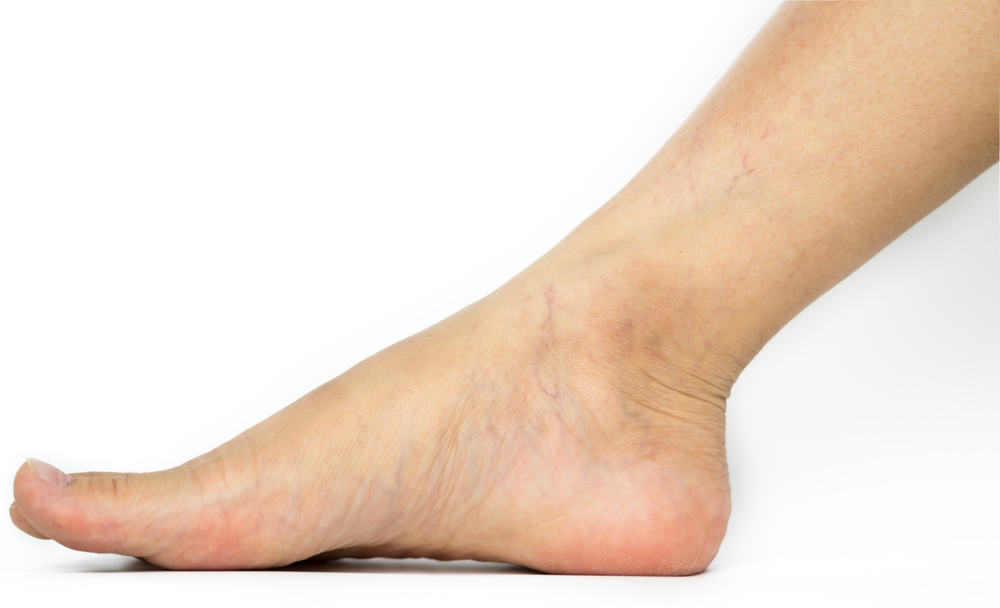
The tiny capillaries that make up spider veins are delicate and not designed to handle this high pressure. Under the strain of venous hypertension, they stretch, dilate, and become engorged with blood. This makes them visible through the surface of the skin as the characteristic web-like patterns we identify as spider veins.
Therefore, while spider veins themselves are damaged superficial capillaries, their appearance can be a direct result of a deeper problem in a larger, unseen “feeder” vein. In this context, the spider veins are not the core problem but rather the symptom—an external clue that the circulatory plumbing deeper within the leg is not functioning correctly.
When Are Spider Veins Just a Cosmetic Issue?
It is important to state that not every spider vein is a sign of CVI. Spider veins can and do form for other reasons, often without significant underlying venous reflux. Factors that can lead to isolated, cosmetic spider veins include:
- Genetics: A family history may simply mean you have a predisposition to weaker capillaries.
- Hormonal Changes: The fluctuations associated with puberty, pregnancy, or menopause can relax vessel walls and lead to spider veins without necessarily indicating a major CVI issue.
- Localized Trauma: A direct injury or blow to the leg can damage small blood vessels in a specific area, causing them to appear.
- Sun Exposure: On the face, spider veins are almost always caused by sun damage to the skin and supporting blood vessels, not by venous insufficiency.
If your spider veins are few, isolated to a small area, and are not accompanied by any other symptoms, they may very well be a localized cosmetic concern. However, if they are widespread, increasing in number, or appearing alongside other symptoms, the likelihood of a deeper issue is much higher.
Key Symptoms That Point to a Bigger Problem
The most reliable way to determine if your spider veins are a sign of CVI is to pay close attention to how your legs feel, not just how they look. When spider veins are a manifestation of underlying venous hypertension, they are often accompanied by other classic vein symptoms in legs.
If you notice your spider veins in conjunction with any of the following symptoms, it is a strong indicator that you should seek a professional evaluation from a chronic vein condition specialist near me.
1. Aching, Heaviness, and Leg Fatigue
This is one of the most common and earliest signs of CVI. You may experience a persistent, dull ache or a feeling that your legs are unusually heavy and tired. The sensation is often worse toward the end of the day, after long periods of standing or sitting, and is typically relieved by elevating your legs. This discomfort is a direct result of blood pooling and increased pressure in the leg veins.
2. Leg Swelling (Edema)
When venous pressure becomes high enough, fluid from the blood can leak out of the capillaries and into the surrounding tissues, causing swelling. This is known as edema. It most often affects the ankles and lower legs and, like aching, tends to worsen as the day goes on. You might notice that your socks leave indentations on your skin or that your shoes feel tighter in the evening. Persistent leg swelling and veins that are visible are a clear signal of circulatory dysfunction.
3. Itching and Burning Sensations
Many people with CVI report an uncomfortable itching or burning sensation, often directly over clusters of spider veins or varicose veins. This is thought to be related to the inflammation and release of certain chemicals in the skin caused by stagnant blood flow and venous hypertension.
4. Nighttime Leg Cramps and Restless Legs Syndrome
The circulatory stagnation and metabolic waste buildup associated with CVI can irritate nerves and muscles, leading to painful muscle cramps, especially at night. Many patients also experience symptoms consistent with Restless Legs Syndrome (RLS)—an overwhelming, uncomfortable urge to move the legs, particularly when at rest in the evening or at night. While RLS can have other causes, there is a strong correlation between it and underlying venous insufficiency.
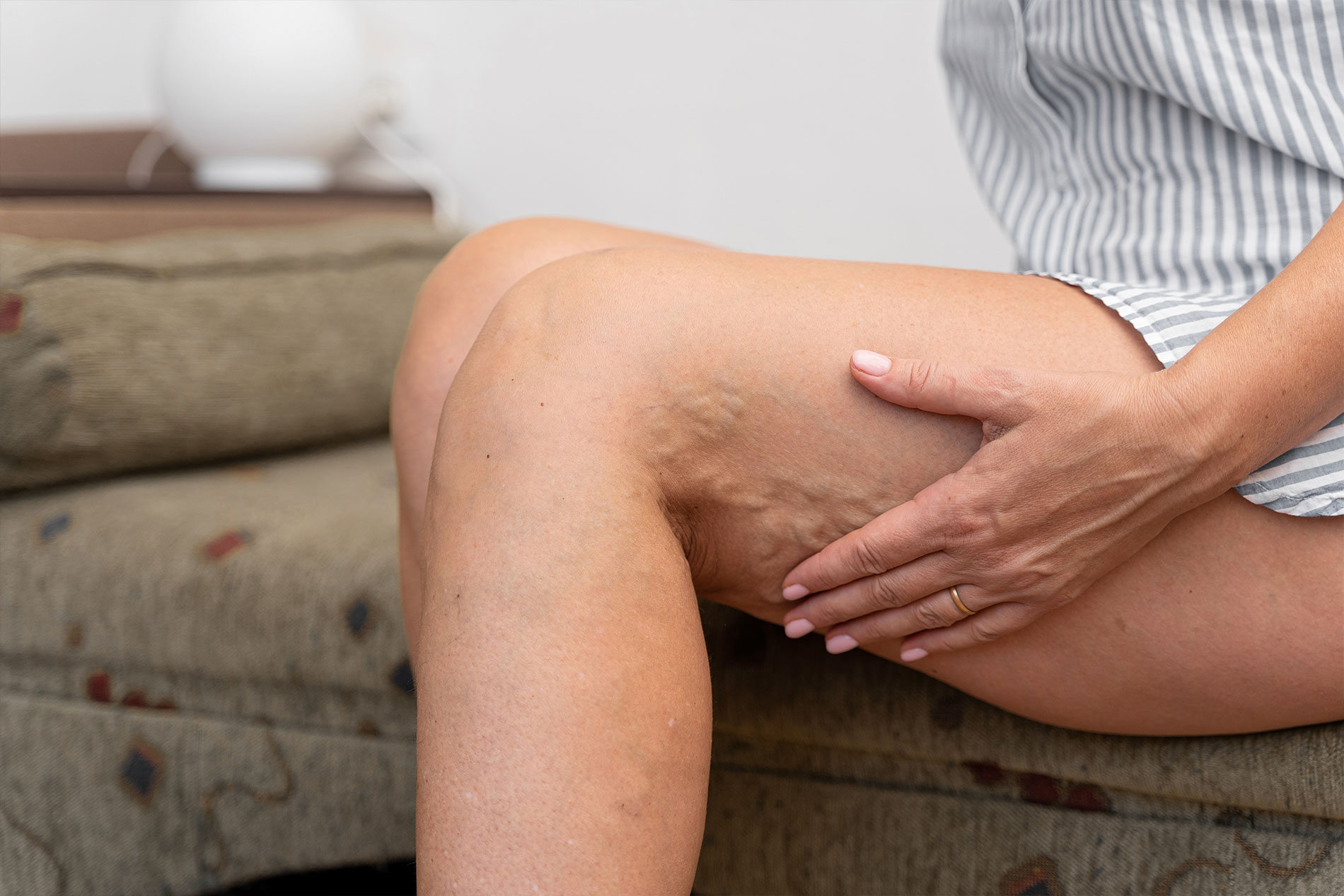
5. The Presence of Varicose Veins
If you have spider veins and also have varicose veins, there is a very high probability that you have CVI. Varicose veins are larger, bulging, and often twisted veins that protrude from the skin. They are a more advanced sign of the same venous hypertension that causes spider veins. Their presence indicates that the pressure problem is significant enough to affect larger, deeper vessels. If you see both, it’s a clear sign you should consult a varicose vein doctor in Manhattan.
6. Skin Changes (Stasis Dermatitis)
In more advanced stages of CVI, the chronic inflammation and poor circulation can lead to changes in the skin of the lower leg and ankle. This condition is called stasis dermatitis. Symptoms can include:
- Discoloration: The skin around the ankles may take on a reddish-brown, rusty appearance. This is caused by iron deposits (hemosiderin) from red blood cells leaking into the tissue.
- Texture Changes: The skin can become dry, scaly, leathery, or shiny.
- Venous Ulcers: In the most severe cases, the skin can break down and form open sores, known as venous ulcers. These are often located on the inner ankle, are slow to heal, and require specialized medical care.
If you have spider veins and notice any of these skin changes, it is imperative to seek medical attention immediately.
The Importance of a Professional Diagnosis
Because spider veins can be either a cosmetic issue or a sign of a medical condition, self-diagnosis is unreliable and unwise. The only way to know for certain what is happening within your veins is to undergo a professional evaluation by a qualified vein specialist.
This evaluation is typically a simple, painless, and non-invasive process. The cornerstone of diagnosing CVI is a Duplex ultrasound exam.
What to Expect During a Vein Evaluation
- Medical History and Physical Exam: Your doctor will begin by discussing your symptoms, your family medical history, and any risk factors you may have (such as pregnancy, a sedentary job, or obesity). They will then perform a visual examination of your legs while you are standing to look for spider veins, varicose veins, swelling, and any skin changes.
- Duplex Ultrasound: This is the most critical part of the diagnostic process. A technologist will apply a clear gel to your leg and use a small, handheld device called a transducer. This device sends harmless, high-frequency sound waves into your leg. The sound waves bounce off the blood vessels and are used to create a real-time image of your veins on a monitor.
- Visualizing the Veins: The ultrasound allows the doctor to see the structure of your veins, both superficial and deep, and identify any abnormalities.
- Mapping Blood Flow: Crucially, the “Duplex” aspect of the scan uses Doppler technology to show the direction and speed of blood flow. The doctor can actually see if blood is flowing backward (venous reflux) through a faulty valve. They will often gently squeeze your calf to observe how the valves respond.
This ultrasound exam provides a definitive map of your venous health. It can pinpoint exactly which valves are failing and determine the extent and severity of any underlying Chronic Venous Insufficiency. Based on these results, your specialist can tell you with certainty whether your spider veins are a sign of a bigger problem and recommend the most appropriate course of action.
Treatment: Addressing the Cause, Not Just the Symptom
If you’re exploring your options for spider vein removal, it’s important to review the details of spider vein treatment in Manhattan from a board-certified specialist.
If your evaluation confirms that your spider veins are linked to underlying CVI, the most effective treatment plan will address the source of the problem. A comprehensive approach offered by a top vein specialist in Manhattan focuses on closing the dysfunctional “feeder” veins that are causing the venous hypertension. By treating the underlying cause, not only do the associated symptoms like pain and swelling improve, but it also prevents the formation of new spider and varicose veins in that area.
Modern vein treatments are minimally invasive, performed in-office, and require little to no downtime. Common procedures for underlying venous insufficiency include:
- Endovenous Laser Therapy (EVLT): A thin laser fiber is inserted into the diseased vein. The laser energy heats and seals the vein shut, rerouting blood flow to healthier veins.
- Radiofrequency Ablation (RFA): Similar to EVLT, this procedure uses radiofrequency energy instead of a laser to heat and close the problematic vein.
Once the underlying source of venous pressure is eliminated, the specialist can then address the visible spider veins on the surface. The gold-standard treatment for this is sclerotherapy.
Sclerotherapy for Spider Veins
Sclerotherapy involves injecting a medicated solution directly into the spider veins. This solution irritates the vein lining, causing it to collapse and seal shut. The body then naturally absorbs the treated vein over the following weeks and months, causing it to fade from view. When performed after the underlying feeder veins have been treated, sclerotherapy is highly effective and produces excellent, long-lasting cosmetic results.
The Verdict: Don’t Ignore the Signs
So, are spider veins a sign of a bigger vein problem? The answer is a definitive maybe. They can be a simple cosmetic issue, but they are also a very common and visible symptom of Chronic Venous Insufficiency.
The key takeaway is not to ignore them, especially if they are accompanied by any other symptoms like aching, swelling, itching, cramping, or the presence of varicose veins. These symptoms are your body’s way of telling you that your circulatory system is under strain.
Viewing spider veins as a potential health indicator rather than just a cosmetic flaw empowers you to take proactive steps. An evaluation with a vein specialist is a simple, effective way to get a clear answer. If it turns out your veins are healthy, you gain peace of mind. If an underlying issue like CVI is discovered, you can access modern, minimally invasive treatments that will not only improve the appearance of your legs but also alleviate uncomfortable symptoms and, most importantly, protect your long-term vascular health. If you are looking for premier vein care treatment in Manhattan, scheduling a consultation is the best first step toward healthier legs.
Leading Manhattan Vascular & Vein Specialist
At Fox Vein Care, we provide state-of-the-art vascular and venous treatments, combining advanced diagnostic technology with minimally invasive procedures that prioritize comfort, safety, and outstanding results.
Contact Us